Competition within the watch industry has always been fierce, especially in today’s technologically advanced society where information spreads rapidly. To remain standing amid such intense rivalry, a watch brand must possess one or two signature strengths or unique watch‑making techniques. Today, let us take a look at the distinctive technologies and craftsmanship adopted by these renowned watch brands.
Rolex Parachrom Blue Hairspring
Most watch enthusiasts understand how critical the hairspring is inside a movement, as it governs a watch’s timekeeping accuracy. The better a hairspring resists temperature fluctuations and shocks, the higher the watch’s precision. Anti‑magnetic performance of the hairspring is equally important. Older‑generation hairsprings were commonly made from alloys based on iron, nickel and chromium. However, hairsprings of this material are susceptible to magnetism and shock impact, which compromises the watch’s time‑keeping
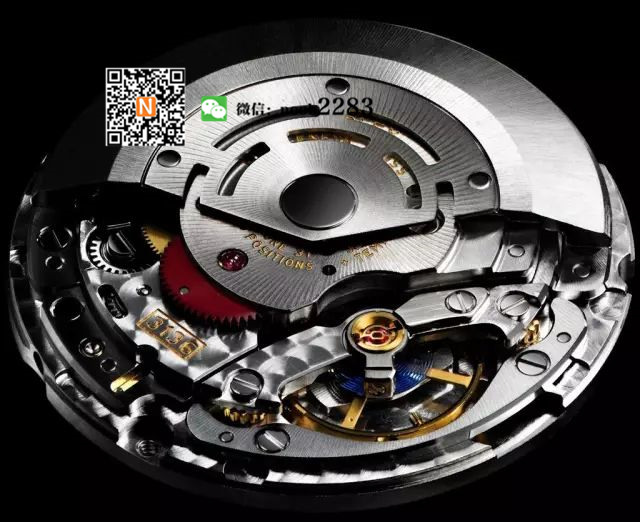
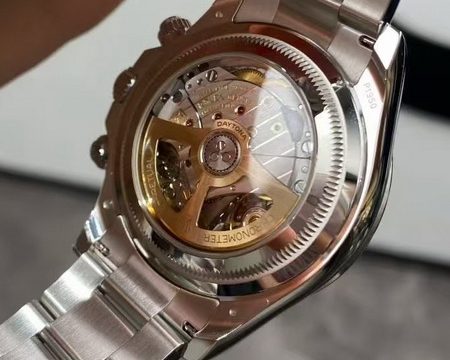
A few days ago, when discussing watch‑making technologies of luxury timepieces, I covered Rolex’s Oyster case. What is less widely known is that Rolex also excels at hairspring manufacturing. Following extensive research, Rolex developed an innovative alloy with a special ratio of 85% niobium to 15% zirconium, delivering optimal anti‑magnetic and shock‑resistant properties.
Made from this niobium‑zirconium Parachrom alloy, the blue hairspring leverages inherent material properties to mitigate stability loss caused by external impacts. Its shock‑resistance is ten times greater than that of conventional hairsprings.
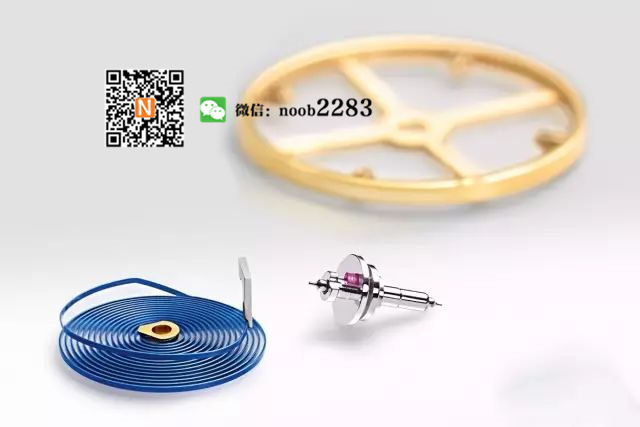
Furthermore, the Parachrom blue hairspring is paramagnetic, with a magnetic susceptibility of approximately one‑hundred‑thousandth. Its probability of becoming magnetised is therefore practically negligible. Zirconium is a rare‑earth metal featuring remarkable corrosion resistance, an extremely high melting point, and exceptional hardness and strength. As a high‑melting‑point material, the niobium‑zirconium alloy suffers minimal performance variation caused by temperature changes. All in all, Rolex’s Parachrom blue hairspring delivers outstanding shock resistance, excellent anti‑magnetic properties and strong temperature‑change tolerance, greatly enhancing the watch’s time‑keeping precision.
A. Lange & Söhne Three‑Quarter Plate
How did German brand A. Lange & Söhne stand out amid Swiss watchmaking and earn its place among the world’s top‑ten luxury watch brands? One defining feature is the three‑quarter plate developed by Mr. Lange. This component has become an iconic hallmark of A. Lange & Söhne and represents the stylistic signature of German watchmaking as a whole.
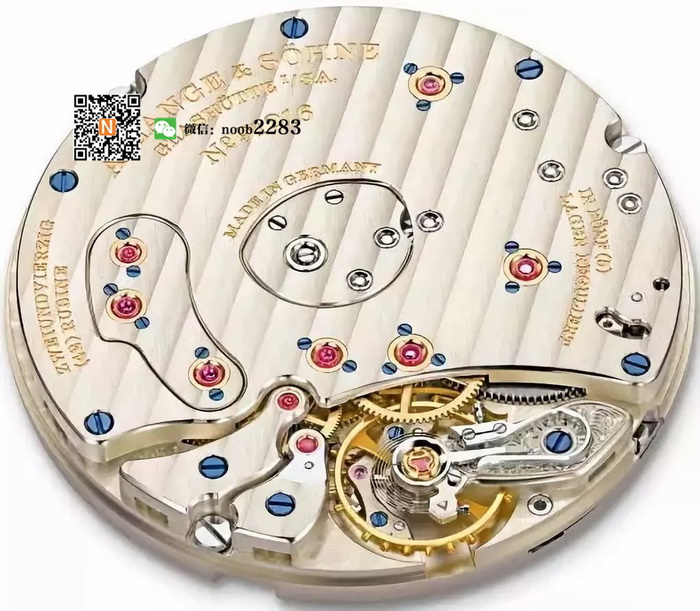
The three‑quarter plate is crafted from untreated German silver, an alloy composed of copper, nickel and zinc. This material is used for all frame components of A. Lange & Söhne watches, boasting high stability and corrosion resistance.
Simply put, the plate is a metal cover laid over the movement to secure gears, covering roughly three‑quarters of the movement’s total surface area. From a more technical perspective, it merges the main‑barrel plate and the train‑wheel plate into a single integrated component.
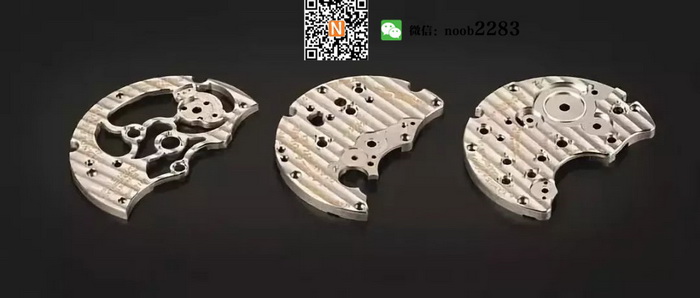
Compared with the traditional construction built upon a three‑quarter plate plus multiple separate bridges, this design substantially improves movement stability. It reduces positional tolerances of gear axle centres while delivering superior dust‑proof and dirt‑resistant performance. It also saves watchmakers considerable time and effort during assembly, boosting working efficiency.
Omega Anti‑Magnetic Movement
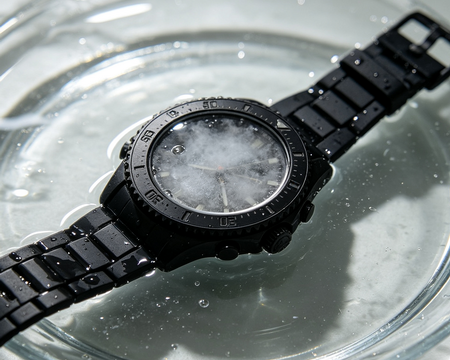
Omega successfully developed the world’s first truly anti‑magnetic movement, capable of withstanding intense magnetic fields exceeding 1.5 Tesla (15 000 Gauss). Its anti‑magnetic performance far surpasses that of all previous watch models.
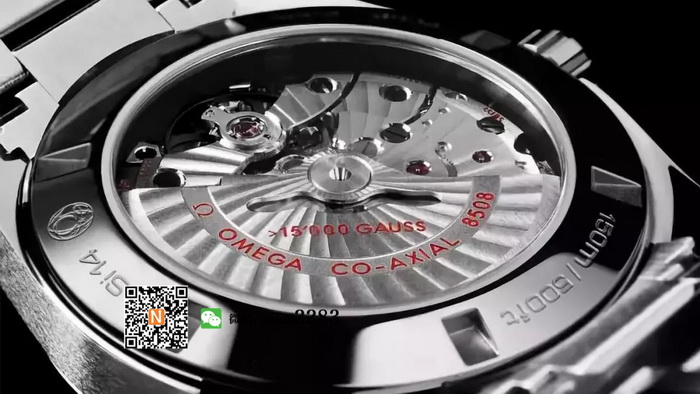
Omega adopts an innovative anti‑magnetic concept, manufacturing all key movement components from non‑magnetic materials, such as the balance staff and pivot points. Omega Co‑Axial Master Chronometer movements are fitted with the non‑magnetic Si14 hairspring, while the balance shock‑absorber springs are made of metallic glass.

Traditional anti‑magnetic watches relying on a soft‑iron inner case cannot feature display case‑backs or dial cut‑outs. In addition, their hand arbors have to be made extremely thin. By contrast, Omega Co‑Axial Master Chronometer movements deliver exceptional anti‑magnetic performance while allowing the use of transparent case‑backs and calendar cut‑outs on the dial.
Jaquet Droz Grand Feu Enamel
Precious Jaquet Droz timepieces are still preserved in the Palace Museum Clock Museum today. The brand shares a legendary history spanning more than 200 years with China. Among Jaquet Droz’s watch‑making crafts, the Grand Feu enamel technique stands out as most breathtaking. The brand excels particularly at decorating Grand Feu miniature enamel dials with intricate miniature painting.
Enamel, fused from mineral substances, boasts multiple merits. It features unique lustre and translucency, together with outstanding chemical stability. Hard, air‑tight and water‑impermeable by nature, high‑quality enamel works can be preserved for centuries without deterioration.

Colours are applied in sequence from light to dark, starting with warm tones, using shades from one colour family at a time. After applying one set of hues, the piece is fired inside an 800‑degree kiln to melt the enamel. It is then taken out for natural cooling before the next layer of colour is added. Each colour layer has to be repeated three times to achieve a perfect finish. Accordingly, the dial undergoes as many firing cycles as the number of colours it contains.
Franck Muller Crazy Hours
Creativity can be found everywhere, and some watch brands have pushed boundaries with bold concepts. Conventional watches are designed for quick, straightforward and legible time‑reading. However, master watchmaker Franck Muller created the Crazy Hours watch, which defies established dial‑display conventions by rearranging the Arabic numerals across the dial.

Colours are applied in order from light to dark, starting with warm tones, with only one colour family used for each coating. Once one colour family is applied, the dial is placed in an 800‑degree kiln to melt the enamel. It is then removed for natural cooling before further colour application. Each colour layer must be applied and fired three times to achieve an impeccable finish. Therefore, the dial goes through as many firing sessions as the number of colours it bears.
Franck Muller Crazy Hours
Creativity abounds, and certain watch brands bring wildly imaginative concepts to life. The primary requirement for conventional watches is fast, intuitive and legible time‑reading. Yet master watchmaker Franck Muller created the Crazy Hours timepiece. Strikingly, it breaks conventional dial‑display rules by rearranging the Arabic numerals on the dial.

Even though the numerals on the Crazy Hours dial are rearranged, time‑reading remains straightforward. The minute hand rotates clockwise to indicate the minutes. The key lies in the jumping‑hour hand: whatever Arabic numeral this hand points to represents the current hour.
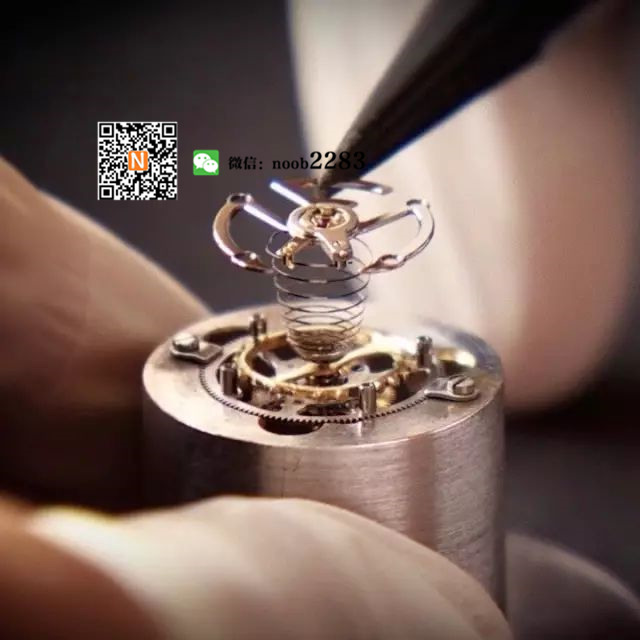
The three‑layer wheel is the key to its “chaotic jumping” function. The top layer is a five‑toothed wheel segment that meshes with the hour wheel teeth. When the cam at the bottom of the three‑layer wheel reaches its limit position, the assembly snaps into instantaneous rotation. Its five teeth advance the hour wheel across five hour markers, translating to a 150‑degree jump of the hour hand on the dial, marking the start of the next cycle.
Eberhard & Co. Four‑Wheel‑Drive Chronograph
Four‑Wheel‑Drive is a patented watch‑making innovation. Eberhard & Co.’s revolutionary Four‑Wheel‑Drive chronograph layout introduced the world’s first chronograph with horizontally aligned sub‑dials. The sub‑dials for minutes, hours, 24‑hour indication and small seconds are arranged in a straight horizontal line, representing an unprecedented patented solution in horology.
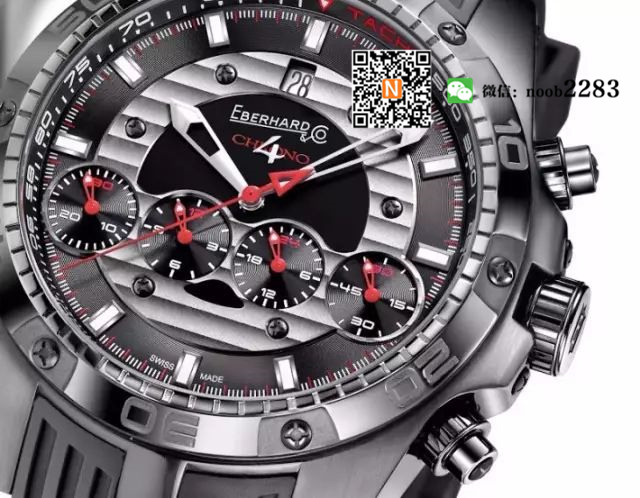
This distinctive design features four chronograph sub‑dials powered by a single movement. It cleverly employs add‑on modules arranged on the dial side, a more straightforward and efficient solution than modifying the base movement itself. Every design detail plays a decisive functional role.
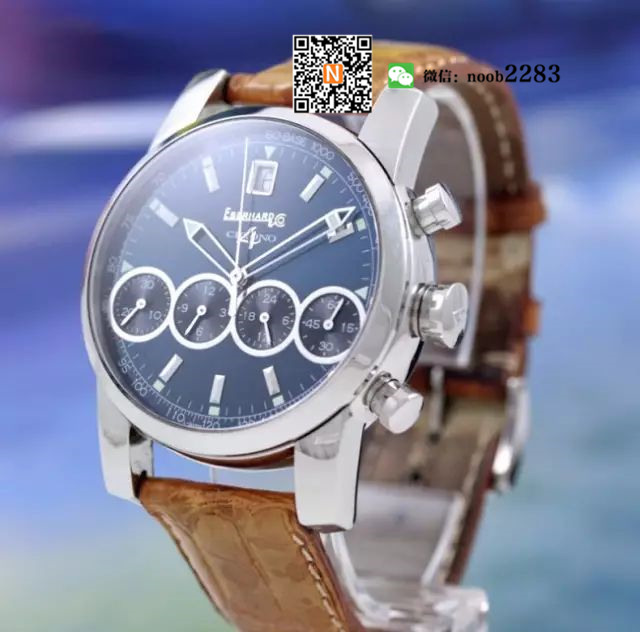
The horizontally‑aligned four chronograph sub‑dials deliver a striking visual presence and a strong sporty character. This collection has since become an emblem of Eberhard & Co., holding a unique position in the global watch industry.
Chronoswiss Guilloché Pattern
As one of the co‑founders of the mechanical watch revival, Chronoswiss ranks among the few watch brands that persist in using mechanical movements. Chronoswiss timepieces boast a clear design philosophy and exquisite aesthetics, with its iconic onion‑shaped crown offering instant recognizability. Nevertheless, the brand’s extraordinary craftsmanship is best reflected in its exclusive guilloché patterns.
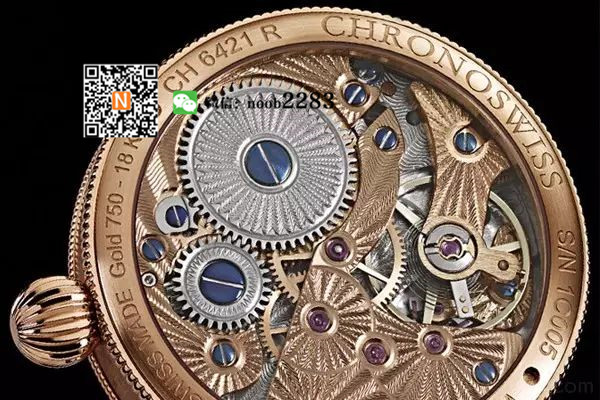
Guilloché engraving refers to carving overlapping and interlaced geometric shapes and patterns onto metal. During the 16th‑18th centuries, this highly‑demanding craft was mostly seen on artisanal pieces made for European royalty and nobility. Innovative watchmakers subsequently developed high‑precision guilloché engraving machines operated solely by manual force, which were used to create guilloché ornamentation on dials and cases.
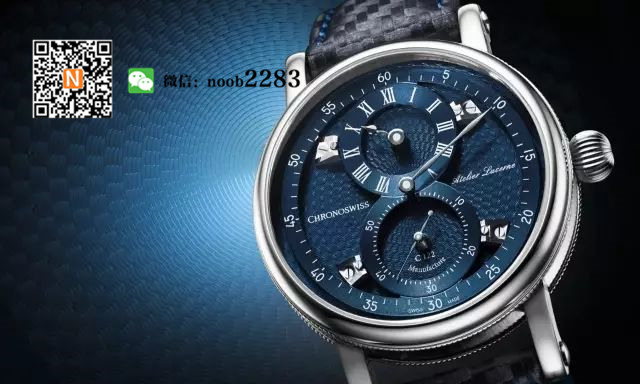
The curvilinear guilloché engraving machine used in Chronoswiss’s dial workshop requires watchmakers to operate it with steady arms, carving elegant and timeless classical patterns onto cases, dials and even movement components.
Mühle Glashütte’s Woodpecker‑Neck Regulator
In the world of fine watchmaking, the presence of a regulator is a distinctive feature of luxury timepieces. The Woodpecker‑Neck regulator featured here is an exclusive patent of Mühle Glashütte and represents an outstanding regulating system for mechanical watches.

Mühle Glashütte’s “Woodpecker‑Neck Regulator” gets its name from the spring, whose contour resembles the neck of a woodpecker. The Mühle Woodpecker‑Neck Regulator consists of five components: the specially shaped Mühle balance cock, the woodpecker‑neck spring, the woodpecker‑neck index pointer, the regulating screw, and the locking screw for the regulating screw.
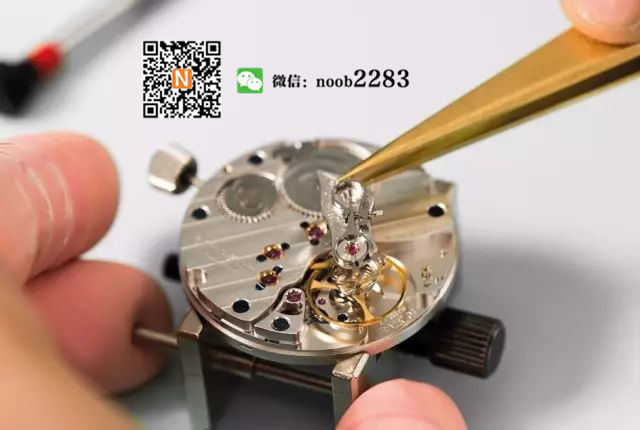
Mühle watches rely on the elasticity of the steel hairspring to act upon the index assembly. The Woodpecker‑Neck Regulator causes the index assembly between the regulating screw and counter‑spring to spring upward. The specially shaped spring of the Woodpecker‑Neck Regulator prevents forward displacement of the index, allowing the index to rest diagonally against the regulating screw and sit firmly on the balance cock. By controlling the amplitude of the balance wheel, the Woodpecker‑Neck regulating mechanism helps guarantee consistent timekeeping accuracy of the movement even under harsh conditions.