I often hear watch‑lovers complain: “My mechanical watch that cost tens of thousands keeps worse time than a cheap quartz watch worth just a few hundred dollars — isn’t that frustrating?” This raises a question: does a time‑keeping error automatically mean your watch has a quality defect?

Inaccuracy in time‑keeping can happen to any mechanical watch. Although some watch‑makers today have developed technologies to greatly improve mechanical‑watch precision, time deviation remains an unavoidable issue for mechanical timepieces.
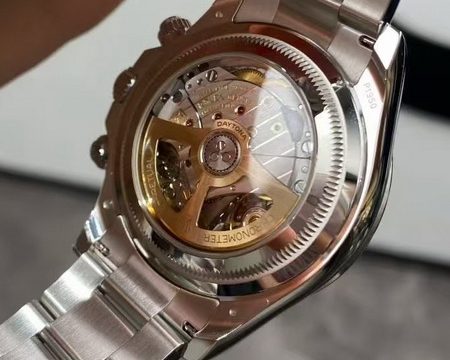
The generally accepted daily tolerance for a mechanical watch is ±15 seconds. Chronometer‑certified watches, which have strict requirements for movement, materials and hand‑finishing, must keep their daily time error within 5 seconds.
So why do mechanical watches lose or gain time? Here is a quick summary!
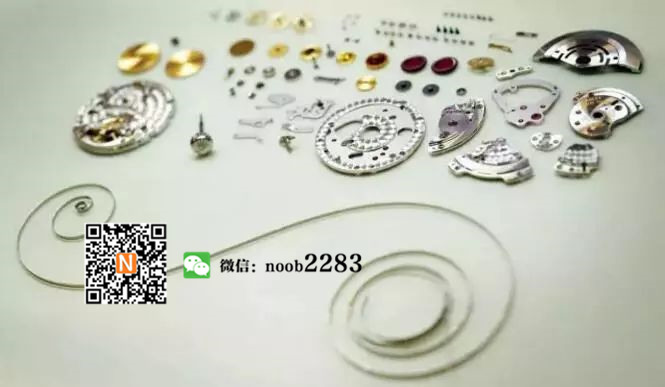
Friction usually produces both positive and negative effects. On the positive side, examples include friction between the sliding clutch wheel, friction between the mainspring and barrel in an automatic watch, and screw self‑locking. On the other hand, friction reduces transmission efficiency and causes component wear, which impairs timekeeping performance.
Common counter‑measures include improving lubrication conditions, selecting different lubricants according to various requirements, adopting jewel bearings or washers, and optimizing gear tooth‑surface conditions — such as applying scientifically designed conjugate tooth profiles and raising surface finish standards. Generally, however, no lubricant is applied to gear tooth surfaces.
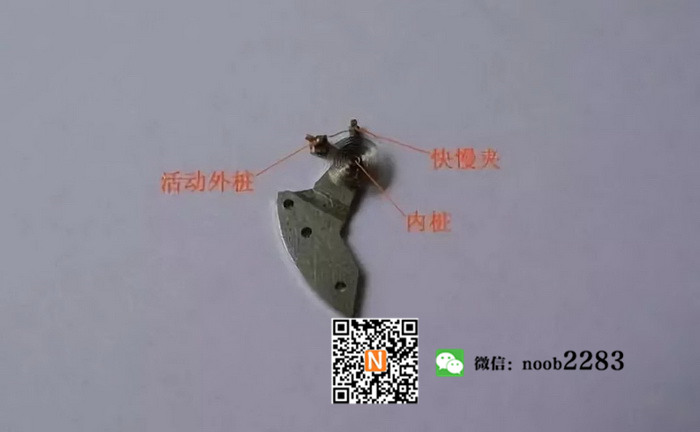
The regulator is the most widely‑used device for adjusting a watch’s accuracy. It adjusts the watch speed by controlling the effective working length of the hairspring, and can simply be shifted left or right during adjustment.
A typical regulator assembly consists of four components:
- Eccentric screw for fine adjustments
- V‑shaped tip of the regulator lever
- Movable outer stud
- Hairspring index clamp
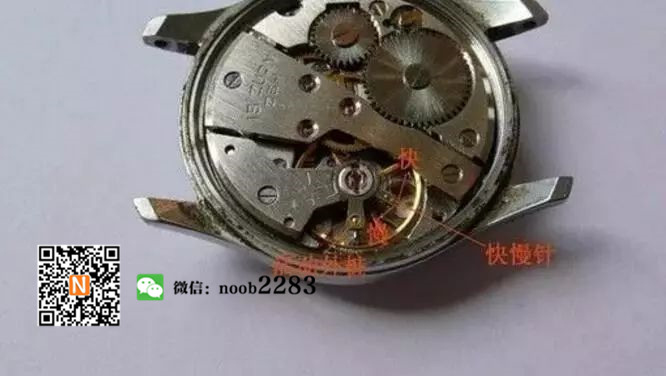
When a watch is subjected to shock, the hairspring undergoes increased deformation during expansion and contraction. This makes it prone to shifting, which causes unexpected gains or losses in time‑keeping. Meanwhile, watchmakers often struggle to judge the exact adjustment angle required during regulation.
Watches fitted with a regulator featuring an eccentric‑screw adjustment mechanism are generally not high‑end pieces. Among luxury brands, only Ulysse Nardin tends to retain this type of assembly on movements modified from ETA bases.
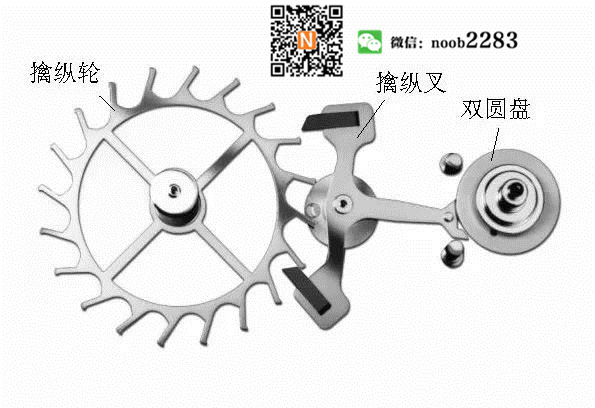
The escapement is a mechanical assembly located between the train wheel system (first‑to‑fourth wheels) and the regulating system (balance wheel and hairspring) inside a mechanical watch.
The meaning of escapement can be easily interpreted literally: to catch and release, to hold and free. This catch‑and‑release mechanism — the escapement — is the very soul of the mechanical timepiece.

This is due to its two vital functions within a mechanical watch. First, the escapement periodically delivers energy supplied by the main‑spring system to the balance‑wheel‑hairspring assembly, sustaining its undamped oscillation. Second, the escapement transmits the vibration count of the balance‑wheel‑hairspring system to the indicating mechanism for time‑measurement purposes. Consequently, the performance of the escapement has a direct impact on the time‑keeping accuracy of a mechanical watch.

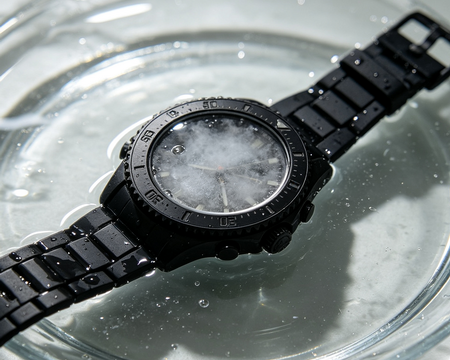
Since most movement components of a watch are made of metal, they can easily become magnetized by everyday items such as mobile phones, chargers and speakers. Magnetization affects the balance‑wheel‑hairspring assembly inside the watch. Once the hairspring gets magnetized, its coils will stick together. In mild cases, the watch’s time‑keeping accuracy suffers; in severe cases, the watch may stop running completely. After the hairspring has been magnetized, you will need a watchmaker to demagnetize the watch with professional demagnetizing equipment to restore its normal operation.
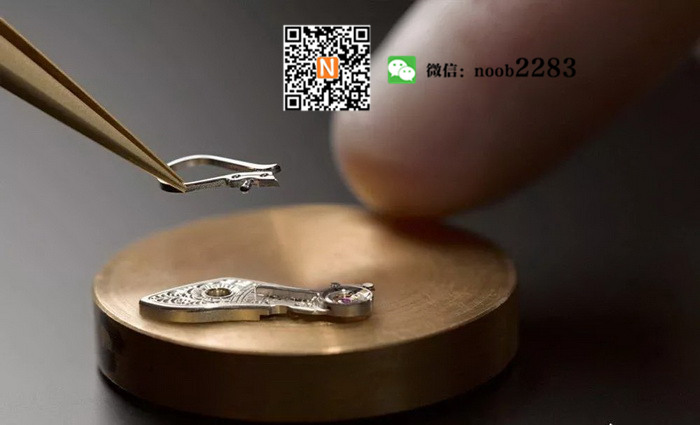
Temperature variations alter the effective working length of the hairspring as well as the inertia of the balance wheel, which directly impacts time‑keeping accuracy. Furthermore, temperature changes affect the viscosity of lubricating oil and reduce transmission efficiency, resulting in timing deviations.
Temperature compensation can be achieved by manufacturing the hairspring and balance wheel from special alloy materials, so that stable performance is maintained within the operating‑temperature range of 8°C‑38°C. Temperature compensation can also be implemented by adjusting the regulator.
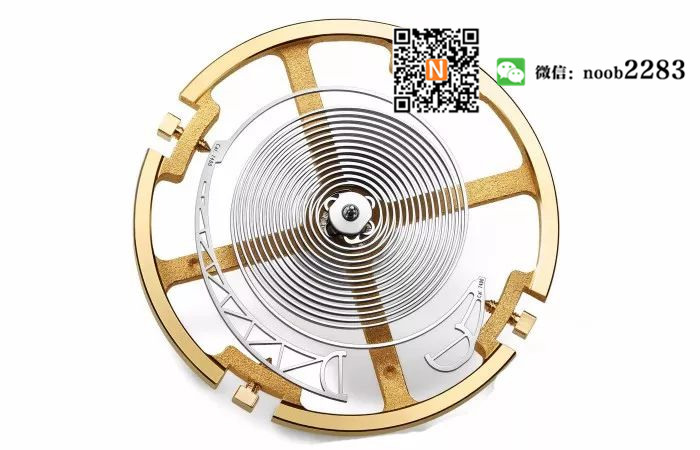
For a conventional flat hairspring, its center of gravity shifts with the swing‑angle of the balance wheel, giving rise to positional errors under the influence of gravity.
The Breguet overcoil hairspring features an inward‑curled terminal coil, keeping its center of gravity unchanged regardless of the balance‑wheel amplitude. The cylindrical hairspring with Phillips terminal curve is installed with top‑and‑bottom symmetry. Straight hairsprings are another alternative. Spherical hairsprings were experimented with in history; although they deliver excellent performance, poor manufacturability has limited their practical application.