A watch’s accuracy is affected by many factors. Once the daily time deviation exceeds 10 seconds, the cumulative error over time will become noticeably obvious to the wearer, and fine‑tuning will be required at that point. Therefore, the regulator used to adjust timekeeping performance is a critical component for judging a watch’s quality.
The same movement can be graded differently depending on the type of regulator fitted. For instance, the widely‑used ETA movements are classified into standard, enhanced, top‑grade and chronometer versions according to their hairspring, balance wheel, shock absorber and regulator assembly. What types of regulator mechanisms are there exactly? Today, Lao Wei will walk you through this knowledge.
Balance‑spring
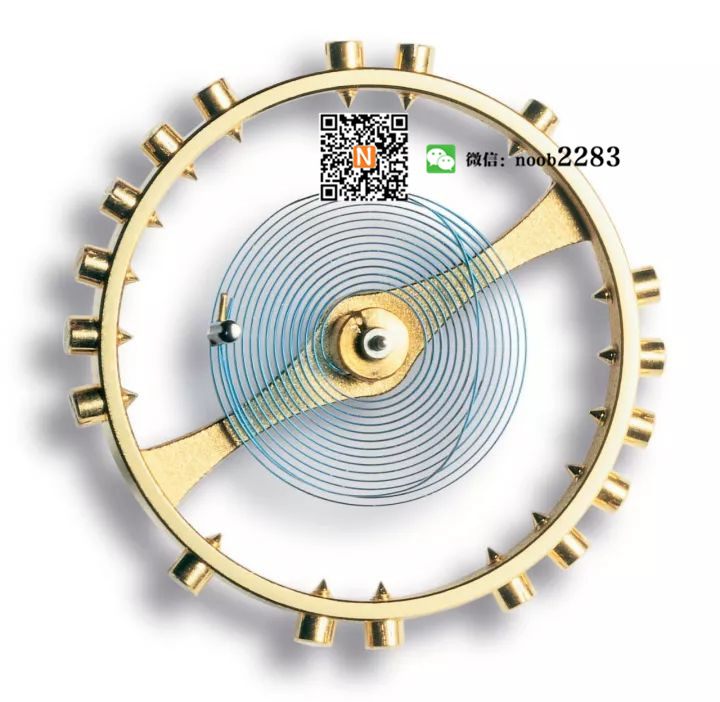
Nearly all modern mechanical watches are designed and manufactured based on the properties of the balance‑spring assembly. The condition of the balance‑spring directly determines the timekeeping accuracy and stability of a watch, making it one of the most intricate parts inside a timepiece. Two elements govern the periodic oscillation of the balance‑spring: the hairspring and the balance wheel. A watch’s regulator mechanism achieves adjustment by acting upon these two components, mainly by controlling the effective length of the hairspring.
Regulator with index (Slow‑Fast Index / Index Regulator)
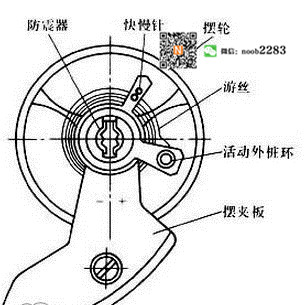
The index regulator is the most widely‑used method for adjusting watch accuracy. It adjusts the watch’s timekeeping rate by controlling the effective working length of the hairspring, simply by shifting it left or right. A typical index regulator consists of four parts:
- Eccentric screw for fine adjustment
- V‑shaped tip of the regulator clamp
- Movable outer stud
- Hairspring index clamp
How does the effective working length of the hairspring affect a watch’s running speed?
As we know, the condition of the balance‑spring assembly directly determines a watch’s timekeeping accuracy and stability, and it represents one of the most sophisticated sections within a watch. Two factors govern the oscillation cycle of the balance‑spring: the hairspring and the balance wheel.
With the balance wheel unchanged, a longer effective working length of the hairspring means more time for the balance wheel to complete each back‑and‑forth oscillation. Since the gear train inside the watch remains constant, the watch will run slower. The opposite effect applies as well.
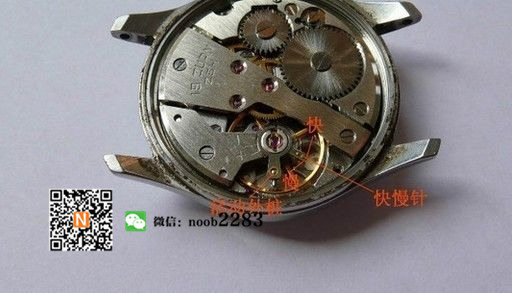
For example, a watch may sometimes become magnetized. Magnetization causes the hairspring coils to stick together, shortening its effective working length, which naturally makes the watch run fast. Watchmakers therefore adjust time‑keeping rate by altering the hairspring’s working length. When the watch runs slow, they shorten the effective length of the hairspring.
The index regulator is theoretically not the ideal solution and comes with inherent drawbacks. Under shock, deformation intensifies as the hairspring expands and contracts. The index can easily shift, causing unexpected gains or losses in time. Moreover, watch repair technicians find it difficult to gauge the exact angle of displacement during adjustment. Watches fitted with eccentric‑screw index regulators are generally not high‑end models. Among luxury brands, only Ulysse Nardin retains this mechanism on movements modified from ETA calibers.
High‑end variant of index regulator — Swan‑Neck Regulator
There is also a premium version of the index regulator: the well‑known swan‑neck regulator. It secures the hairspring clamp with a curved piece cut from solid steel, shaped much like a swan’s bent neck, hence its name. Apart from the swan‑neck design, pocket watches feature a similar snail regulator that serves largely the same purpose.
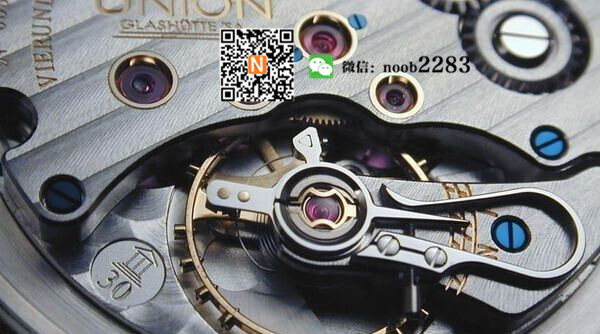
The swan‑neck regulator has three major functions. First, it firmly holds the index clamp. Versions with double swan‑necks can also secure the outer stud, preventing displacement caused by shocks. Second, it enables fine precision adjustments, allowing the watch rate to be accurately tuned to a satisfactory and accurate range. Third, today it serves largely as decorative ornament and heritage of watch‑making culture, embodying artistic value and reflecting the grade of a timepiece.
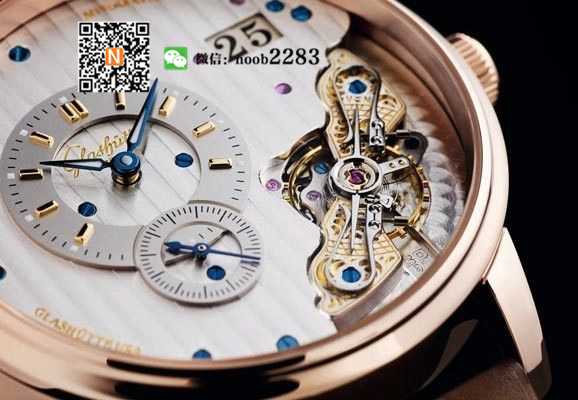
Today, the swan‑neck regulator has become a symbol of German watchmaking. A. Lange & Söhne features it as one of its signature elements. Glashütte Original has also invested heavily in swan‑neck regulators and even filed a series of patents to address hairspring deformation issues caused by conventional index regulators. Furthermore, Glashütte Original introduced the double swan‑neck regulator system. In an innovative move, it places this double swan‑neck assembly on the dial side of the watch, presenting wearers with unadulterated mechanical beauty.
Fine‑tuning by Adjusting Balance‑Wheel Weights / Free‑sprung Regulation
Fine‑tuning can be achieved by adjusting the balance‑wheel weights, targeting the balance wheel component.
The principle is straightforward. With the hairspring unchanged, a heavier balance wheel takes more time to complete each back‑and‑forth oscillation. Given the fixed gear train inside the watch, the timepiece will run slower. Conversely, a lighter balance wheel shortens the oscillation cycle, making the watch run faster while the gear train remains the same.
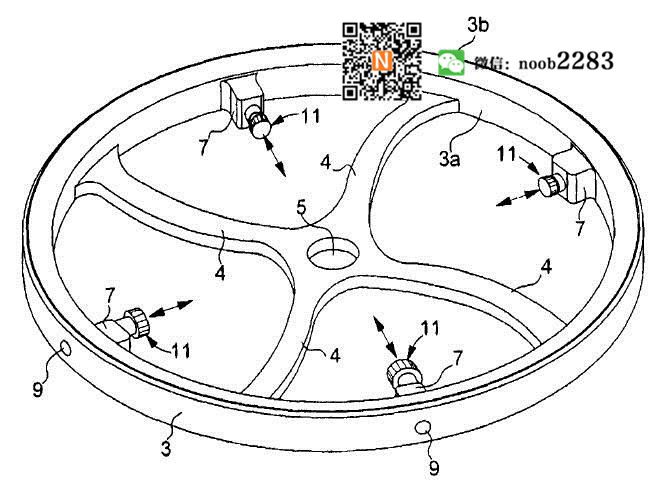
It should be noted that adjusting a watch’s time‑keeping rate via the balance wheel does not involve physically adding or removing mass from the balance wheel itself. Given its high level of precision, it is impractical to modify its weight after manufacturing. Watchmakers have therefore developed methods to adjust the adjustable weights fitted onto the balance wheel.
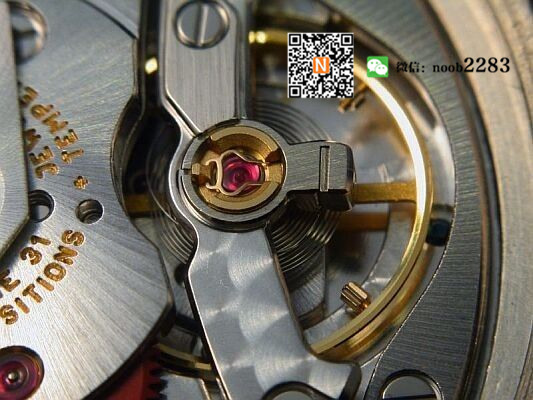
The so‑called “free‑sprung” design essentially means there is no index regulator. Timekeeping accuracy is adjusted by means of weights mounted on the balance wheel. These weights come in many forms and function much like timing screws. They are always paired in even numbers. Adjustment shifts the centre of mass of the balance wheel toward its centre or outer rim, thereby altering the oscillation period. Although widely known as “free‑sprung”, the term “weight‑adjusted balance wheel” would actually be more accurate.
This is implemented by fitting screws on the inner side of the balance wheel. Screwing them in or out produces the effect. The weight of the screws and the balance wheel itself does not change, yet their distance from the balance‑wheel centre is modified, which correspondingly alters the effective mass distribution of the balance wheel.
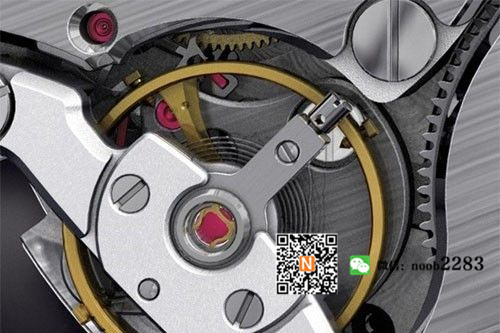
Compared with the index‑regulator system, the free‑sprung structure keeps the hairspring at a fixed working length, delivering much better stability and isochronism. If one has to point out its shortcoming, free‑sprung movements are generally fitted with Breguet overcoil hairsprings for superior concentricity, which makes the overall balance‑wheel assembly roughly 1 mm taller.There are two major free‑sprung systems: Rolex’s Microstella and Patek Philippe’s Gyromax.
Rolex Microstella free‑sprung mechanism, introduced in 1938
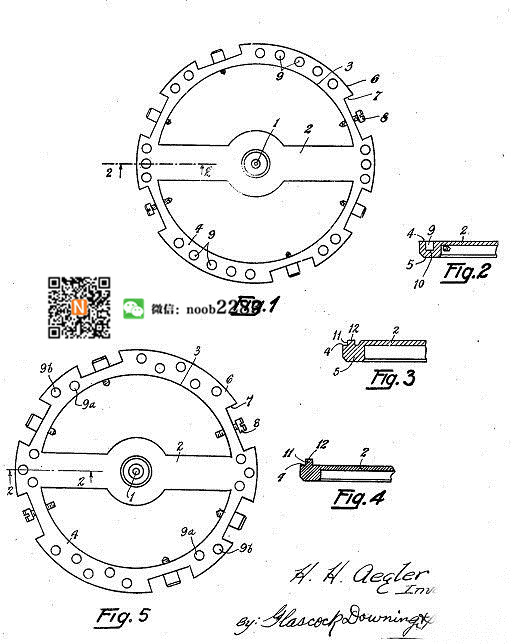
Rolex Microstella free‑sprung mechanism, covered by a US patent and used for 76 consecutive years
Rolex’s design features screw threads around the rim of the balance wheel, onto which gold‑plated nuts are turned. Much like Patek Philippe’s solution, early‑generation Rolex movements laboriously cut grooves along the balance‑wheel rim, with timing weights positioned on its outer edge.
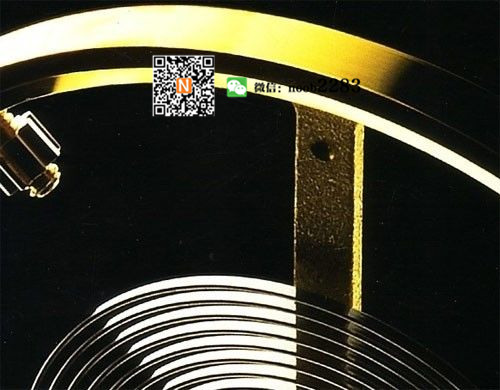
In the modern‑day Microstella design, the free‑sprung timing weights are located inside the balance wheel.
In modern‑generation Microstella regulators, the timing weights sit on the inner rim of the balance wheel. This greatly reduces manufacturing complexity while delivering identical adjustment performance and lower air‑resistance. Rolex filed the patent CHX2239668 for this technology on July 29, 1938. With a 20‑year term, the patent entered the public domain upon expiry, allowing free use by any manufacturer. The free‑sprung designs adopted by Panerai and Omega draw heavily from Rolex’s concept.
Patek Philippe Gyromax Free‑Sprung Mechanism, Introduced in 1948
When talking about free‑sprung regulation, the first thing that comes to mind is likely Patek Philippe’s iconic horseshoe‑shaped gold‑weight Gyromax regulator. The Gyromax is a remarkable mechanism that has been in service for more than 60 years and is still used even in modern silicon escapements. Rotating the notched opening toward the central axis of the balance wheel will cause the watch to run slower.
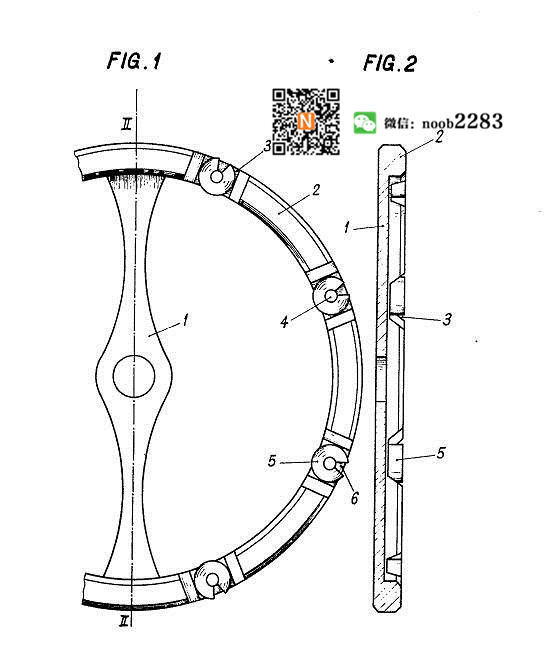
The Gyromax regulator weights are mounted on the balance wheel under Patek Philippe’s Swiss Patent CH280067A.
Patek Philippe most commonly fits eight masselotte timing weights on its balance wheels, though versions with four or six weights also exist. The silicon balance wheel found in PP’s in‑house chronograph movement 28‑520, based on the Cal.324 automatic caliber, uses only four gold timing masselottes. Do not underestimate these small weights: their adjustment can alter the amplitude by up to 180 degrees, compared to a typical normal amplitude of 270 degrees. This represents an impressively broad tuning range. Practical, reliable and aesthetically pleasing, the design remains in use to this day.