In ancient times, people felt awed and anxious about the waxing and waning of the moon. In modern‑day research, we have learned that the moon always keeps the same side facing the Earth throughout its orbit, with the visible area accounting for a steady 59 percent of the lunar surface. These facts lend the moon an air of mystery and make it an outstanding source of inspiration for sci‑fi designs.
Blancpain VILLERET Collection
Model No. 6664‑3642‑55B
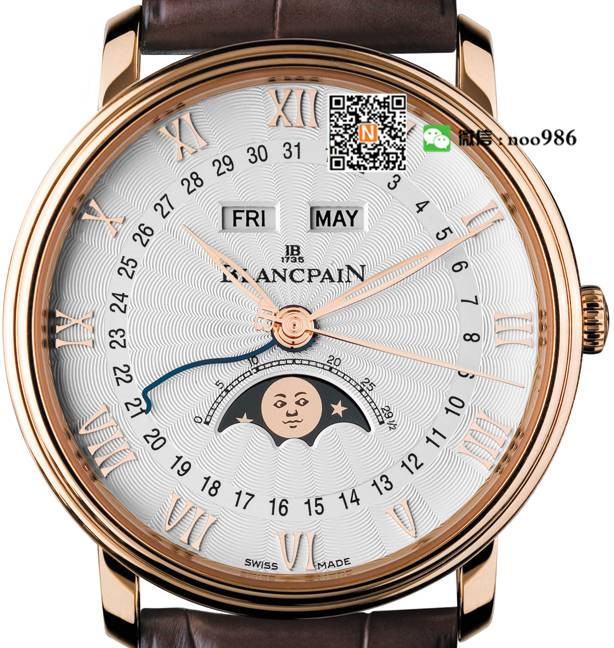
The origin of the moon‑phase watch remains an unsolved historical puzzle. The most credible hypothesis to date states that it was developed to meet maritime‑navigation demands. The watch‑making industry advanced rapidly owing to the indispensable role of timepieces in seafaring. Ocean tides are directly governed by lunar gravitational pull. Fluctuating tides exerted great influence over military tactics, ocean‑going voyages, marine fisheries and other sectors. Being able to read the lunar cycle could even save lives. This accounts for the emergence of the moon‑phase complication.
Glashütte Original PanoMaticLunar Collection Model: 90‑02‑42‑32‑05
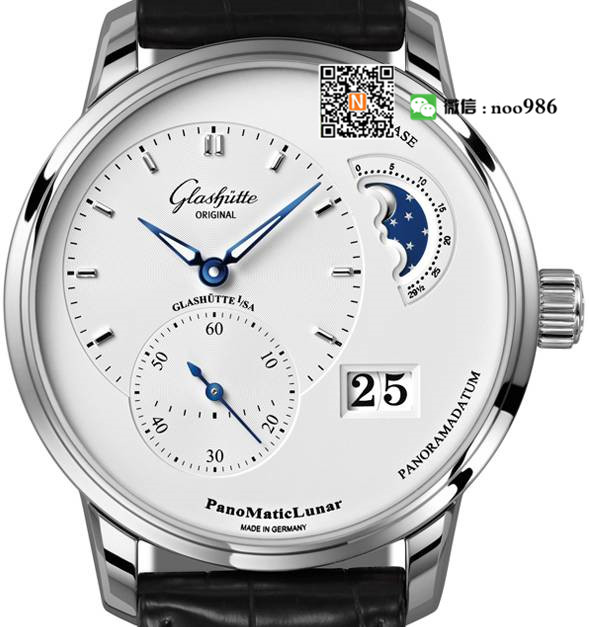
It can thus be seen that wearing a moon‑phase watch and keeping track of the lunar cycles of waxing and waning provides endless conversation topics for well‑rounded individuals. Nevertheless, many watch‑lovers are puzzled over how to properly read this enigmatic moon‑phase complication.
IWC Portofino Collection Model No. IW544801
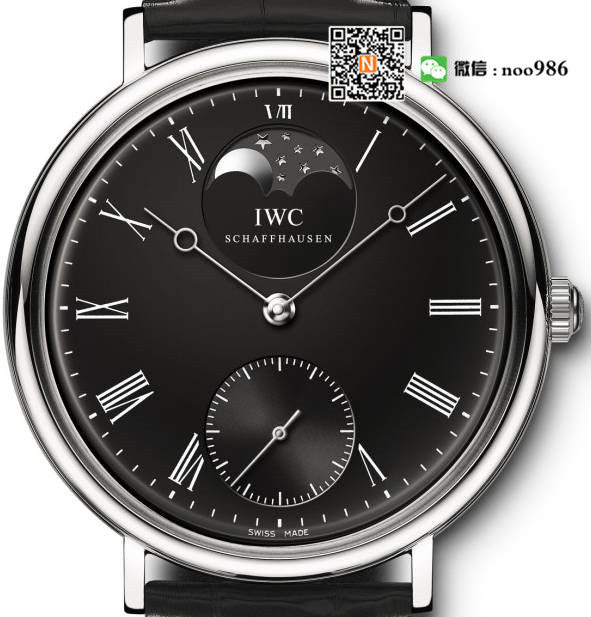
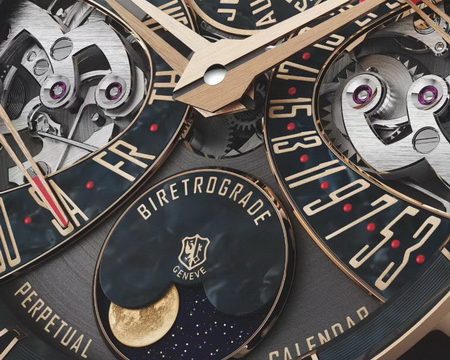
As its name suggests, a moon‑phase watch features a crescent‑shaped aperture on the dial, most commonly positioned at the 12‑o’clock or 6‑o’clock mark. This window displays lunar cycles including the new moon, first quarter, full moon and last quarter. The moon‑phase disk completes one full cycle based on the 29.5‑day lunar cycle. Two moon motifs are printed on the disk, whose outer rim carries 59 gear teeth. Driven by the drive wheel, the moon‑phase wheel advances one tooth per day, presenting the waxing and waning moon on the dial in a timely manner. The 59‑tooth wheel is designed around the average 29.5‑day lunar cycle. Since the actual lunar revolution cycle equals 28 days, 12 hours, 44 minutes and 2.9 seconds, a 24‑hour display deviation will accumulate roughly every 33 months. Recalibration is therefore required every three years.
Zenith Commander Collection Model No. 18.2140.691/02.C498
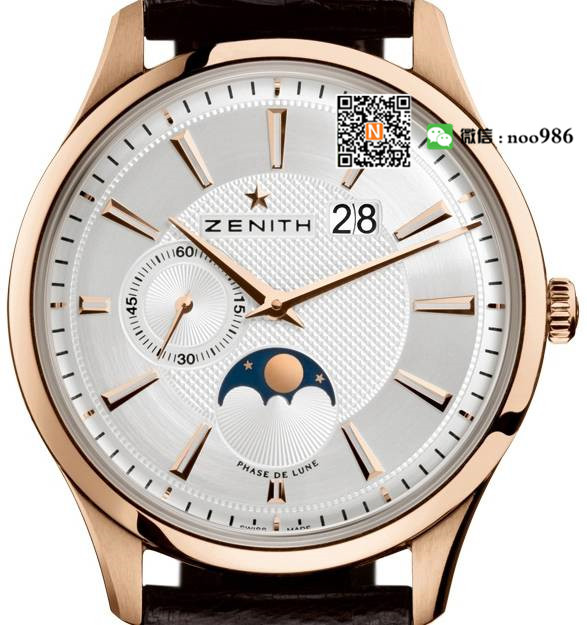
The most fundamental method for setting a moon‑phase watch is to follow the user manual. You will need to work it out yourself if the instruction booklet is unavailable. Use the full moon on the 15th day of the lunar month as your reference point. Align the moon graphic on the moon‑phase display to the centre, then make adjustments according to the current lunar date. For instance, suppose you need to set the watch to the second day of a lunar month and the previous lunar month has 29 days. Carry out the calculation: 29‑15+2. Add one extra day if the prior month is a 30‑day long lunar month. Adjustment is normally completed via the quick‑set pusher on the watch‑case flank or by turning the crown.
Ulysse Nardin Classico Collection Model‑No. 8293‑122B‑2/41
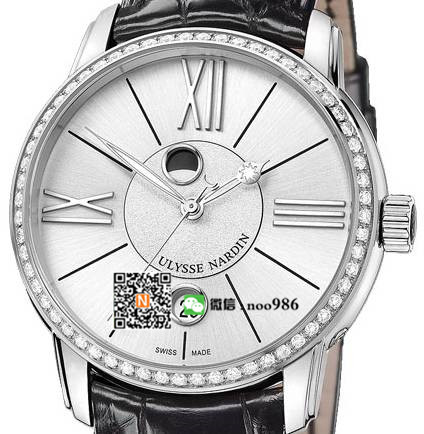
Moon‑phase watches feature dedicated setting principles and sensitive adjustment windows. Between 8 p.m. and 4 a.m., the gears connected to the quick‑set pusher of a mechanical watch stay fully engaged. Operating the quick‑set button during this period may easily cause component malfunction. For that reason, you ought to avoid carrying out adjustments within the 8‑p.m.‑to‑4‑a.m. window counted clockwise on the dial. Exceptions nevertheless exist: certain specialised timepieces take 12 o’clock as their sensitive setting zone. As a general rule, wind the watch hands to a time earlier than 8 p.m. or later than 4 a.m. before activating the quick‑set pusher to modify the date or moon‑phase display.