


Micro‑Rotor
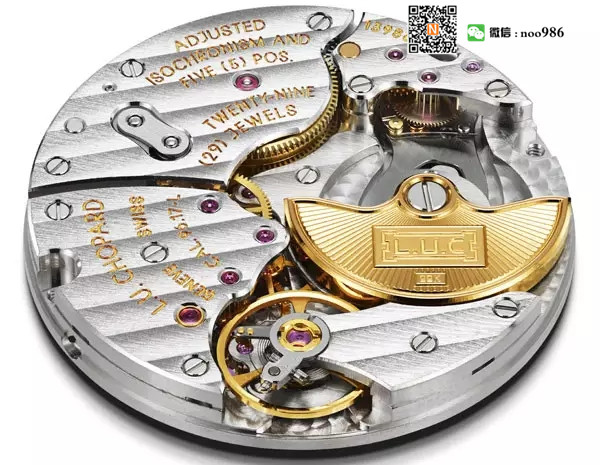
Horologists at Chopard’s Fleurier Manufacture have successfully engineered a micro‑rotor. They managed to fit a self‑winding mechanical movement, twin mainspring barrels and a 65‑hour power reserve within an ultra‑thin watch case, marking an outstanding horological achievement.
The bumper‑style rotor, inspired by a seesaw, features iron‑weighted ends. It carries out constrained circular motion driven by gravity to wind the watch movement. Owing to its unsatisfactory winding efficiency and other drawbacks, this design was phased‑out during industry evolution. Nowadays, it can only be found on certain vintage timepieces.

Omega launched the Constellation collection in 1952. The earliest Constellation models were equipped with the bumper‑rotor Cal.35 movement. This chronometer‑grade movement was crafted from red copper, boasting exquisite appearances and dependable service life.
Outer‑edge Rotor
The peripheral‑mounted rotor is a highly distinctive variant. Shaped like a curved strip, it travels along the outermost rim of the movement against the inner watch‑case wall. This leaves the entire central area of the movement unobstructed for viewing.

Carl F. Bucherer’s Patravi collection serves as a typical representative and delivers distinctive visual appeal. With this patented design from the distinguished watch‑maker, the bulky oscillating weight is downsized into a curved black segment. It slides along the movement’s outer rim under gravitational pull to supply winding power for the timepiece.
Special‑shaped Rotor
Most irregular‑shaped rotors are derived from the conventional crescent‑style rotor. Cut‑out hollow‑out work is made on the crescent‑shaped surface to create a wide range of open‑worked patterns.
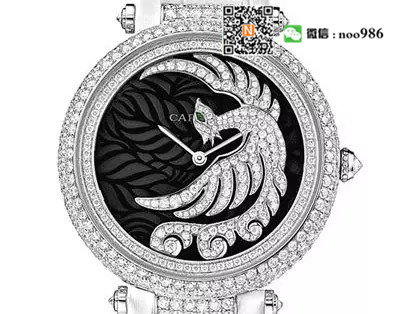
Cartier excels the most when it comes to special‑shaped rotors. The brand fashioned a phoenix‑shaped rotor encrusted with diamonds, moving this component from the discreet case‑back onto the eye‑catching dial. The watch gets wound imperceptibly as the phoenix‑shaped rotor rotates. The design boasts outstanding ornamental value alongside practical functionality. Such ingenious and bold craftsmanship is truly admirable.
Vertical Rotor
The vertical‑axis rotor is an exclusive design belonging to Corum, the well‑known Swiss watch brand, for its Golden Bridge collection. First introduced in 1980, the timepiece stood out among watch enthusiasts thanks to its distinctive rotating vibration and one‑of‑a‑kind novelty.

The Corum Golden Bridge collection features a classic transparent linear‑shaped movement structure and superbly‑crafted gold base plates and bridges. It constantly evokes the Golden Gate Bridge, the source of inspiration for its movement. Boasting well‑proportioned dimensions, the collection sits comfortably on the wrist.