Origin of Hallmarks
Since ancient times, precious metals have served as currency or currency equivalents in commodity trade. Gold, in particular, has long acted as the fundamental guarantee for the value of a nation’s currency, depending on its reserves. Unregulated production and circulation of gold articles could therefore impact financial markets at national, regional and global levels.
As early as antiquity, many nations recognised the need to establish laws governing the manufacturing and trading of gold goods. Specialised inspection and appraisal authorities were set up to impose strict controls over the quality and purity of gold and other precious metal products. This practice aimed to stabilise the financial order, while also protecting consumers.
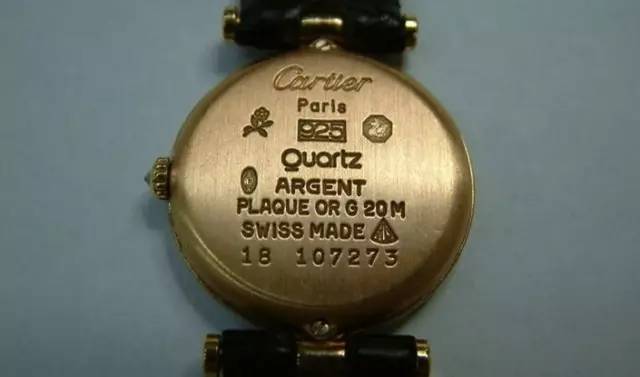
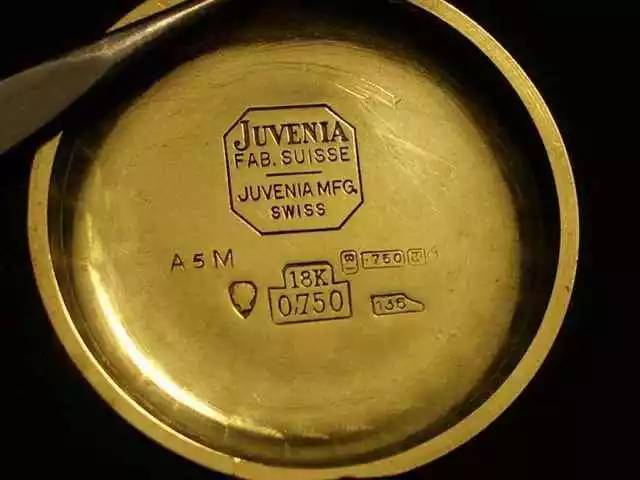
One of the earliest methods of regulating precious metals was to stamp hallmarks onto them. This allowed the metal purity to be identified at a glance and made it simple to trace the manufacturer.
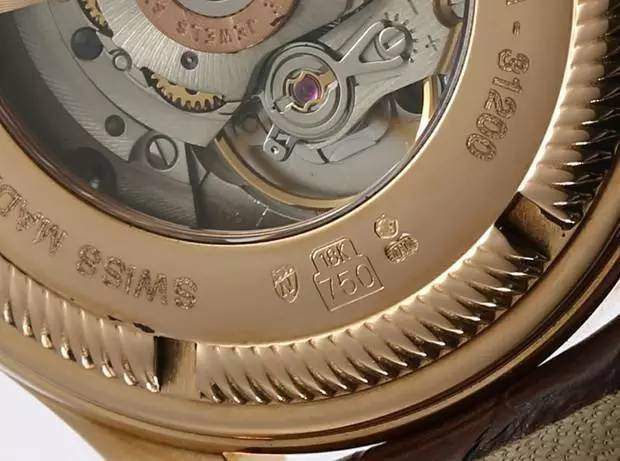
France began applying hallmarks to gold artifacts as early as the late 13th century. To this day, more than 3,000 different hallmarks have been used across Europe. Initially, every goldsmith and silversmith was required to possess an individual hallmark, signifying accountability for the purity of their wares.
Later, the French government mandated that each guild create a unique hallmark distinguishable from those of other guilds. Articles would then be submitted for purity verification. After inspection, an official hallmark would be struck onto the piece. This system clarified accountability for all parties and helped safeguard consumers’ rights.
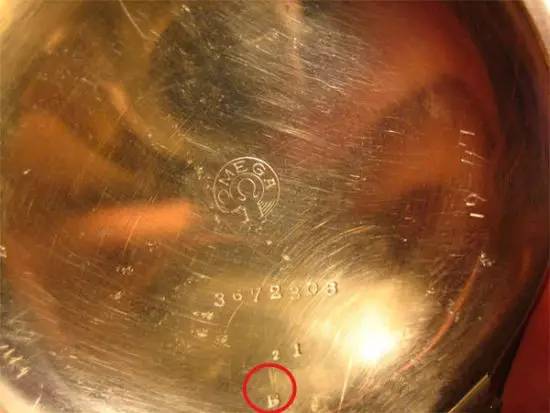
In concrete terms, this system employed different letters of the alphabet for identification, cycling sequentially starting from the letter A. The letters J, V and W were omitted from use, resulting in a new set of letter fonts every 23 years. Variations included bold, regular, script and cursive typefaces. This system was later introduced to Britain. For simpler record-keeping, X, Y and Z were also excluded, adjusting the cycle length to 20 years. These distinct letter fonts make it possible to determine the year an item was submitted for assay. Thanks to this method, the production year of many antique pocket watches can be traced.
Swiss Hallmarks
Since Swiss watches constitute the majority we encounter, we will focus primarily on Swiss hallmarks. Switzerland adopted hallmarking in the mid-18th century. Unlike other systems, hallmarks found on Swiss watches cannot be used to date pieces; they solely serve as a guarantee of precious metal purity.
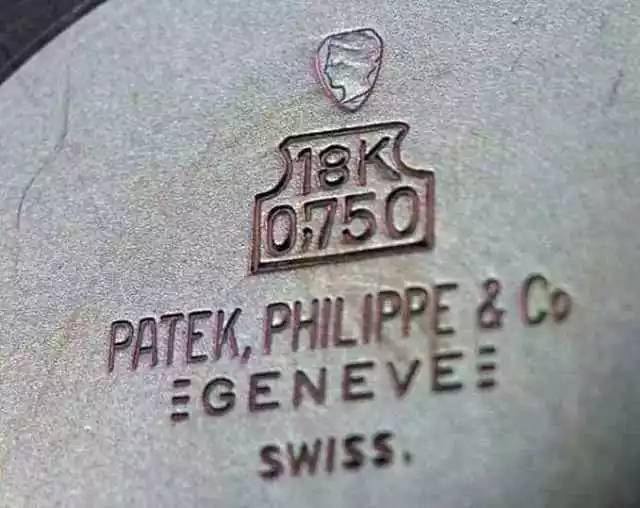
The most common motif is the profile bust of Helvetia, the national personification of Switzerland (commonly known as the Queen’s Head), which signifies 18-karat gold (0.750 purity).
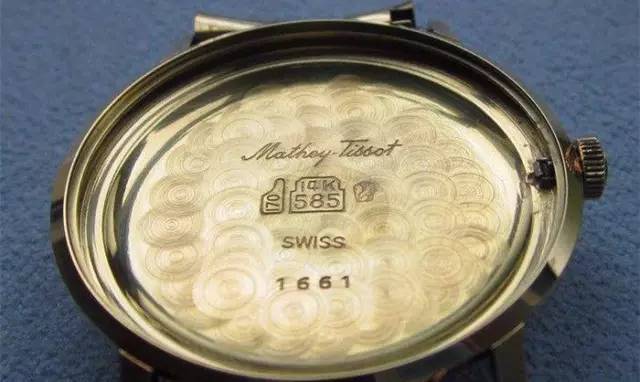
The squirrel hallmark represents 14-karat gold (0.585 purity).
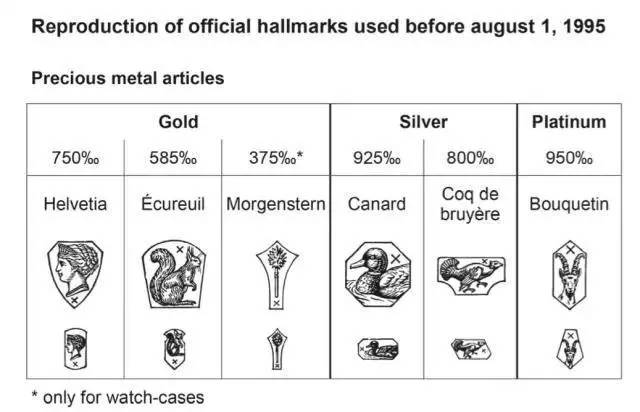
Swiss Watch Case Hallmarks Prior to 1995
For Swiss watches manufactured for overseas export, the Lynx Head mark was adopted. The numeral “1” stamped between the lynx’s ears denotes 18-karat gold, while the numeral “2” indicates 14-karat gold.10K gold (0.417) and 9K gold (0.375) are identified by a symbol shaped like a sword with an ornate floral motif inside.
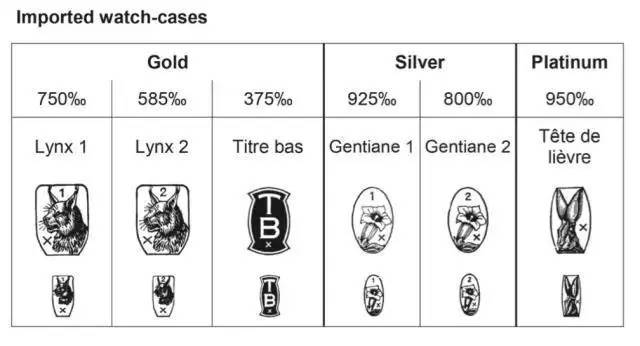
Swiss Watch Case Hallmarks Prior to 1995
Different animals were used as marks for silver depending on its purity grade. Silver of 0.935 purity bears a lion hallmark; 0.925 silver (sterling silver, the widely seen 925 standard, commonly referred to as pure silver) is marked with a wild duck; and 0.800 silver uses a turkey mark.
The most common platinum alloy is Pt950 (0.950 purity). Pt900 and Pt850 variants exist as well; these are mostly utilized in jewelry and rarely applied to watchmaking. Platinum is identified by the goat’s head hallmark (commonly nicknamed antelope head).
Regarding balance scale hallmarks for material certification: the precious metals associated with wristwatches mainly cover gold, silver and platinum. Under current regulations, hallmarks for these three metals are enclosed in differently shaped borders.
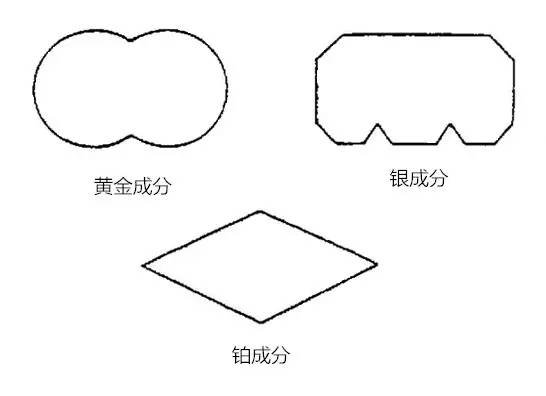
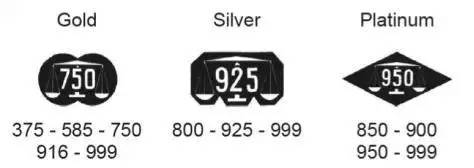
Drawings of Various Balance Scale Hallmarks

Maker’s Mark
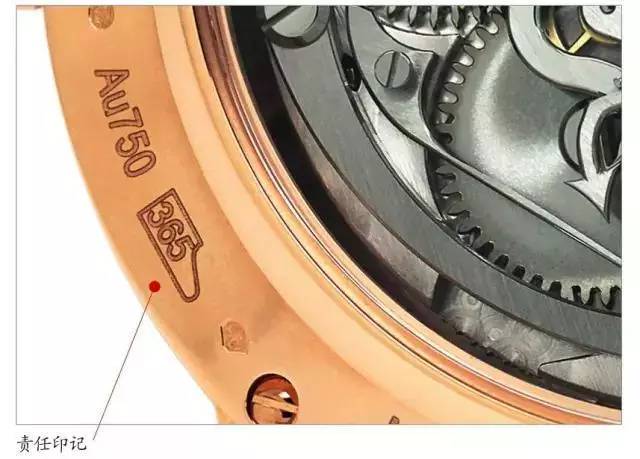
The number at the center of this “hammer” hallmark identifies the producer of the precious metal component, usually indicating a specific region.
Modern Hallmarks
Some readers may wonder: you’ve been talking about hallmarks, yet I cannot find any of them on my watch. That is absolutely correct. All those older hallmarks were fully discontinued in 1995. After 1995, a brand-new hallmark was adopted, the St. Bernard dog’s head hallmark we see nowadays.
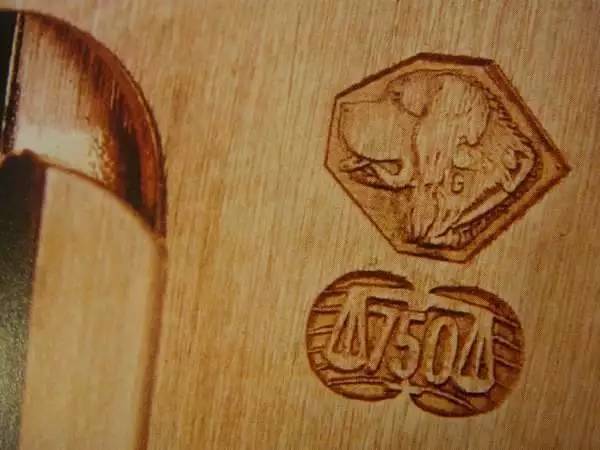
St. Bernard’s Head Hallmark
When Switzerland revised its regulations on precious metal hallmarks in 1995, it stipulated that the profile of the St. Bernard, the country’s national dog, would serve as the exclusive mark for Swiss-made precious metal articles. The internationally recognised balance symbol denotes the material, accompanied by numbers and lettering to indicate purity.
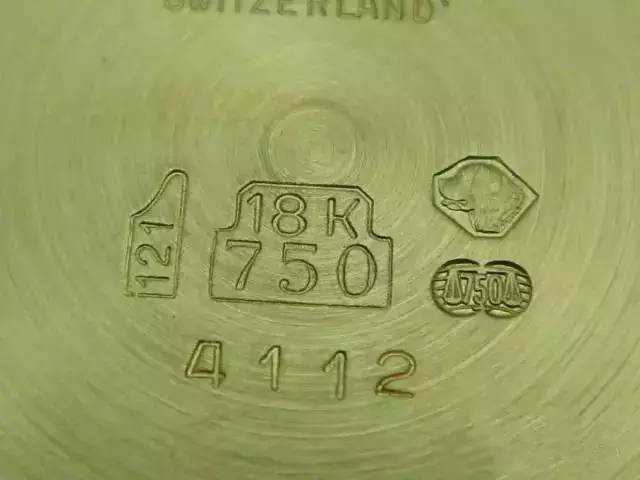
From then on, modern Swiss gold watch cases bear four hallmarks: the St. Bernard’s head, the balance symbol for material type, the purity mark, and either the maker’s responsibility mark or the manufacturer’s trademark.
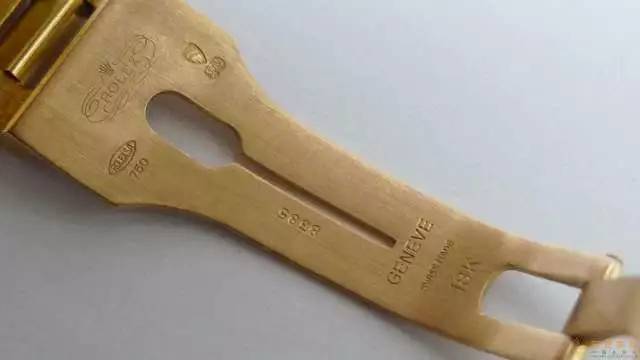
These common hallmarks can be found on the case back, lugs, clasp and other locations. Use a magnifying glass if they are hard to discern.
Switzerland’s Precious Metal Purity Act, enacted on January 1, 1888, mandated that all precious metal items must be stamped for accountability. Therefore, if these hallmarks are absent, a watch with a golden appearance is generally only gold-plated. Models crafted from stainless steel will be inscribed with “STAINLESS STEEL”.