When a watch falls from a height of one meter, its balance wheel endures an impact force equivalent to 5,000 times its own weight. The balance wheel is the most delicate component inside the entire movement.
For this reason, shock-absorbing systems are indispensable for wristwatches. These components protect timepieces from malfunctions triggered by shocks and vibrations. The watch escapement assembly functions as the “heart” of a watch and ranks among its most fragile structures. Shock absorbers are engineered specifically to shield the escapement mechanism. While they cannot deliver complete immunity against shocks, they absorb a portion of external impact force and minimize damage inflicted on the watch by vibration.
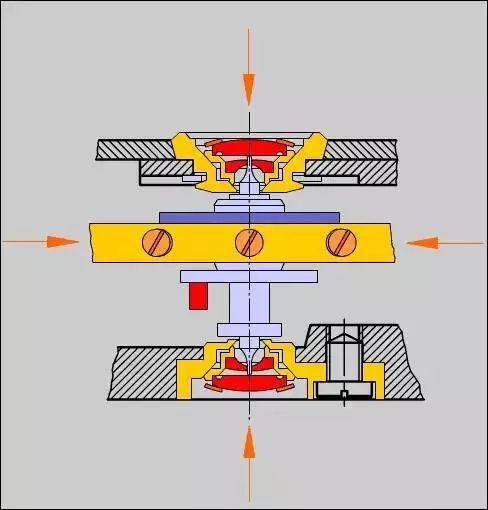
Working Principle of Watch Shock Absorbers
Impact and vibration forces acting upon a watch generally fall into three typical directions: axial, radial and lateral. The shock absorber base forms a 45-degree inclined fit with the shock absorber jewel setting, allowing sliding displacement. The jewel setting is commonly known as the shock bowl. As the shock bowl slides along the inclined surface of the absorber base, the shock spring bulges and deforms to absorb impact energy transmitted from the balance staff. Afterwards, the thicker lower section of the balance staff pivot collides with the inner edge of the hole on the shock absorber base. The shock absorber safeguards the hairline-thin pivot of the balance wheel against forces coming from all directions.
Breguet Shock Absorber, invented in 1790
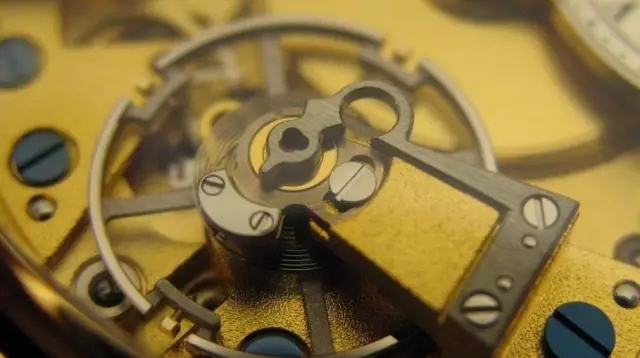
Mr. Breguet invented the parachute suspension shock absorber. It is widely acknowledged that Mr. Breguet was the originator of the first watch shock absorber.
Incabloc Shock Absorber, 1933
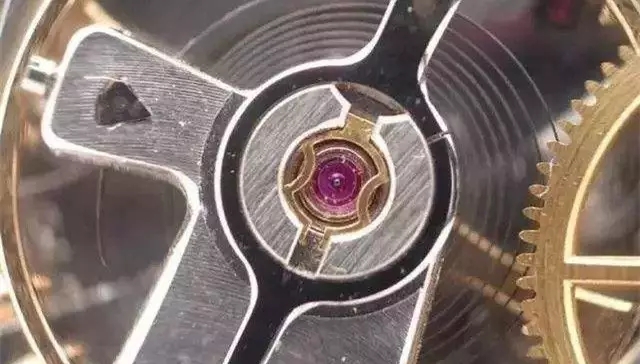
In 1933, Switzerland’s Universal Escapement Company launched the Incabloc shock absorber, commonly referred to as the horseshoe-style shock absorber. This shock absorber is widely adopted across numerous mainstream movements, including the popular calibers 2824, 2836 and 2892. Incabloc is a registered trademark for Swiss-manufactured anti-shock systems for watch movements. Its structure resembles a circle with two cutaway corners that suspends a jewel bearing known as the cap jewel. Beneath the cap jewel sits another jewel bearing termed the hole jewel, which maintains the positional alignment between the gear pivot and the jewel bearings. When external shocks strike the movement, the Incabloc system enables synchronous displacement of the gear pivot together with the hole jewel, preventing the pivot from fracturing under instantaneous impact loads.
Not every watch brand opted for Incabloc, with Rolex being a prominent exception. Unwilling to print the unrelated “Incabloc” logo on its dials, Rolex fully backed an alternative shock absorber manufacturer named KIF. Derived from an Arabic phrase meaning “equivalent effect”, KIF emerged as a competitor aiming to capture market share during Incabloc’s market dominance and successfully secured a portion of the industry market. Both companies suffered severe business decline amid the quartz crisis. They managed to survive only thanks to the mechanical watch renaissance, though their current operational scales are far smaller compared to their peak eras.
KIF Shock Absorber, 1944
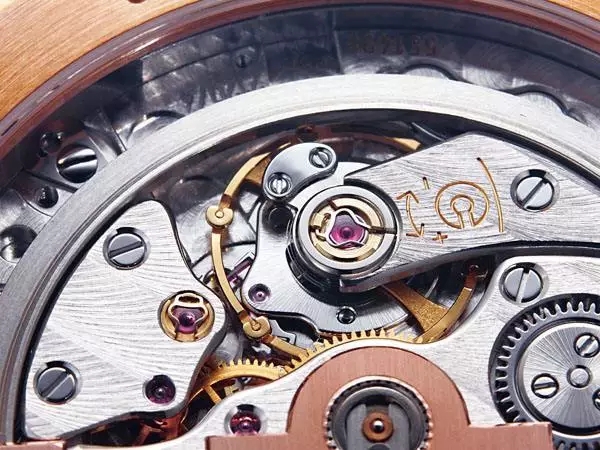
KIF shock absorbers rank among the most premium watch shock-resistant systems, supplied to watch manufacturers by the Kiefer Anti-Shock Company. Prestigious Swiss luxury watch houses commonly equip their timepieces with KIF shock absorbers, including Rolex, Patek Philippe, Vacheron Constantin and Audemars Piguet.
KIF products come in a wide range of models and specifications. Disassembling, servicing and lubricating these shock absorbers during watch repair is an extremely delicate and high-risk operation. Tiny components are easily lost, and the shock spring may pop out inadvertently. Experienced watchmakers follow strict rules: never lift the shock spring excessively after prying it open. The shock jewel cap must be seated flat and fully fitted into the shock bowl before securing the spring back into place. These shock springs are made of gold-plated steel and are far more minuscule than most people would imagine.
Etashoc Shock Absorber (Triangular Shock Absorber), Late 1990s
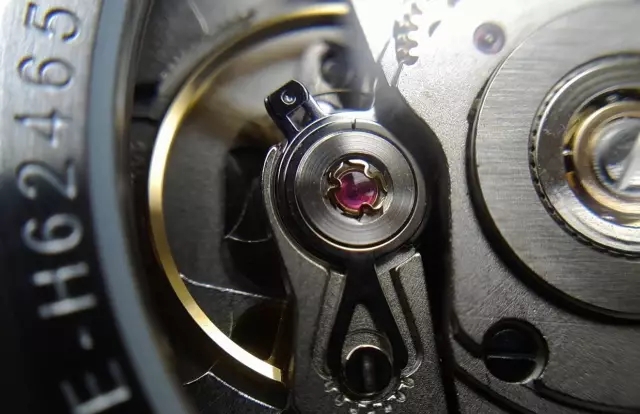
Some raw unassembled ETA movements sold online are fitted with triangular shock absorbers and cost only a few hundred yuan. The triangular shock absorber belongs to the most economical tier of shock-resistant structures, with its shock spring fixed onto the shock base via three support points.
With that in mind, you can see ETA calibers such as the 2824 and 2836 were produced in two shock absorber variants: horseshoe-shaped Incabloc and triangular Incabloc. Both designs are manufactured by Incabloc and deliver identical shockproof performance. The triangular version merely features lower production costs. For this reason, identifying movement quality solely based on the shock absorber structure is not a reliable method.
Many entry-level watches from brands including Mido and Tissot now adopt triangular shock absorbers to cut manufacturing expenses. Accordingly, people can no longer judge a watch’s authenticity simply by observing the style of its shock absorber as they once did. It should be noted that COSC-certified chronometer models from these brands still utilise standard horseshoe Incabloc shock absorbers. Caution is advised if you encounter a chronometer-certified watch equipped with a triangular shock absorber.
Rolex Exclusive Paraflex Shock Absorber
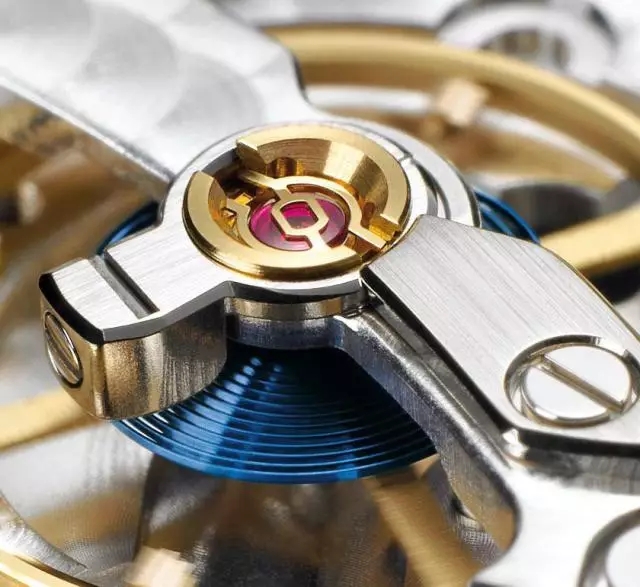
As mentioned earlier, Rolex was the first major watch brand to abandon Incabloc in favor of KIF. However, Rolex has never been willing to rely on third-party suppliers for core components. After utilizing KIF shock absorbers for nearly half a century, the brand unveiled its in-house developed Paraflex shock system in 2005. Its spring leaf is engineered through precise mechanical calculations, resulting in a far more sophisticated structure compared to both Incabloc and KIF units.
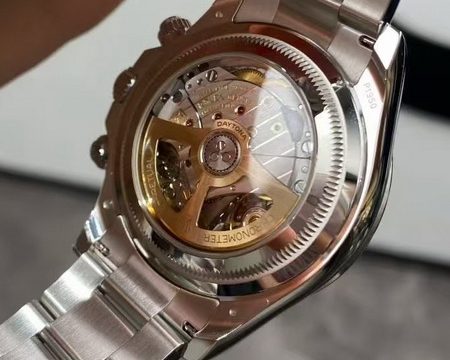
The Paraflex system was first deployed inside Caliber 7040. According to official Rolex data, Paraflex delivers a 50% improvement in shock resistance over KIF configurations and markedly boosts overall movement durability. In 2008 and 2009, it was fitted to the updated Caliber 3156 for the Day‑Date II and Caliber 3136 for the Datejust II respectively. The outstanding robustness and long service life of modern Rolex watches are widely praised by global consumers, with the proprietary Paraflex shock absorber standing as an indispensable contributing factor.
Nivachoc Shock Absorber – Swatch Group, 2006
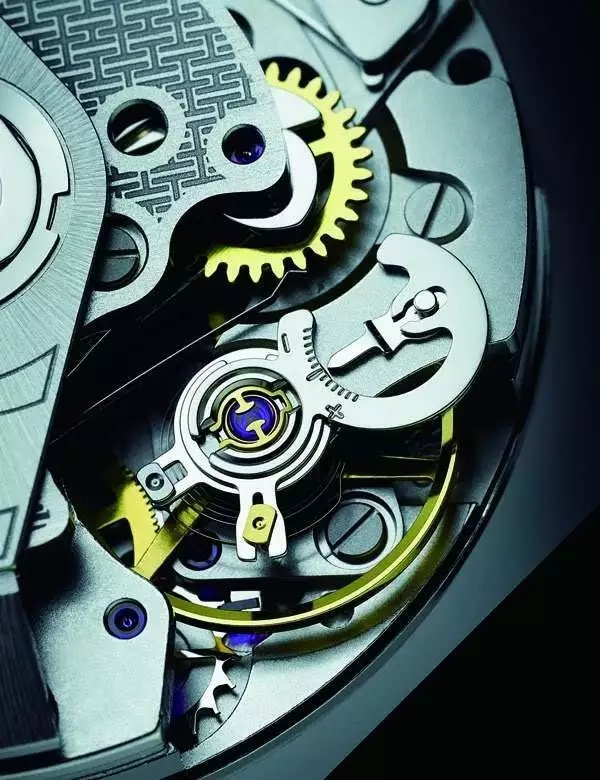
Breguet’s new-generation 777Q automatic movement under the Swatch Group is equipped with the updated Nivachoc shock absorber.
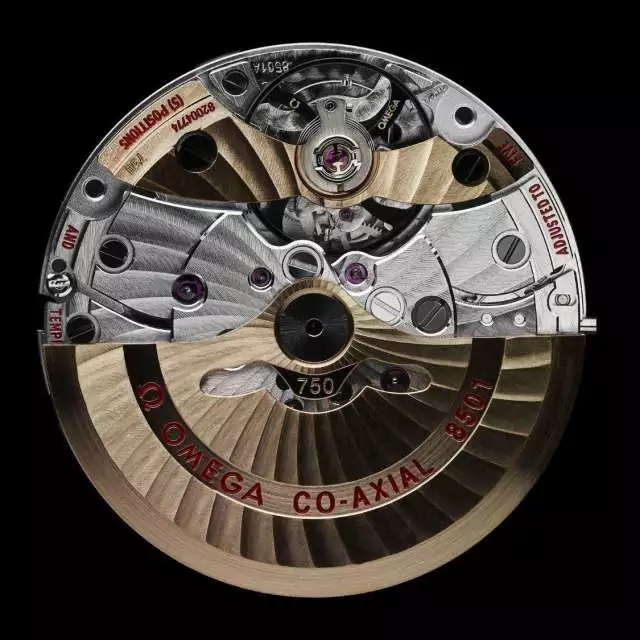
Omega Caliber 8500 and 850 co-axial escapement movements also adopt this type of shock absorber.
Furthermore, Cartier fitted its dual Y-shaped shock absorber into the 9452MC tourbillon movement back in 2008. During this period, Japan’s Seiko and Citizen independently developed proprietary shock absorber systems of their own design. Beyond shock mitigation, these shock absorbers also serve an oil retention function. A precise quantity of watch oil must be applied between the shock bowl and cap jewel, a procedure requiring stringent standards and meticulous technique. The pivot of the balance staff undergoes high-speed oscillating friction roughly 690,000 times each single day at this contact point.
In recent years, movement designs for mechanical watches have grown increasingly intricate. Single timepieces now integrate multiple tourbillons, separate escapement assemblies and several mainspring barrels. Greater complexity and precision within mechanical structures, paired with more diverse daily usage scenarios, raise the performance benchmarks required for shock protection systems. We may anticipate the emergence of an even wider variety of shock absorber configurations in the near future.