The Seamaster is one of Omega’s flagship collections, though the name commonly refers to the iconic 300‑metre diver model at its core. Spinoff variants, namely the Seamaster 150 M and Seamaster 600 M, have since been released, and both are now fitted with the Calibre 8900 movement.
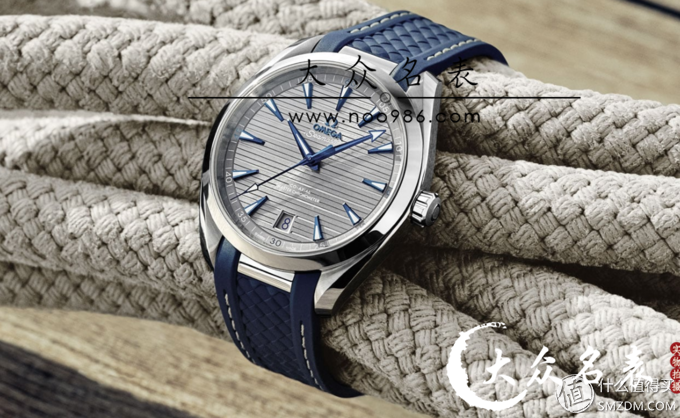
The Aqua Terra (commonly shortened to AT) is a newer model launched under the Seamaster collection in 2010, positioned as a versatile watch for both business‑casual and everyday wear. It was equipped with Omega’s in‑house Calibre 8500, first unveiled back in 2008. Living up to expectations, the Aqua Terra quickly became one of Omega’s star models.
Fueled by the success of the 8500, Omega ramped up its movement‑development efforts and rolled out two major upgrades within just eight years: the original Calibre 8500 in 2008, the Master‑Chronometer‑certified 8500 variant in 2014, and finally the Calibre 8900 in 2017. Each iteration brought enhanced precision and reliability. Its core features‑‑the silicon balance spring, co‑axial escapement, anti‑magnetic materials and dual‑barrel power‑reserve system‑‑rendered the movement exceptionally robust.
Visually, the most noticeable changes on the AT with Cal. 8900 are the relocation of the date window from the 3‑o’clock to the 6‑o’clock position, and the re‑orientation of the teak‑wood dial pattern from vertical to horizontal. These two adjustments did not sit well with me, as someone who was used to the AT 8500 layout. The 6‑o’clock date window feels unusual, while the horizontal striations are somewhat reminiscent of Patek Philippe’s Nautilus. While it is clear Omega aimed to refresh the design and deliver something new for customers, personally I still struggle to warm to these distinctive revisions.
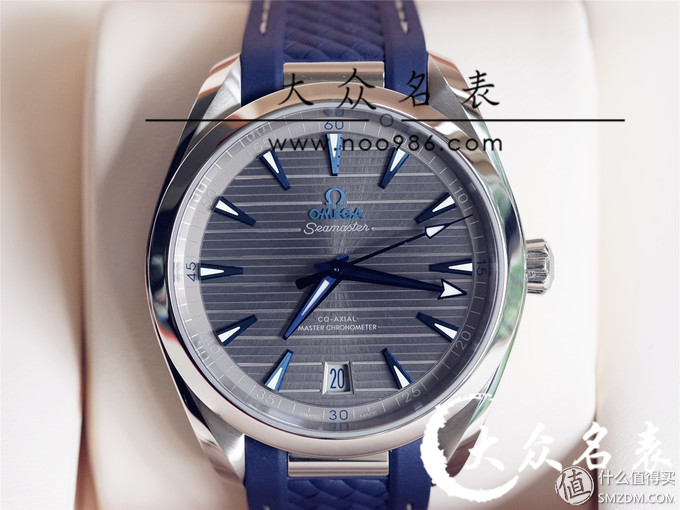
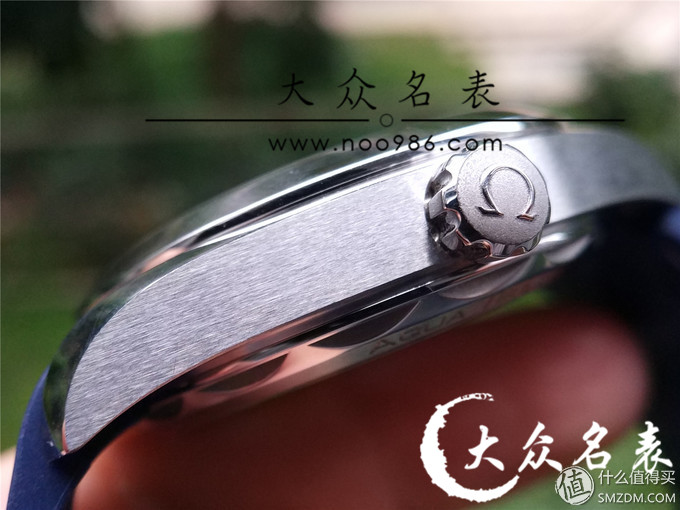
Looking at the watch as a whole, the case‑size reduction from 41.5 mm down to 41 mm delivers a more well‑proportioned fit. The side‑wall brushing and polished finishing are executed to Omega’s usual high standard, while the 13‑mm‑thick case falls within a normal range.
The crown features an onion‑shaped design for easier time‑setting. One distinctive trait of the Calibre 8900 movement is its crown‑position layout: position 2 adjusts the hour hand, and position 3 adjusts the minute hand. If the watch has sat unworn for some time and stopped running, you have to nudge the hour hand forward or backward one‑hour increments at a time — a somewhat tedious process. Fortunately, the generously‑sized crown makes this adjustment far more comfortable.
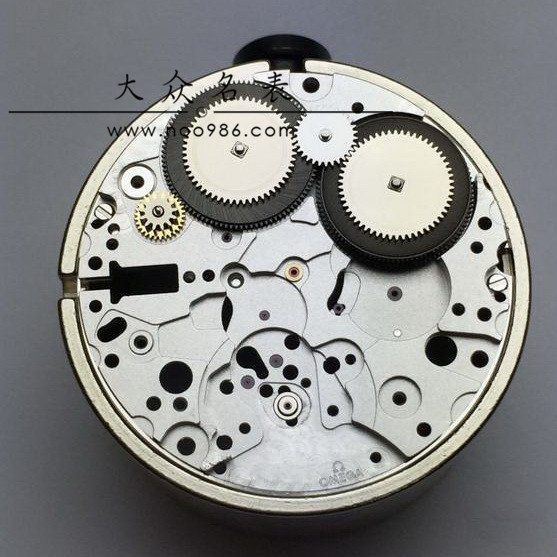
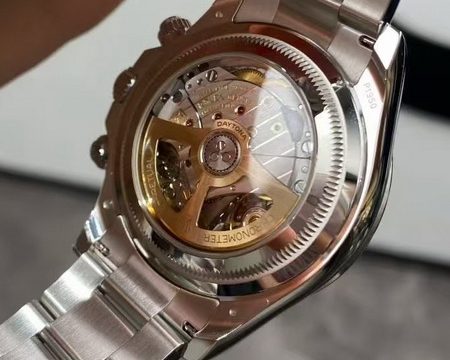
Turning now to the Calibre 8900 movement. Its technical details have already been covered in my two previous articles, so this section will focus primarily on Omega’s upgrade journey for this in‑house movement.
The most crucial aspect lies in its continued development of the co‑axial escapement. Omega has consistently refined this technology ever since 1999. Improvements have been made to power delivery, timekeeping stability, amplitude, the primary and secondary escape wheels, as well as materials and the balance spring. The Calibre 8900 stands as a flagship representative of the third‑generation co‑axial escapement.
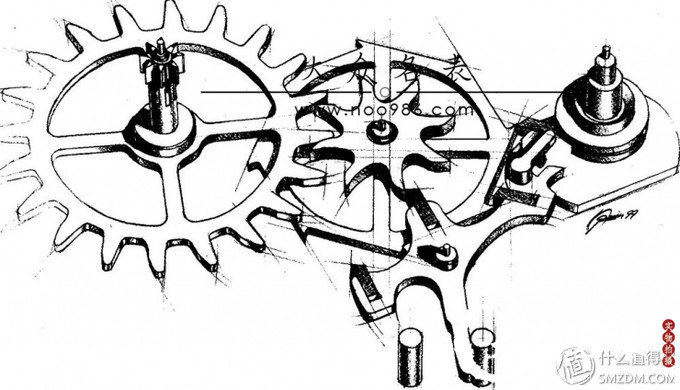
The “octopus‑style” three‑tier escape‑wheel structure, first implemented in the Calibre 9300 movement in 2011, is manufactured using the LIGA nickel‑phosphorus alloy. This innovative octopus‑shaped configuration delivers superior mechanical properties and enhances shock‑resistance during the operation of the co‑axial escapement.
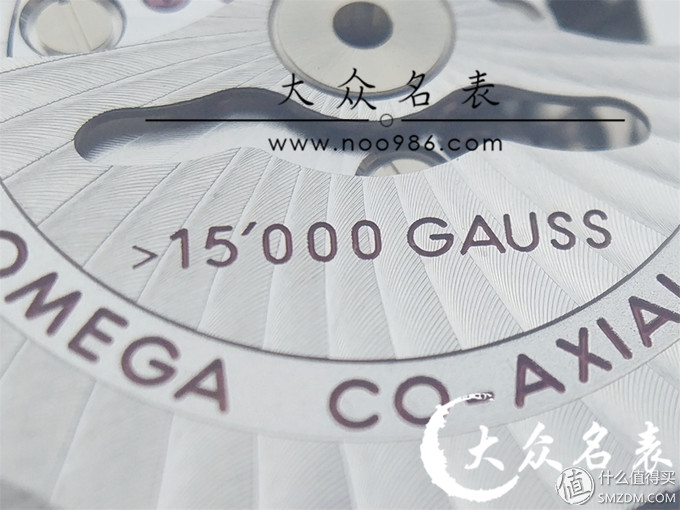
Non‑Ferrous‑Metal Materials
This is an anti‑magnetic movement capable of withstanding an impressive 15,000 gauss. Leveraging resources within its parent group, the Swatch Group, Omega collaborated with ETA and its research‑and‑development subsidiary ASULAB. The two firms selected non‑ferrous metals as core construction materials for the movement. The staff assembly of the balance wheel is crafted from a proprietary anti‑magnetic alloy known as Nivagauss™. Stainless‑steel components inside the co‑axial escapement pallet have been replaced with non‑magnetic alternatives, while the shock‑absorbing springs within the shock‑protector system are made from amorphous metal. These material upgrades together yield a watch movement with a remarkable anti‑magnetic rating of 15,000 gauss.

The co‑axial escapement surpasses the traditional lever‑escapement design. One of its key advantages is that the lever assembly can go up to ten years without servicing. Nevertheless, it has a critical drawback: the intricate escapement mechanism must fit within a confined space. Omega achieves optimal performance for its co‑axial system at the cost of adopting dual‑barrel energy storage and a reduced vibration frequency.
As such, the Aqua‑Terra fitted with the Calibre 8900 stands as one of Omega’s flagship products. Many watch enthusiasts, however, have noticed the brand faces a worrisome competitive situation. Rolex towers overhead as the market leader, while Tudor — its junior sibling — is catching up quickly with newly‑developed in‑house movements. Understandably, Omega feels mounting competitive pressure, and the re‑armoured Aqua‑Terra has been sent out to do battle.
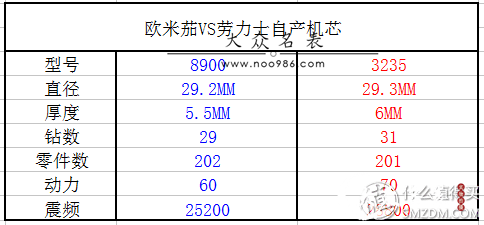
Before heading into competition, one must first understand one’s rivals, and Rolex, Omega’s long‑standing competitor, inevitably comes into the picture. I have compiled a side‑by‑side performance comparison between the Calibre 8900 and Rolex’s newer Calibre 3235 movement.
The Calibre 8500 carries COSC Swiss chronometer certification, with a daily rate tolerance of ‑1 to +6 seconds.
The Calibre 8900, by contrast, has passed both COSC chronometer certification and METAS certification from the Swiss Federal Institute of Metrology, offering an even higher level of reliability. Its permitted daily timing deviation ranges from 0 to +5 seconds.
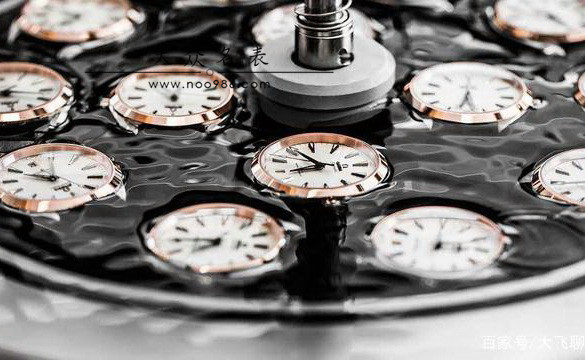
Since greater torque is required to drive the co‑axial escapement, the dual‑barrel design of the Calibre 8900 was intended to completely resolve the stopping‑at‑will issue that affected Calibre 2500A/B/C movements. It also ensures that timing error does not fluctuate significantly even when the movement has low remaining power reserve.
Overall, as an upgraded and improved successor to the Calibre 8500 and Calibre 8800, the 8900 movement pushes precision and anti‑magnetic performance to unprecedented levels.