When shopping for watches, you often hear the phrase “get it right in one go”. Some buyers even chase the absolute peak of technical specs. As Rolex’s production model with the greatest water resistance, the Deepsea naturally earns its status as a heavyweight favourite among many watch enthusiasts.

Back in the 1960s, Rolex partnered with Comex, a French underwater engineering firm. To meet the demands of deep-sea saturation diving, Rolex modified the side of the Submariner Ref.5513 case and added its newly patented helium escape valve. A dedicated reference, Ref.5514, was then produced exclusively for Comex. This marks the origin of the Rolex Sea‑Dweller collection.
Following real-world field testing, Rolex officially released Ref.1665 to the market in 1967. Its dial bears two lines of red text: “Sea‑Dweller” and “Submariner”, which collectors nicknamed the “Double Red”. The year 1967 is recognised as the official birth year of the Sea‑Dweller.

A decade later, in 1977, the updated Ref.1665 discarded the dual red “Sea‑Dweller” and “Submariner” dial markings. Only “SEA‑DWELLER” remained, printed in white capital letters. 1977 is regarded as the pivotal year when the Sea‑Dweller, in the narrow sense, split off from the Submariner line and became an independent collection.
The Sea‑Dweller continued to evolve over the years. Its development timeline is summarised below:
- 1st generation: Ref.1665 (1967–1983, Cal.1575, 610m water resistance)
- 2nd generation: Ref.16660 (1978–1988, Cal.3035, 1220m water resistance)
- 3rd generation: Ref.16600 (1988–2008, Cal.3135, 1220m water resistance)

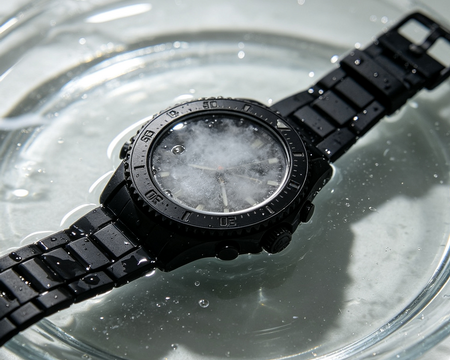
In 2008, just as the Sea‑Dweller had branched off from the Submariner years before, Rolex took the Sea‑Dweller platform and dramatically boosted its water resistance. The depth rating jumped from 1,220 metres to an extraordinary 3,900 metres, bringing us the Deepsea Ref.116660. Its staggering performance earned it the well‑known nickname “Sea King”.

Nicknamed the “Sea King”, this watch earned the moniker for good reason. The popular Submariner is only rated for 300 metres, while this timepiece withstands the water pressure at 3,900 metres below sea level. They share largely identical movements; the biggest differences lie in case construction, materials and dimensions.
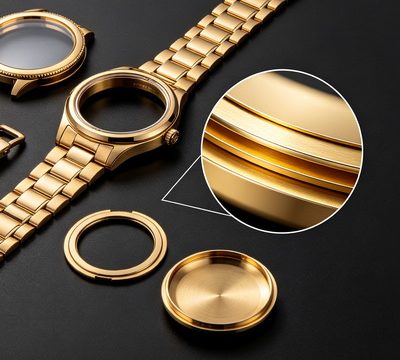
Rolex’s widely used 904L steel offers excellent resistance to seawater corrosion, yet it cannot handle the pressure at 3,900 metres when shaped into a watch case. Therefore, the Deepsea utilises the patented Ringlock system. The Ringlock case consists of an inner case and an outer case. The inner case delivers the waterproof performance, whereas the outer case merely serves to attach the bracelet.
Fitted inside the inner case is an ultra‑robust nitrogen‑alloy stainless steel ring that acts as the watch’s central support structure. Up front sits a domed sapphire crystal with a thickness of 5.5 mm. The caseback features a dual‑layer design. The inner component, crafted from thickened nitrogen‑alloy stainless steel, bears the pressure and ensures water resistance. The outer ring secures this heavy‑duty inner back firmly in place. Thanks to this sophisticated engineering, the Deepsea can withstand pressure equivalent to up to 3 tonnes.

With its 3,900‑metre water resistance and substantial proportions, the Deepsea is naturally categorised as a professional tool watch. It tends to appeal mainly to performance enthusiasts and collectors with larger wrists. On August 5, 2014, Rolex rolled out a fascinating upgrade to the Deepsea: the introduction of the iconic “D‑BLUE” dial. Its blue‑to‑black gradient takes inspiration from the colour of seawater. When sunlight hits the ocean surface, short‑wavelength light such as blue and violet scatters and reflects more readily, which is why seawater appears blue. As depth increases, the blue fades gradually into black.
In 2018, Rolex unveiled new releases. Alongside the much‑hyped GMT‑Master II with the red‑blue bezel and five‑link bracelet, the Deepsea also received revisions and upgrades.

The updated Deepsea reveals its differences at first glance. Compared with earlier iterations, its broad lugs have been downsized by roughly 1 millimetre. Meanwhile, the bracelet width has been increased by 1 millimetre. This pairing creates a stronger visual impression of slimmer, more elongated lugs.
Ahead of Baselworld, Monochrome, the international watch media outlet, predicted that a new Submariner would launch that year with narrower lugs. Surprisingly, the Submariner remained unchanged, and it was the Deepsea that received the slimmer lug redesign. Given that the Deepsea originally pioneered the wide-lug design before the Submariner, many watch enthusiasts speculated that future Submariner models would follow this trend and adopt slimmer lugs.
That said, the case revision only affects the profile of the lugs. To withstand the 3,900‑metre underwater pressure, the case thickness of the new Deepsea stays identical. The refined slim-lug aesthetic is only obvious when viewing the watch head-on. Seen from an oblique side angle, it is still the substantial, bulky Sea King we know.

Apart from the case, many watch enthusiasts are more curious that the new Deepsea is equipped with Rolex’s new-generation Cal.3235 movement. Featuring the brand’s patented Chronergy escapement system, it delivers a practical 70-hour power reserve with just one single mainspring barrel. By contrast, the previous-generation Deepsea only offered a 48-hour power reserve.
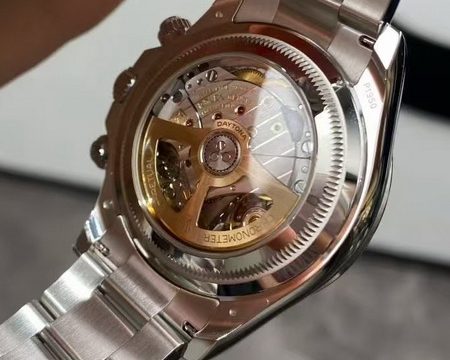
All Rolex sports watches feature a solid caseback. Initially, this was implemented to secure reliable water resistance, while today it is largely a nod to brand tradition. For the Deepsea engineered to withstand 3,900 metres of pressure, an exhibition caseback is technically feasible, yet it would require further thickening of the case. Bear in mind that the Deepsea’s case is already 5 millimetres thick, roughly double that of the Submariner.

With a solid caseback, the Deepsea does not allow enthusiasts to view its new Cal.3235 movement. However, Rolex rolled out a fresh dial marking system that year. All new watches fitted with Cal.3235 and Cal.22 series movements carry the brand’s tiny crown logo printed at the 6 o’clock position on the dial. Previously, only the words “SWISS MADE” appeared there. This marking serves as an easy identifier, likely introduced by Rolex to boost sales of its new models. The updated Deepsea also receives subtle revisions to dial marker sizing and hand lengths, yet these changes are hardly noticeable to most buyers. The newly added crown logo remains the clearest telltale sign.
The domestic official pricing for the 2018 Deepsea has been released. The black dial variant retails at RMB 95,500, while the gradient blue D‑BLUE version costs RMB 98,000. It marks a modest price increase of a few thousand yuan over the prior model. The core upgrade is the new movement, making it a worthwhile update. That year, Rolex also launched the Pepsi GMT‑Master II, which features a more eye‑catching design and appeals to a broader audience. Consequently, the secondary market focused heavily on speculating over the GMT. By comparison, the new Deepsea stayed far more sensible in market performance.
Rolex Oyster Perpetual Deepsea Specifications Reference: 126660 Case: 44 mm Oystersteel, 3,900‑metre water resistance Movement: Rolex Cal.3235, automatic winding Power reserve: Approximately 70 hours Functions: Centre hours, minutes and seconds; quick‑set instantaneous date; stop‑seconds for precise time setting Retail price: Black dial – RMB 95,500; D‑BLUE gradient blue dial – RMB 98,000