Preface: Why did I write this article? There are now countless manufacturers making Ballon Bleu replicas. Most new buyers will first ask me, “Which factory makes the best Ballon Bleu?” and their second question is, “What makes it so good?”
I end up repeating the same answers dozens of times every single day. Therefore, I have put together some advice based on frequently‑asked buyer questions. If you still cannot decide which one to get after reading this guide, you might want to skip the Ballon Bleu altogether.
Now let’s get down to business. Below are the most well‑known manufacturers: V6 (the longest‑established brand), AF (the priciest option), CR (best value‑for‑money), and V9 (known for over‑hyped marketing descriptions). I will cover the first three together since their watch dimensions overlap significantly.
Let’s start with the 42 mm men‑sized models.
The V6 factory equips its watches with a Chinese‑made 2824 movement, valued for solid durability and easy servicing. It has reached its final V4 iteration, meaning there is theoretically little room left for further improvements. It comes at a reasonable price with excellent craftsmanship, and upgrading it later to a Swiss‑made ETA 2824 movement will also be cost‑effective. If you are purchasing the 42 mm Ballon Bleu with a steel bracelet, V6 is my top recommendation.
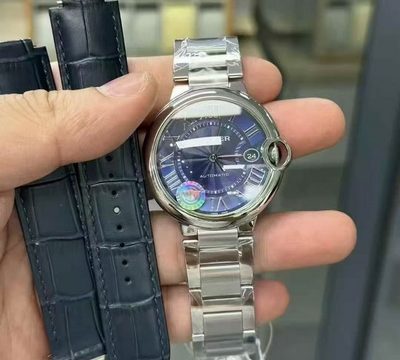
As for the AF factory, there is no steel‑bracelet version for the 42 mm model. Crocodile leather strap is supplied as standard, available in three colour options. It runs on a Chinese‑produced 2892 movement and costs several hundred more than the V6 edition. The higher price is largely driven by the premium crocodile strap and 2892 movement. AF is the ideal choice if you want a top‑spec model straight away and prefer a leather strap. It comes fully‑loaded out of the factory, and the colour‑matching between its blue crocodile strap and dial is remarkably well‑executed. One downside, however, is that a future upgrade to a Swiss movement will prove costly, as an ETA 2892 movement carries a high price tag. Buyers with a larger budget can disregard this concern.
The CR‑factory version is cheaper than the two above‑mentioned options and would otherwise be a worthy recommendation. Nevertheless, from my personal experience after receiving several batches, its quality control has proven inconsistent, leading to multiple product returns and exchanges. This issue is likely caused by insufficient quality oversight among CR’s third‑party component suppliers. For this reason, I suggest putting CR aside for now and choosing between V6 and AF.
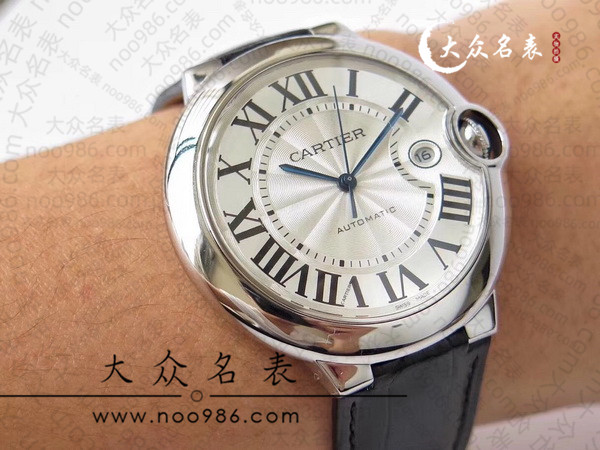
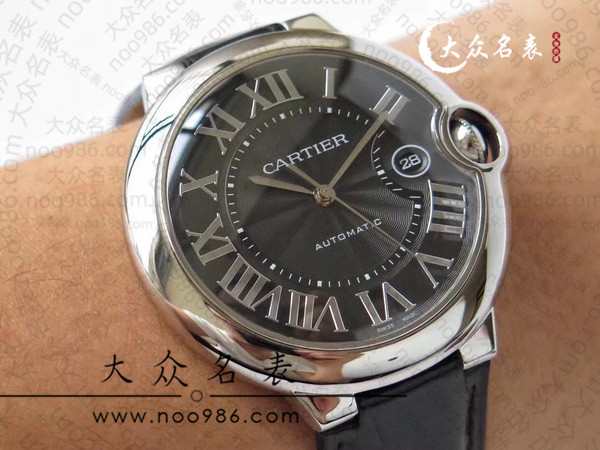
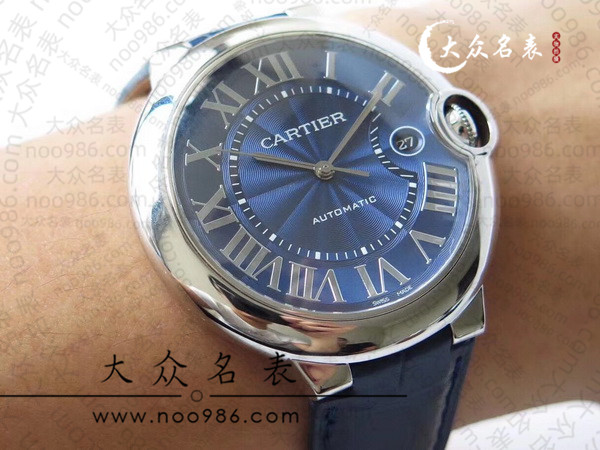
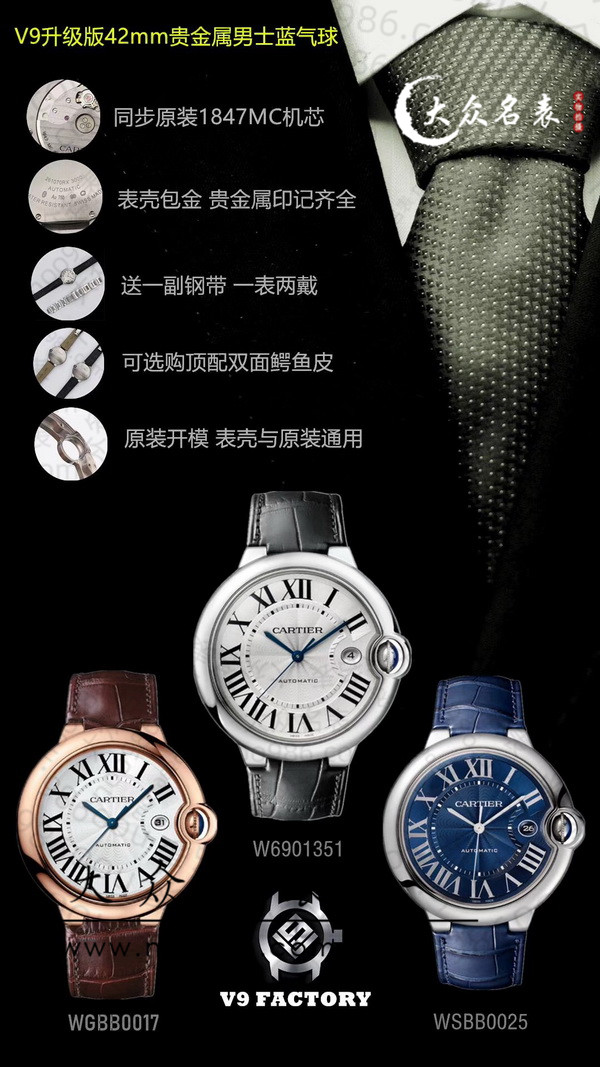
Here is the picture provided by the V9 factory — isn’t it over‑the‑top? Claims of white‑gold material, original‑calibre movements and all sorts of misleading wording are plastered all over it. Let me share my thoughts.
First of all, there is no doubt that the V9‑made Ballon Bleu is well‑finished. Yet I find the factory’s claim of “permanent‑colour white‑gold plating that will never fade” rather absurd. The genuine base‑model 42 mm Ballon Bleu is crafted from stainless steel to begin with. Why would a replica be fitted with white‑gold plating? Even setting aside whether it is real white gold or not, adding precious‑metal markings out of nowhere seems completely counter‑productive. I have spent quite some time researching and cannot find any record of Cartier ever releasing a standard 42 mm Ballon Bleu in white gold. Feel free to let me know if you find evidence to the contrary.
Its 1847 MC movement is most likely a Citizen 9015 base fitted with a decorative fake rotor bridge. Personally, I strongly dislike adding cosmetic bridges to solid case‑back watches. This modification serves no practical purpose and raises the risk of movement malfunctions.
The factory’s heart may have been in the right place by including a crocodile‑leather strap as standard. However, they went one unnecessary step further and used double‑sided crocodile leather. No original Ballon Bleu from the boutique has ever come with a double‑sided crocodile strap. This feature exists purely to grab attention.
For the standard stainless‑steel 42 mm Ballon Bleu, V9 is therefore my least‑recommended option. To sum up, every selling point it offers is unnecessary overkill and a cheap marketing trick. The extra money you pay goes toward features of no real value.
When it comes to the 33 mm ladies’ model, there are two mainstream movements on the market: one is the Citizen‑based movement, and the other is the modified ETA 2671 (referred to as the “original‑spec movement”).
If you opt for the Citizen‑powered version, I believe both V6 and AF are solid choices. The differences between them are minimal, so you can pick either one.
For those going for the original‑spec movement, AF delivers superior quality. AF’s movement has had the calendar position removed, bringing its setting behaviour much closer to that of the genuine watch. CR also offers an original‑spec variant at a slightly lower price than AF. However, for the reasons I mentioned earlier, if you are buying the Swiss‑movement version, I still recommend going straight for AF. As for leather‑strap editions, AF comes fitted with a crocodile‑leather strap as standard, making it a great all‑in‑one option.
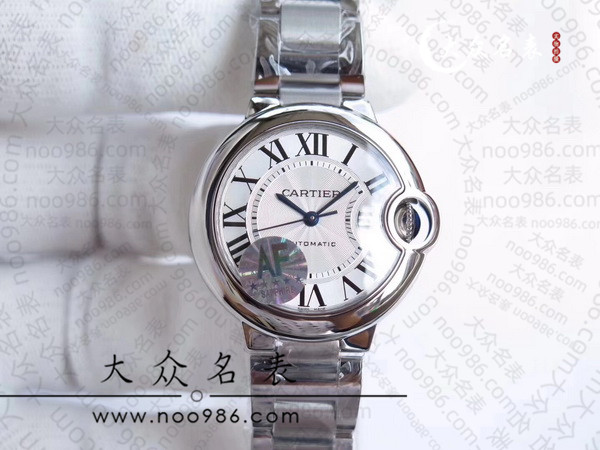
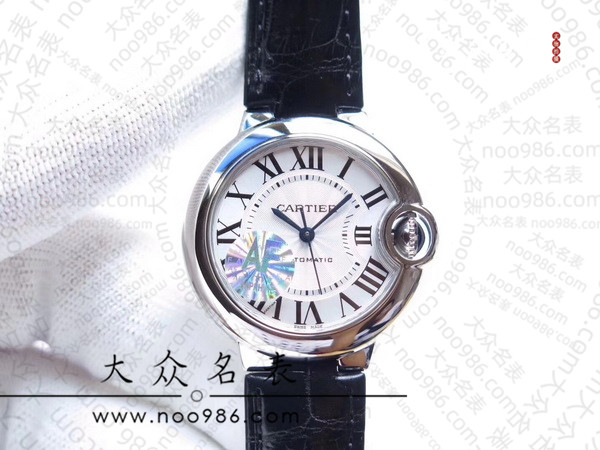
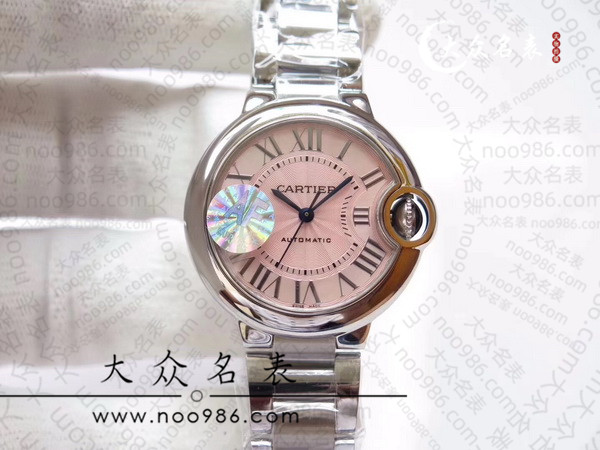
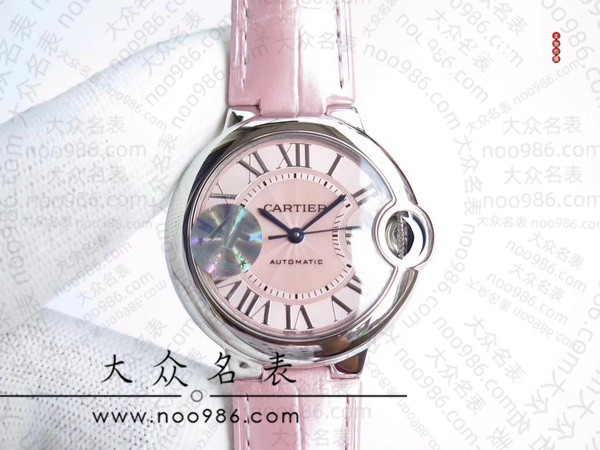
I need to talk about V9 separately once again. The same issue persists: unnecessary precious‑metal hallmarks and white‑gold stamps have been added to a stainless‑steel watch case. That said, the V9 ladies’ models offer greater flexibility, with both 36 mm and 33 mm size options available, and a crocodile‑leather strap included as standard.
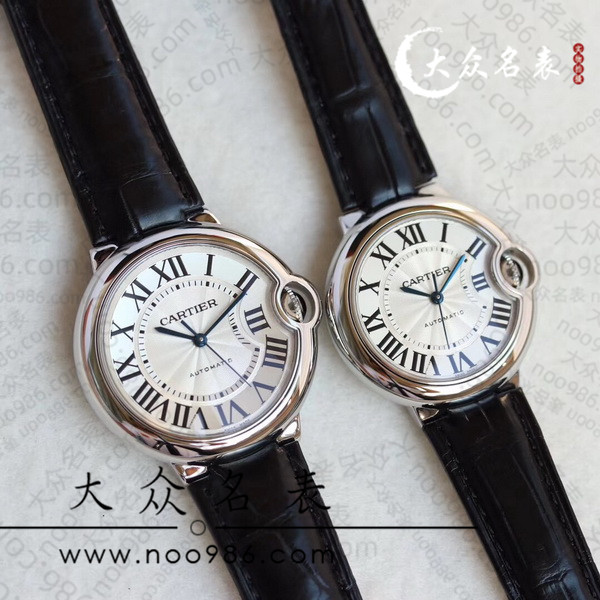
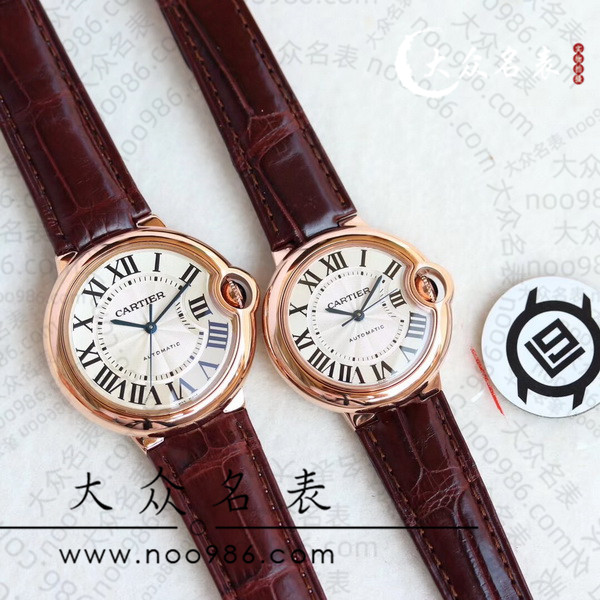
When it comes to the rose‑gold variants, the manufacturer’s promise of no‑fading finish is highly tempting. After its release, I intended to get one for testing, yet it was already out of stock. Whether poor sales or overwhelming demand caused the shortage remains unknown. Whether the plating truly resists fading has therefore become something of an open question. V9’s Ballon Bleu is rarely available to buy, constantly running in and out of stock. It is inevitable that its sales lag behind those of AF and V6. For a reliable, safe choice, I would still recommend AF or V6. If you are particularly fond of rose‑gold, you may give V9 a try.
To sum up: I have not discussed dial‑face details or craftsmanship throughout this article. The Ballon Bleu has become an over‑saturated model within the replica‑watch market. Virtually every capable factory purchases an original watch to create moulds from it. With such fierce competition, can there really be major differences in minor details between versions?
In my opinion, buyers should not get carried away by countless so‑called reviews and side‑by‑side factory comparison pictures. Marketing claims are growing increasingly exaggerated, and there are no consequences for over‑hyped advertising. When purchasing a watch, it is better to return to the fundamentals: choose well‑established, reputable manufacturers that deliver reliable movements and, most importantly, solid after‑sales support.
Is there any real‑world value in scrutinising one tiny stroke of a case‑back engraving under a magnifying glass with 10‑times magnification? Let me ask you this: if you owned the genuine watch, would you ever examine it in that way? I urge everyone to stop over‑correcting minor flaws. Please do not message me complaining that the tiny hook at the end of a certain engraved letter from one factory is imperfect — such messages frustrate me greatly. At times, our customer‑service team does not even reply to these kinds of enquiries, because we receive far too many of them each day. If you tend to nit‑pick excessively, it would be far more practical to focus your energy on earning money instead.
Returning to the purpose of this guide: by now, you should have a clear idea of which factory to pick for each watch size. This article will serve as my standard reference answer for future buyer enquiries. Thank‑you for reading my free‑flowing, opinion‑driven piece.