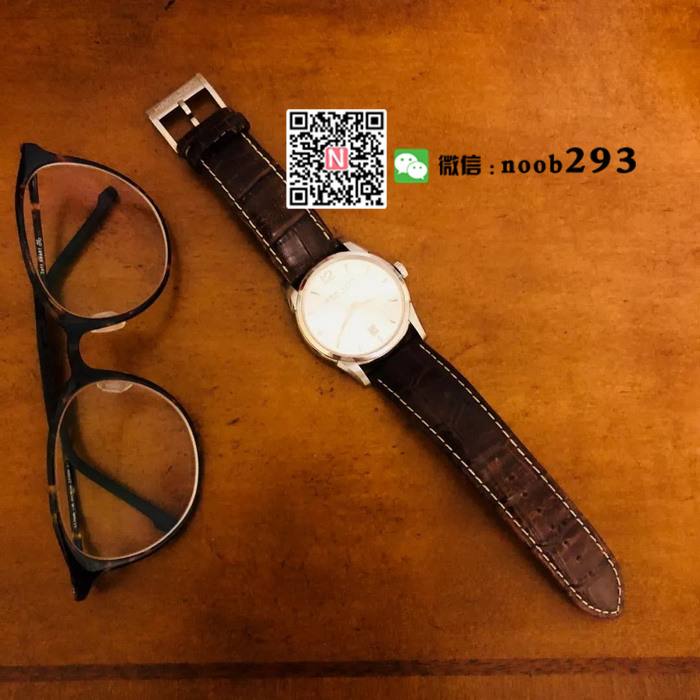
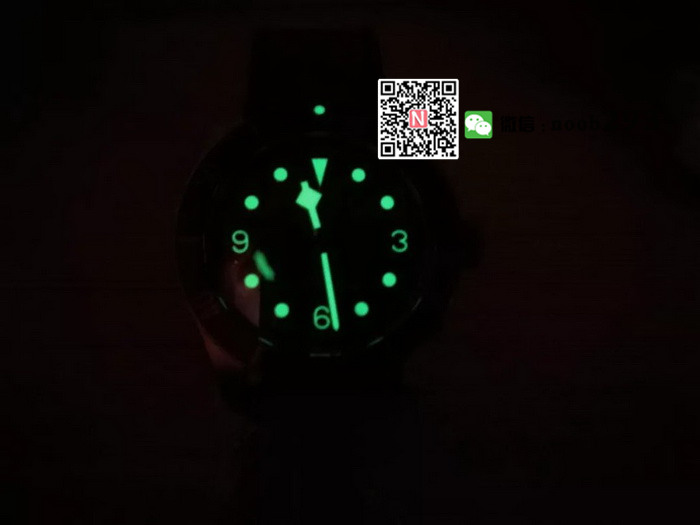
My very first self‑purchased watch was a Hamilton Jazzmaster. Traditionally, American‑made mechanical timepieces are associated with bold, muscular lines. This Jazzmaster, however, was the complete opposite — minimalist, refined and clean‑cut. It is truly an American brand infused with Swiss watch‑making aesthetics. Closing my eyes, I could almost hear smooth jazz melodies lingering in my mind. I quickly swiped my card and brought it home. After some time tinkering with it, I made an unexpected discovery: its slender hands and hour markers were fitted with luminous material. Seasoned watch enthusiasts who can rattle off reference numbers effortlessly would have spotted this detail at once, yet back then, I only noticed it after wearing the watch. The lume function proved highly practical, allowing me to read the time easily in total darkness. Nevertheless, after a period of time, the luminescence stopped glowing.
Did you think this article would be a nostalgic throwback to my very‑first watch, or perhaps a review of an older Hamilton Jazzmaster model? In fact, what I wish to talk about is the luminous function on watches. When it comes to watch luminescence, we cannot overlook the world‑renowned scientist Marie Curie. In the early 1900s, Marie Curie discovered radium, a radioactive element. As it decays, radium emits ionizing radiation, which causes fluorescent substances to glow. This property was harnessed for watches, making it easy to tell the time after dark. Back in that era, something as simple as checking the time at night was far from convenient. This gave rise to the invention of repeater watches.

In the early years of the last century, timepieces with luminous features mostly relied on this material and principle. Luminous illumination is practically a standard requirement for diver‑style watches. The deeper you dive, the poorer visibility becomes, and lume effectively solves the difficulty of reading the time in low‑light conditions.
When talking about diver watches, the Rolex Submariner is an unavoidable topic. The Mercedes‑style hour hand, meanwhile, stands out as one of Rolex’s most recognizable features. Some claim it is a leftover from an early partnership between Rolex and Mercedes‑Benz, making it their very first cross‑brand collaboration. But is this really true?
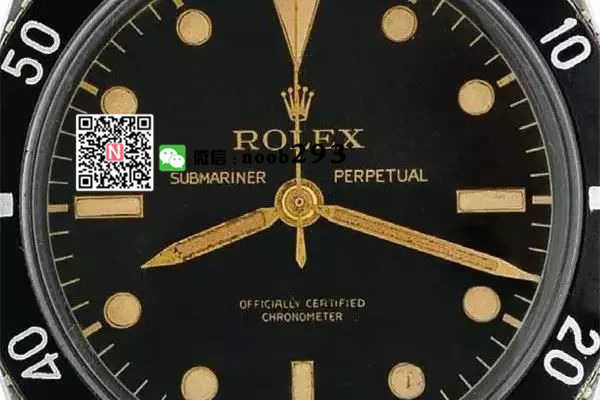
In its early days, Rolex used radium‑infused mixtures when producing luminous watches, applying the compound onto hour markers and hands. Since the shapes of the hour and minute hands were quite similar, wearers could not tell the time quickly and efficiently under harsh conditions. Given that their similar shapes caused confusion, the simplest solution was to redesign the hour hand. Major watch manufacturers therefore began fixing this flaw, for instance by making the hour hand wider and larger so it could be easily distinguished from the minute hand. While this improved the user experience, a new manufacturing issue emerged. With a broader hour hand, the luminous paint could not be applied evenly and securely to its tip. After long‑term use, aging would set in, causing the luminous coating to crack and peel off.

Since an overly large surface area would trigger manufacturing problems and a tiny one would impair readability, the tip of the hand was divided into segmented sections. This ensured stable production quality while keeping the watch easy to read. A range of similar designs was subsequently developed, such as the snake‑style hour hand. By splitting the tip into separate segments, the area to be coated with luminous paint in one go was reduced, solving the technical difficulties encountered at that time.

Snake‑style hour hand
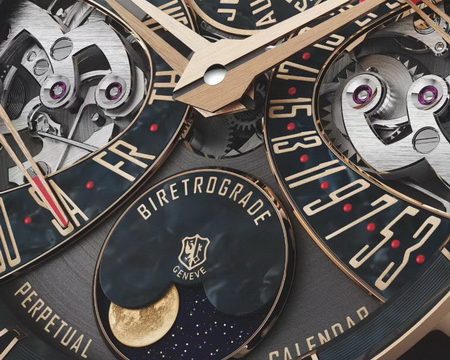
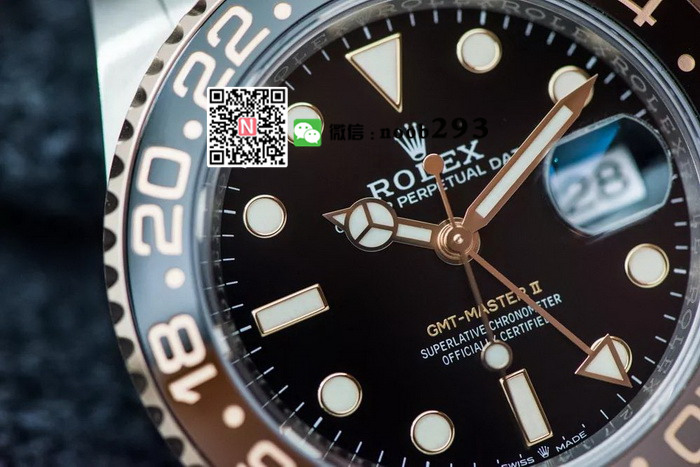
Rolex built upon this concept and made an improvement: it divided a circular tip into three fan‑shaped segments. Since this shape resembles the logo of the well‑known car brand Mercedes‑Benz, the hand has been affectionately nicknamed the Mercedes‑style hour hand among watch enthusiasts.
Over time, luminous materials for glow‑in‑the‑dark watches have kept evolving with advances in technology. Watchmaking moved from the radioactive element radium to tritium, and later upgraded to Super‑LumiNova, the material used in around 99% of luminous watches today. Non‑radioactive and non‑toxic, this strontium aluminate‑based pigment is perfectly safe. It produces its glowing effect by absorbing light energy and then releasing it slowly. So when my Hamilton Jazzmaster stopped glowing at night, I simply left it under sunlight for a while, and its lume lit up brightly once again. With all that in mind, do you still believe there is any connection between Rolex’s Mercedes‑style hour hand and Mercedes‑Benz automobiles?