Most people believe Swiss mechanical watches are the top choice when buying a timepiece, assuming that the “Swiss Made” marking guarantees superior quality. Consequently, many brands compete to print the Swiss Made label on their dials to prove authentic Swiss origins.
In reality, a watch marked “Swiss Made” is not entirely manufactured in Switzerland. Under the latest regulations set by the Fédération de l’Industrie Horlogère Suisse (FH), effective January 1, 2017, a watch can legally bear the “Swiss Made” label only if 60% of its manufacturing value originates in Switzerland, up from the previous threshold of 50%.

“Swiss Made”, much like “Made in China”, is an origin marking and merely one of the basic indicators. Other well-known certifications include COSC, also referred to as chronometer certification. Its full French name is Contrôle Officiel Suisse des Chronomètres, the Swiss Official Chronometer Testing Institute. This certification signifies that the watch movement’s timekeeping accuracy has been tested and approved by the institute.

In the 18th century, precise timekeeping for navigation became critical to prevent the British Royal Navy from getting lost on long ocean voyages. During the 19th century, major watch brands began developing in-house movements. At that time, observatories tasked with measuring time standards held authoritative judgment over chronometric accuracy, which gave rise to observatory-led certification for timepieces.
Timepieces approved by observatories and capable of accurately calculating longitude at sea were named “Chronometer”, the term we still use today for chronometer watches. The word originates from Greek roots: “Khronos”, meaning time, and “Metron”, meaning measurement. Nowadays, any watch that passes chronometer certification qualifies as a chronometer.
COSC certification evaluates watch movements. Movements undergo roughly 15 days of testing across 3 temperature variations, 5 different positions and 7 performance criteria. A COSC-certified movement must maintain a daily rate error between -4 seconds and +6 seconds.

Among COSC’s biggest contributors, Rolex, Breitling and brands under the Swatch Group account for the largest volume. It is reported that over the past decade, these brands submitted millions of movements for testing every year.
However, as watchmaking technology matured, many brands began establishing their own stricter internal standards beyond COSC requirements, including Omega, Rolex and Jaeger-LeCoultre.
Rolex states that any watch engraved with “Superlative Chronometer Officially Certified” on the dial must meet a daily rate tolerance of -2 seconds to +2 seconds.

Omega partnered with the Federal Institute of Metrology (METAS) of Switzerland to launch the Master Chronometer certification. On top of meeting standard chronometer requirements, watches must also pass tests for water resistance and anti-magnetic performance.


In addition, Jaeger-LeCoultre’s renowned 1000 Hours Control is the brand’s own rigorous independent testing protocol. During this procedure, the complete watch is subjected to 1000 hours of trials simulating real-world usage conditions, including water resistance and shock resistance tests. The watch must achieve a daily rate between -1 second and +4 seconds, surpassing the COSC chronometer standard of -4 to +6 seconds per day.
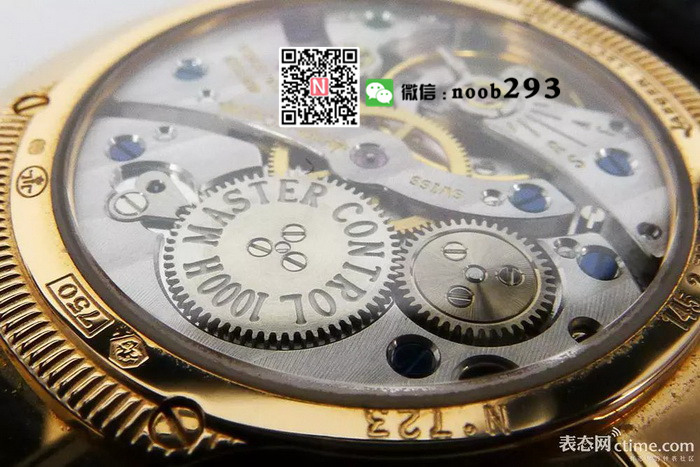
While chronometer certification focuses primarily on a watch’s timekeeping precision, the Hallmark of Geneva stands as the most prestigious benchmark for watchmaking craftsmanship. Vacheron Constantin, Patek Philippe and other brands use or have used the Hallmark of Geneva. It governs movement components such as bridges, gears, screws and pivot holes, which must meet strict standards for finishing, polishing and chamfering. Movements that satisfy Hallmark of Geneva criteria bear the “eagle and key” emblem on the watch.
Looking back, the Hallmark of Geneva is essentially a product of local protectionism. No matter how superb the craftsmanship, a movement cannot receive this hallmark without a Geneva origin. Like COSC, many brands are no longer satisfied with third-party standards as technology advances. They pursue elevated internal technical benchmarks to showcase their brand value.

The Patek Philippe Seal emerged against this backdrop. In 2009, Patek Philippe announced it would discontinue using the Hallmark of Geneva in favour of the more stringent Patek Philippe Seal. Covering multiple rigorous criteria, the Patek Philippe Seal governs timekeeping accuracy and watchmaking craftsmanship for every model.
Each component undergoes multiple inspections before assembly. After being fitted into the finished watch, further regulation is carried out. Without exception, every Patek Philippe timepiece must pass hundreds of quality checks and meet the requirements of the Patek Philippe Seal before release. Beyond manufacturing standards, service quality also constitutes a key commitment of the Patek Philippe Seal.

Similar to the Patek Philippe Seal is the Qualité Fleurier (QF) Seal. This watch quality certification was jointly launched by three brands based in Fleurier: Chopard, Parmigiani Fleurier and Bovet. The QF Seal incorporates requirements for both timekeeping precision and machining craftsmanship, and can be described as an extremely rigorous version of chronometer testing.
Five percent of the submitted watches undergo destructive wear tests. The remaining 95% are put through a 24‑hour simulation of real‑life wrist wear, including variations in temperature and position, plus different levels of motion and static rest. Most importantly, Qualité Fleurier certification is open to all applicants. Put colloquially, it echoes the well‑known phrase: “If you think you can, prove it; if you cannot…”


These hallmarks, standards and testing protocols within the watch industry were originally devised to identify outstanding timepieces. Over time, they evolved into a demonstration of brands’ confidence in their fine watches. As watchmaking technology continuously advances, established “high standards and strict requirements” risk being abandoned and phased out by brands if they fail to keep pace with market changes. New standards and hallmarks will break conventions and replace formerly cutting‑edge concepts. In any case, the pursuit of excellence and adherence to rigorous standards benefit both the development of the watch industry and consumers.