
When we previously discussed the relationship and differences between electronic watches and quartz watches, we mentioned the “Quartz Crisis” in the late 1960s and early 1970s. Swiss watchmaking was nearly defeated by quartz technology, and many traditional Swiss mechanical watch manufacturers barely survived. We did not dive into the details back then. Many watch enthusiasts messaged us asking how mechanical watches emerged from the Quartz Crisis. Since so many readers are curious, today we will take a brief look at this topic (a full deep dive could fill an entire research paper).

By the late 1970s, people’s sentiments toward Swiss watches resembled how the public felt facing the global financial crisis in 2008 — gripped by panic, confusion and uncertainty. This was all brought on by the arrival of quartz watches. Ironically, it was the Swiss themselves who invented the quartz watch. When electric current passes through a quartz crystal, the crystal vibrates. The vibration is transmitted to a motor to drive the watch hands. It boasts key advantages: exceptional accuracy, shock resistance and tolerance to temperature fluctuations. Beyond that, it was over 100 times more precise than any watch available worldwide at that time. Its battery life exceeded one year, 250 times longer than most mechanical watches, while its price was only 1/200 of that of a mechanical watch.

The watch industry’s equivalent of the World Cup was the competition held at Switzerland’s Neuchâtel Observatory. For decades, Swiss brands occupied all the top rankings. But in 1968, Japanese companies entered the contest with quartz watches and immediately outperformed many Patek Philippe, Rolex and Omega timepieces. In 1969, Seiko launched an epoch-making quartz watch that went down in history: the Seiko Quartz Astron.

Inexpensive yet high-quality Japanese quartz watches grew rapidly amid the complacent arrogance of European watchmakers and swept across the globe. When people realized what had happened, Swiss watch exports had plummeted from 82 million to 31 million pieces. Nearly half of the watch firms went bankrupt, and the workforce shrank drastically from a peak of 190,000 to just over 30,000. Wu Xiaobo, a financial writer, also recounted this period of history. Within just six or seven years, the Swiss watch industry faced a catastrophic collapse. Its global production share tumbled from 45% to 15%. At one point, thousands of watch factories closed, displacing more than 100,000 watchmakers. For Switzerland, a country with a population of only 7 million, this was unbearable. Almost everyone believed the end had come for Swiss watches — mechanical watches in particular.


Japanese watchmaking was at the height of its glory back then. It defeated Omega, which prided itself on being the official timekeeper of the Olympic Games, ending Omega’s 17 consecutive stints as the Olympic timekeeper.

Steve Jobs’ Seiko Quartz Watch
Steve Jobs was particularly fond of Seiko’s design. A replica version of this Seiko Quartz appears in nearly all photos of him from his younger years. The minimalist design of the Seiko watch aligned perfectly with Jobs’ personal aesthetic.
It looked like Swiss mechanical watches were doomed. What could be done? Where was their saving grace?

Mr. Hayek, Founder of the Swatch Group
At this point, the hero who rescued the failing Swiss watch industry was Nicolas G. Hayek. He developed a quartz watch with merely 51 components, 100 fewer parts than Japanese quartz watches. This greatly reduced failure rates and manufacturing costs. Ultimately, it made plastic watches feasible, cutting both production costs and retail prices of the timepieces by 80% compared to other brands of the same era.

Back then, people typically bought only one mechanical watch in their entire lifetime. The Swatch Swiss watch, priced at just 50 Swiss francs, made it possible for people to own multiple watches and quickly sparked a revolution within the industry. In its first year of production, sales surpassed 1.1 million units, and three years later, annual sales had jumped to 12 million pieces.

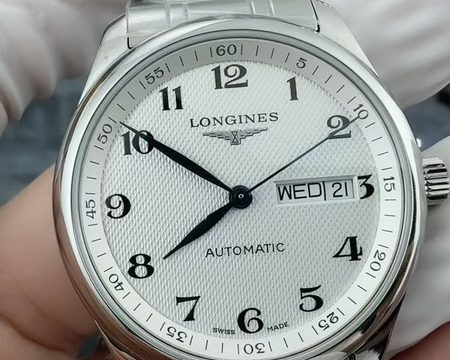
Meanwhile, Mr. Hayek went on to acquire renowned watch brands with rich heritage including Omega, Breguet, Blancpain and Longines, building what is now the giant Swatch Group. In the 1990s, Swiss mechanical watchmaking gradually recovered and flourished. Brand narratives, heritage and brand identities were carefully crafted. He revitalized the Swiss watch industry and built the Swatch Group as we know it today.

Today, Switzerland is home to three major watch groups: the Swatch Group, Rolex and Vendôme. They control roughly 80% of the world’s luxury watch brands and production capacity.

Swiss watchmaking proved that mechanical watches hold a different kind of value from quartz watches. They are not mere daily commodities but luxury goods. Before the advent of quartz watches, only a small number of exquisitely crafted timepieces qualified as luxury items, while most were ordinary everyday watches.

Mass-produced watches, categorized as everyday timepieces, simply could not compete against Japanese quartz watches. For this reason, the Swiss watch industry had to pivot toward the high-end segment.

This crisis wiped out the market for low-grade mechanical watches, while high-end mechanical watches adopted a new mode of existence: crafted exclusively for affluent clients. Hence, a narrative emerged in the 1980s that mechanical watches were luxury collectibles. Those mechanical watch brands that survived that era rose from the ashes and grew even more resilient.

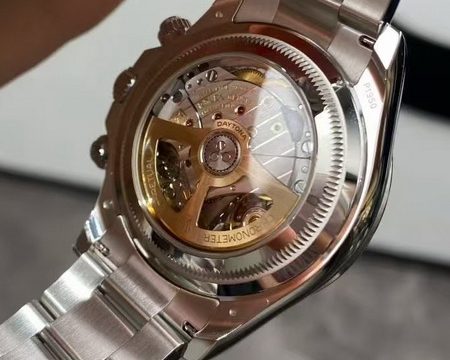
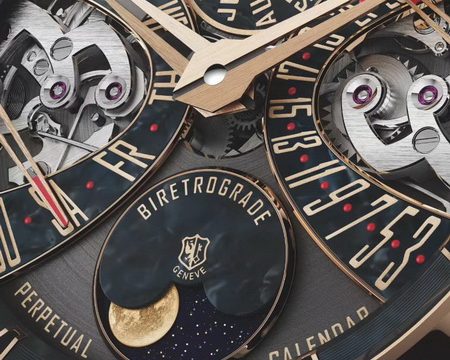
Over these two decades, Swiss watch factories obsessively focused on functional upgrades and innovations for mechanical watches, developing many highly sophisticated complications, such as upgraded tourbillons, karussells, perpetual calendars, moon phases, dual-time displays, and even Chinese lunar calendar watches.

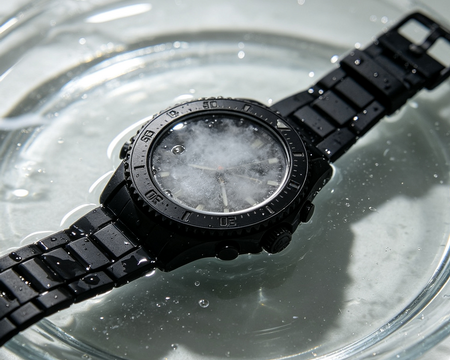
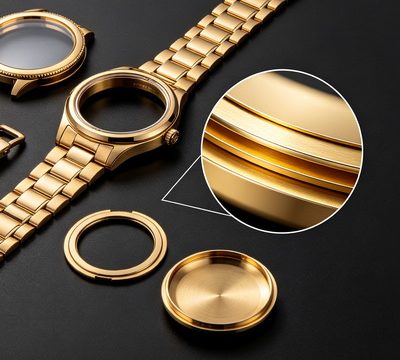
The Swiss made revolutionary innovations in enamel work, deep diving water resistance, metal surface finishing and more by leveraging cutting-edge new materials available at the time. This quietly built a substantial “technical moat” that watch manufacturers from other countries could not match. It can be said that when it comes to cost control, sales volume and production output, European brands cannot compete with American and Japanese counterparts. Nevertheless, thanks to exquisite craftsmanship and profound heritage, traditional European crafts including high fashion, perfumes and watchmaking still dominate the global market.

After the 1990s, these revitalized brands further expanded into global markets, fully activating markets particularly in the Middle East and East Asia. In the watch industry, nearly all the famous watch brands we know today emerged from this wave of global marketing. Those that kept up with the trends were completely transformed, while those clinging to old ways faded into obscurity.

With a century of accumulation, traditional watchmaking has evolved into a culture and an emotional heritage. People love mechanical watches not merely as timekeeping tools, but for far greater meaning.