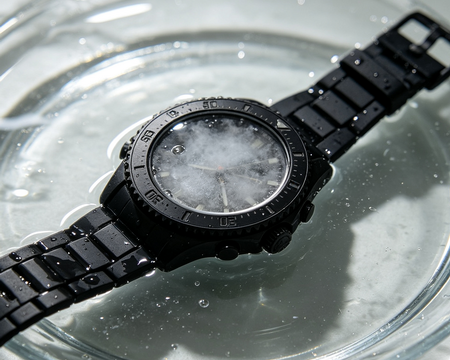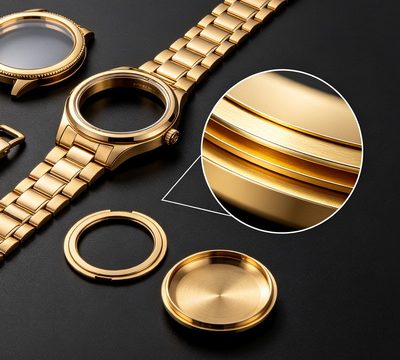
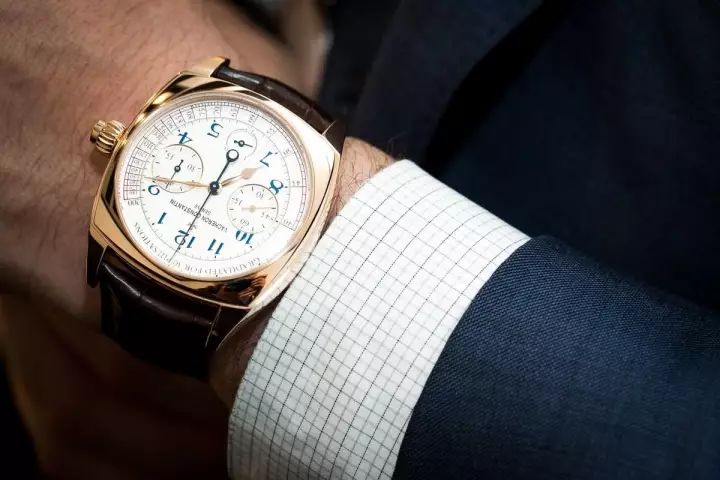
Many watch enthusiasts may have noticed that certain models from the same brand share identical movements and dial designs yet carry vastly different price tags. In most cases, the higher‑priced version is crafted from precious‑metal materials. Some watch lovers are drawn to precious‑metal watches for their upscale, prestigious appeal, while others prefer the simplicity and practicality of stainless‑steel models. Today, let’s take a closer look at precious metals used in watchmaking.
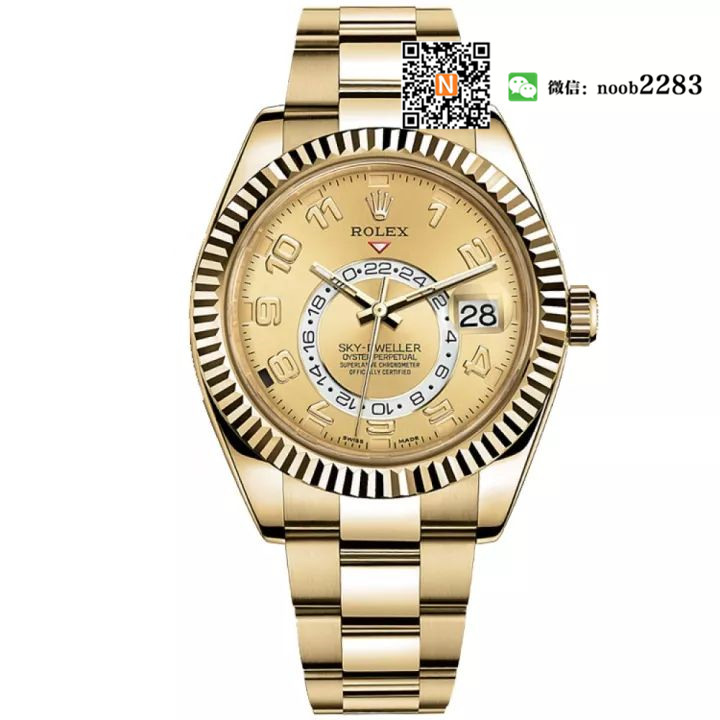
Precious‑metal watches are mainly divided into two material categories: gold alloys and platinum. Pure gold is unsuitable for watch cases due to its low hardness. Regardless of hue, so‑called “gold watches” are actually alloys, cast from 750 parts per thousand fine gold mixed with several other metals. This well‑known formulation is 18‑karat gold.

Gold watch cases are cast from 750‰ fine gold blended with 125‰ silver and 125‰ copper. Since silver and copper produce a tone close to gold, the alloy retains the natural golden colour when combined with fine gold, yet gains substantially improved hardness, making it fully capable of withstanding tensile force from the bracelet. Rolex is practically synonymous with gold watches. Back in the era of Hong‑Kong gangster films, every leading figure wore a gold Rolex, radiating powerful presence.

Watch cases are cast from 750‰ fine gold and 250‰ copper. While the fine‑gold content remains unchanged, the higher proportion of copper gives the alloy a subtle reddish tint, hence the name red‑gold watch, also known as rose‑gold watch. With its distinctive tone, red gold is less ostentatious than yellow gold and exudes greater elegance, winning growing recognition and popularity in recent years. Red gold can be further broken down into pink gold. Unlike standard 18K yellow gold, 18K pink gold carries a reddish hue and goes by various names including red gold and rose gold. It is also referred to as Russian gold, as it gained great popularity in Russia in the early 19th century.

It is generally composed of 750‰ pure gold and 250‰ electrolytic pure copper. It features excellent ductility, high hardness, strong resistance to deformation and scratches, as well as varied colour tones. Adding silver will lighten its hue; the higher the silver content, the less prominent the red tone becomes. When silver content rises to 10 % and copper drops to around 15 %, the alloy takes on a pale or pinkish shade.
‑ 3N pink gold: 75 % pure gold, 13 % silver, 12 % copper
‑ 4N pink gold: 75 % pure gold, 9 % silver, 16 % copper
‑ 5N pink gold: 75 % pure gold, 4.5 % silver, 20.5 % copper
As can be seen, less silver paired with more copper produces a deeper, more reddish colour.
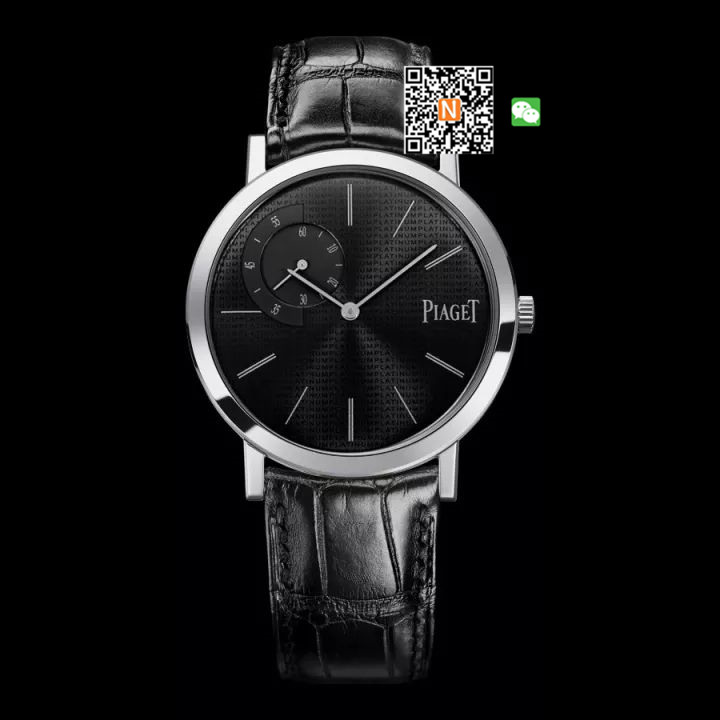
The concepts of white gold and platinum have long been confused among the public, which calls for a clear explanation here. In watchmaking, white gold is still a gold‑based alloy containing 750 parts per thousand of fine gold. There are two major formulations for the remaining 250 parts of alloying metals.
One formulation uses zinc, which yields a greyish‑yellow white‑gold tone. A rhodium plating on the surface is required to achieve a bright, lustrous finish. The downside is that the rhodium plating will wear off over time, diminishing visual appeal. Even reputable brands offer rhodium‑replating services, yet this remains an inconvenient extra step.
The other formulation incorporates palladium, another precious metal, which drives up production costs. Palladium‑alloyed white gold delivers a smooth, evenly bright white colour with no need for rhodium plating, sparing owners from considerable maintenance hassles down the line.

The three aforementioned materials are all gold‑alloy watches, whereas platinum is currently the most expensive precious‑metal material. In the jewellery market, platinum rings cost significantly more than gold rings, and a similar price gap applies to watches made from these two metals. Due to its high cost, platinum cases are reserved for the world’s most exclusive timepieces, which command staggering price tags.
In Switzerland, platinum bears official hallmarks distinct from those for 18‑karat gold, making differentiation relatively straightforward for buyers. To help customers identify its pieces, Patek Philippe sets a small, clearly visible diamond beneath the 6‑o’clock marker on all its platinum watches. With this detail in mind, you can reliably tell whether a Patek Philippe watch is made of platinum.

- Avoid contact with chemicals such as bleach and hand‑sanitizing soap.
- K‑gold is prone to scratches caused by friction and impact. Handle watches with care and store them separately.
- Wipe off fingerprints and smudges on the surface using a non‑abrasive cloth, such as a silver‑polishing cloth or eyeglass‑cleaning cloth.
- Though large‑dial watches are popular, moderate sizing is recommended for gold watches. For ladies’ gold watches, the case diameter should not exceed 36 mm. Men’s dress gold watches work best between 35 mm and 40 mm; sports models may be slightly larger.
- Scratches are inevitable. Take a rational attitude toward marks formed during daily wear. They are traces of time rather than signs of poor care, so do not over‑worry about them.
Here is a quick guide to Patek Philippe material codes: G stands for 18K white gold; R for 18K rose gold; J for 18K yellow gold; 1A for full stainless‑steel construction. For example: 5711/1A is stainless‑steel; 5711G is 18K white gold; 5711P denotes platinum.
Precious‑metal watches are generally stamped with official precious‑metal hallmarks on the case back. Some watches that appear rose‑gold‑coloured may in fact be gold‑plated.