Let’s take a look at Tudor’s in‑house movements

What kind of brand is Tudor exactly? It is often known as Rolex’s younger sibling, manufactured at the same watch‑making factory yet produced on separate production lines and positioned at a different tier. Many also note that Tudor once relied permanently on ETA movements without in‑house calibres. When Tudor was first founded, Hans Wilsdorf positioned it as “the people’s Rolex”. While promoting Rolex watches in Britain, the Rolex founder found that local customers could not afford Rolex’s high‑end price tags, which gave rise to the Tudor brand.

Early‑era Tudor watches bore strong stylistic resemblances to Rolex timepieces. Crown‑themed details frequently appeared on case backs, bracelets and winding crowns. Another hallmark was the varied‑sized rose logo on the dial, an emblem referencing the long‑ruling British Tudor dynasty. This timeless symbol remains one of the brand’s most talked‑about icons. Tudor underwent brand repositioning and transformation starting in 2009, when fresh design features were incorporated into its watch collections. In 2015, the brand unveiled its debut in‑house movement, the MT‑56 series. The initials MT stand for Manufacture Tudor. This milestone ended its long‑term dependence on generic movements supplied by ETA and Valjoux. The launch of the MT‑56 series came as a natural outcome of Tudor’s brand‑upgrade ambition together with the tightening supply of ETA movements. Watch enthusiasts harboured few doubts over the new movement’s quality, given that Tudor had previously tuned outsourced ETA calibres up to premium‑grade performance. As a light‑hearted analogy, a misstep by Tudor would also embarrass Rolex, much like a parent cannot afford the disgrace brought by a misbehaving child. It is straightforward to tell apart variants within the MT‑56 movement family: – MT 5621: with date and power‑reserve indicators – MT 5612: date‑only version – MT 5601: no‑date variant with a slightly compact dimension – MT 5602: no‑date calibre

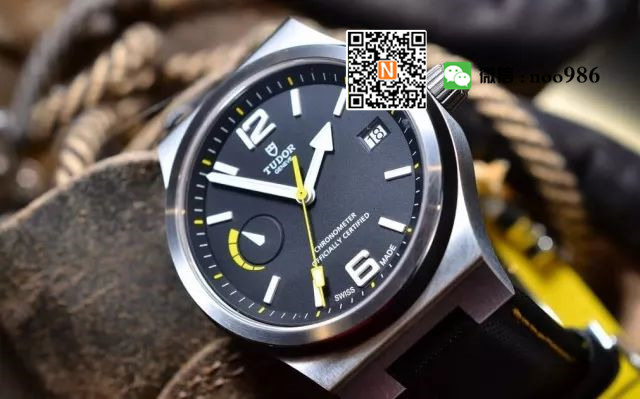
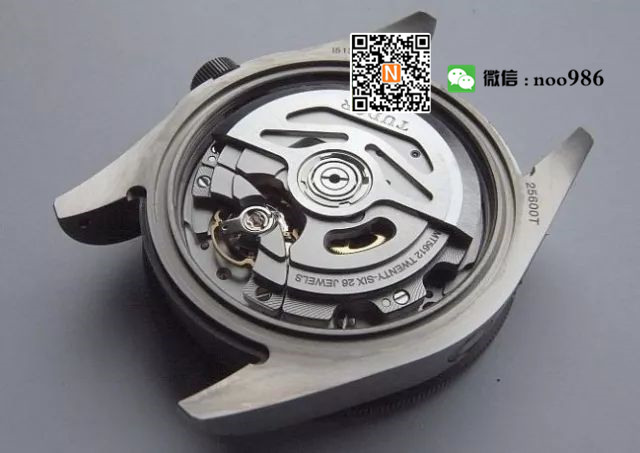
The movement disassembled in this session is the MT 5612, a calibre equipped with a central sweep‑seconds hand and a date display. It has been fitted into numerous Tudor watch collections, including the Pelagos diving watch, which claimed the Best Sports Watch award at the 2015 GPHG, and the two‑tone Heritage Black Bay collection unveiled in 2017.

The MT‑5612 movement runs at a vibration frequency of 4 Hz and measures 31.8 mm in diameter. Similar to Rolex’s Cal.3135, it features outstanding robustness, precision and durability.

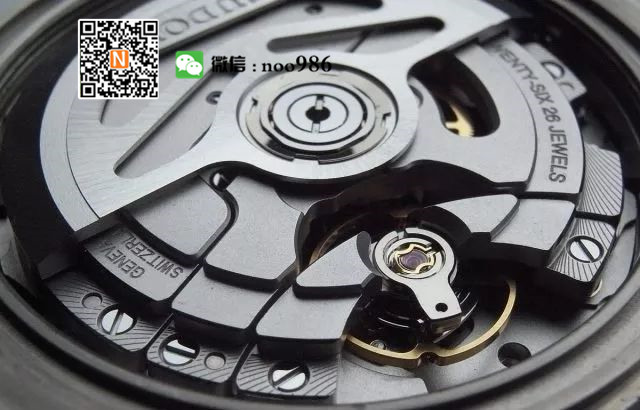
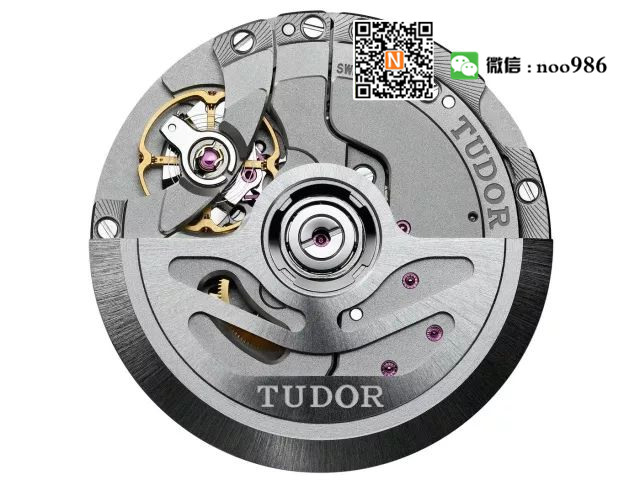
Once the case‑back is removed, you can observe that the cross‑over balance bridge and the two‑piece cover plate underneath the balance wheel adopt a stepped‑style design, delivering an overall impression of solidity and stability.

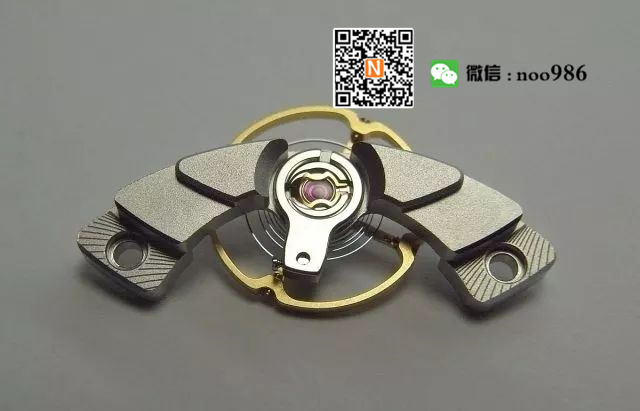
Beneath the balance‑wheel bridge sits a four‑armed annular balance wheel. Its rate is fine‑tuned by four adjustment screws. This is a sophisticated high‑end regulating system, also known as a free‑sprung hairspring balance or inertia‑adjustment balance wheel.

After removing the balance‑wheel bridge, one screw can be seen at the lower‑right corner. This configuration matches the Cal.7040 from the Rolex Prince collection. The Cal.3035 also uses a single screw, whereas the Cal.3135 employs two for its balance‑staff adjustment mechanism. When minor wear occurs on the balance staff, fine‑tuning the clearance preserves accurate timekeeping. This structure is rarely‑seen among luxury watch brands. Meanwhile, the single‑layer silicon hairspring shields the movement against disturbances caused by magnetic fields and temperature fluctuations.

Here are the detailed features of the removed balance‑wheel bridge with excellent shock‑resistance performance. The MT 5612 is fitted with an Incabloc shock absorber rather than Rolex‑made KIF shock‑proof assemblies. Rolex equips movements including the 3131, 3135, 3555 and 3186 with KIF shock absorbers, while calibres such as the 3132, 3136, 3156, 3187 and 9001 adopt Paraflex shock‑resistant systems. Nevertheless, thanks to the relatively large dimension of the MT 5612, it delivers remarkable shock‑absorbing capability. Present‑day Patek Philippe and A.‑Lange & Söhne watches also widely deploy this type of shock‑proof device.

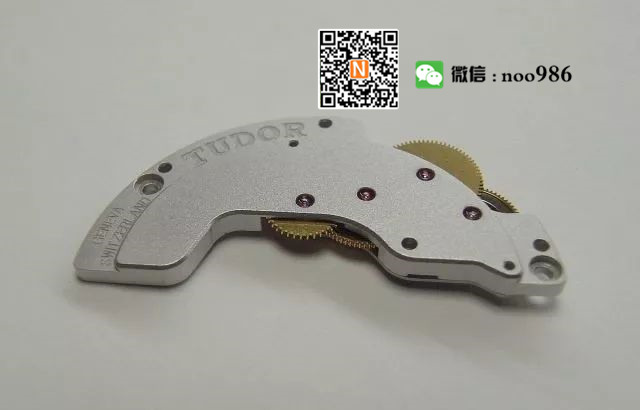
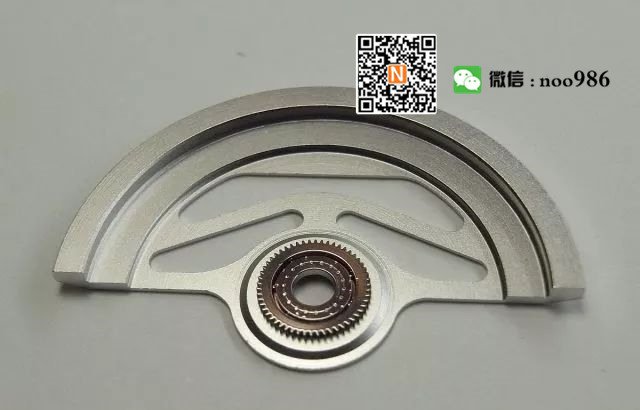
The rotor is separated from the self‑winding mechanism, whose gear train sits on the side. Unlike the Rolex Cal.3135 where the rotor connects directly to the winding assembly, the MT 5612 keeps its rotor and automatic‑winding system independent, with the winding spindle mounted on the gear‑train cover plate. This setup helps prevent component breakage. This side‑mounted gear‑train layout for the self‑winding mechanism is relatively uncommon and generally intended to cut down movement thickness. As for the going‑train arrangement, it follows conventional configurations. Watch‑makers tend to stick to proven traditional layouts, since overly‑radical designs are often prone to more operational flaws.

The rotor of the MT‑5612 features a bidirectional self‑winding structure fitted with a ball‑bearing assembly, delivering satisfying winding efficiency and a 70‑hour power reserve, which conforms to the development trend of newly‑released movements in recent years. For surface finishing, the MT‑5612 movement mostly adopts matte sand‑blasted treatment. Watch enthusiasts accustomed to Rolex movements may notice a minor finishing gap. Nevertheless, compared with peer‑positioned movements from competing brands, Tudor’s craftsmanship is already commendable and beyond reasonable criticism. From a nit‑picking perspective, the movement would achieve perfection if the pallet‑fork cover plate underneath the balance wheel received further refinement.

The MT‑5612 has obtained the Swiss COSC chronometer certification. In truth, meeting COSC‑standard requirements is not overly challenging. During the research‑and‑development phase, the brand ran computer simulations covering every plausible working condition of the movement across 15 years and carried out targeted upgrades on identified defects, demonstrating the watch manufacturer’s commitment to quality. Even so, isolated early‑stage repair cases have occurred for the MT‑5612, which count as rare exceptions. No mechanical timepiece can maintain flawless stability one‑hundred‑percent of the time. Even top‑tier luxury brands occasionally run into malfunctions. What truly matters is proper after‑sales handling, alongside drawing lessons from faults to implement improvements — a priority that every watch brand ought to contemplate.

Related Posts

Leave a Reply

Your email address will not be published. Required fields are marked *