The well‑known Rolex Submariner was launched in 1953. Nicknamed the “Sea‑Dweller” among watch enthusiasts, this dive‑watch came into being due to historical circumstances. Back in the 1940s and 1950s, sturdy and reliable diving timepieces were required for offshore oil extraction and marine exploration, which laid the groundwork for the birth of the Submariner. Nearly 65 years have passed since the debut of the iconic dive watch. It has undergone numerous iterations, much like sports cars and scale‑down models. Several generations featured major overhauls, while others only received minor tweaks. Watch collectors hold varied preferences: some favour date‑display variants, and others are fond of Mercedes‑style hands. Every modification made to the Submariner bears witness to history. Now let us take a retrospective look at all generations of the Submariner.
1953
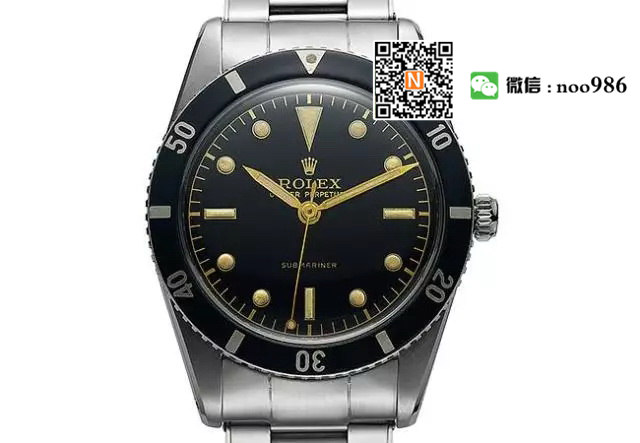
The original Rolex Submariner debuted in 1953 under the reference 6204, with a water‑resistance rating of 100‑metres. This explains why many early‑stage dive‑watch certifications set 100‑metre water resistance as the minimum standard. Fitted with the A.260 self‑winding movement, it featured a far more under‑stated appearance compared to subsequent iterations. Signature Submariner hallmarks including crown guards, the first‑15‑minute graduated bezel, framed hour markers, Mercedes‑style hands and printed water‑resistant labelling were absent from the 6204. Even so, the inaugural‑generation dive watch remains highly sought‑after by Submariner devotees.
1954
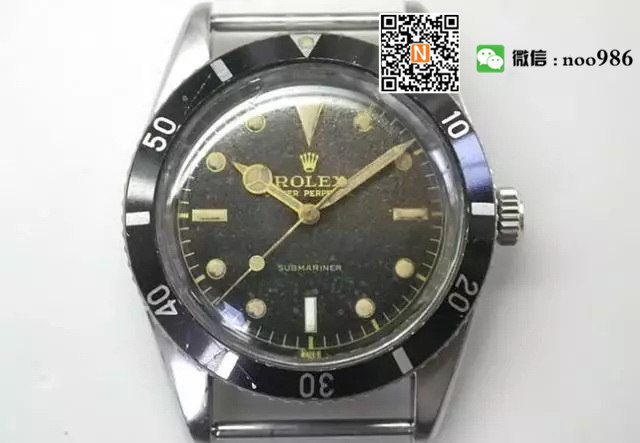
Ref. 6205
Launched in 1954, the Submariner Ref. 6205 doubled its water‑resistance capability to 200 metres and was equipped with the Caliber A.296 self‑winding movement. Its crown was noticeably larger than that on the first‑generation model for simpler time adjustment. The rotating bezel bore Arabic numerals every ten minutes, without the graduated markings for the initial 15‑minute interval. One prominent visual upgrade of this Submariner was the newly‑adopted Mercedes‑style hour hand. The dot on the second hand was repositioned backward relative to the prior edition, delivering enhanced legibility.
1959

Ref. 5512
Released in 1959, the Ref. 5512 marked the second‑generation Submariner and served as the prototype for the modern‑day Submariner. Its case diameter was increased from 36 mm to 40 mm. Crown guards were fitted to prevent accidental adjustment of the crown underwater. The bezel notches extended from the side onto its front surface, and minute graduations were added for the initial 15‑minute section on the rotating bezel.
1962
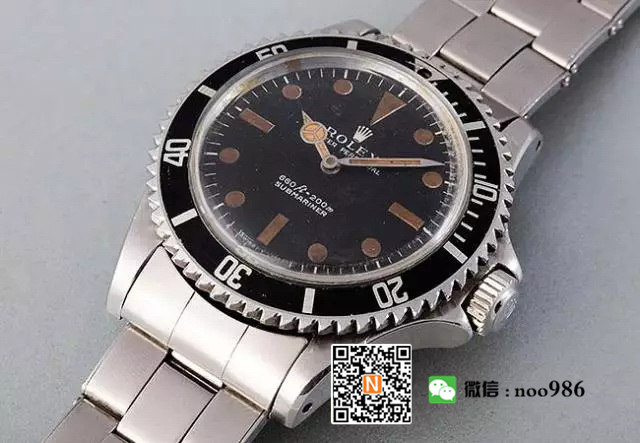
The Prop Watch Ref. 5513 Featured in *Live and Let Die (007)
Launched in 1962, the Submariner Ref. 5513 was once fitted with a serrated‑edge bezel and rose to fame in *Live and Let Die*, the 007 film starring Roger Moore. Like the earlier Ref. 5510, this timepiece initially adopted the Caliber 1530 self‑winding movement, before receiving an upgrade to the Caliber 1520 in 1963.
1966
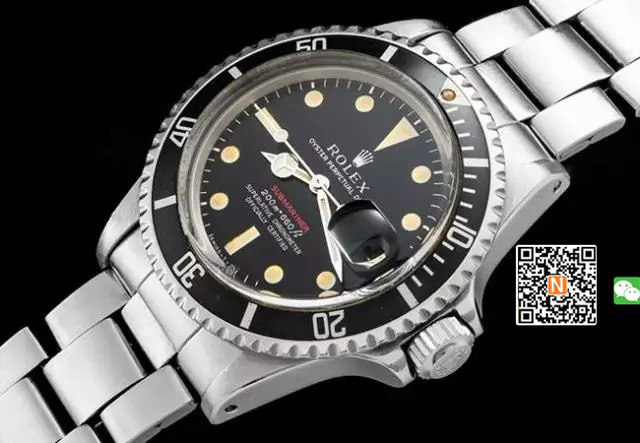
Ref. 1680
Released in 1966, the Ref. 1680 removed the‑3‑o’clock hour marker and introduced a date window topped with an acrylic magnifying lens. It housed the Caliber 1675 self‑winding movement inside. Besides, the “Submariner” lettering at the bottom of the dial was printed in red, a design kept until 1973. For this reason, red‑text Submariners traded at watch auctions and second‑hand watch markets mostly date back to this era, ranking among collectors’ favourites. The Ref. 16618 made its debut in 1969 with an all‑gold case. Its gleaming golden casing endowed the Submariner with a luxurious flair.
1967
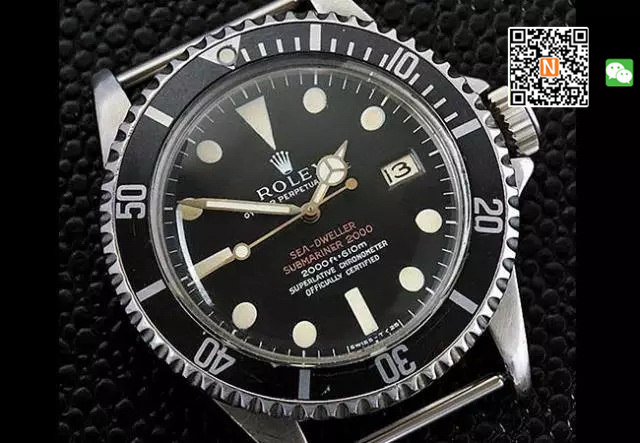
Ref. 1665 Sea-Dweller Submariner 2000
In 1967, Rolex rolled out a special‑edition Submariner variant, the Ref. 1665 Sea‑Dweller Submariner 2000. It can be regarded as a crossover model between the regular Submariner and the Sea‑Dweller line. Produced from 1967 to 1977, it reached an outstanding water‑resistance depth of 610 metres and came equipped with a helium‑escape valve. This Sea‑Dweller is well‑known as the “Double‑Red Sea‑Dweller”, named after its rare two‑line red‑coloured dial inscriptions reading “SEA‑DWELLER” and “SUBMARINER 2000” near the dial bottom, rendering it extremely scarce.
1977~1979
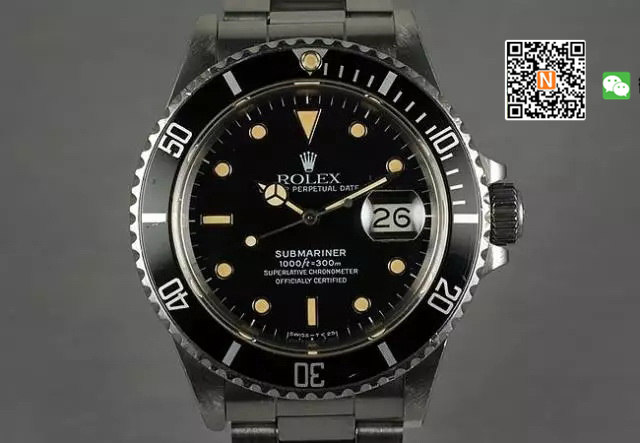
Ref. 16800
In 1977, the Submariner was fitted with a triple‑lock crown equipped with a three‑stage waterproof system for improved water resistance. The three dots underneath the Rolex crown emblem on the crown serve as its identifying mark.
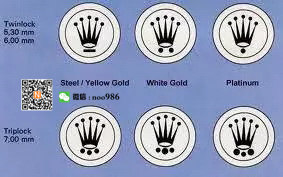
The markings (dots and bars) beneath the crown logo carry intricate meanings, and only their water‑resistance indications are explained here. Twinlock crowns are marked with one horizontal line, one dot or two dots under the crown for standard‑grade waterproofing, and their available crown diameters measure 5.3 mm, 6.0 mm and 7.0 mm. Triplock crowns are identified by three dots underneath the crown emblem, with crown sizes of 7.0 mm and 8.0 mm.
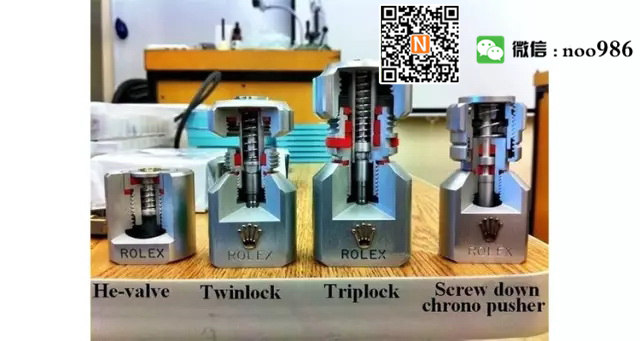
The picture above displays three types of crowns and one valve. From left to right: the helium escape valve for deep‑sea diving, the Twinlock crown, the Triplock crown, and the water‑proofing assembly for the Daytona chronograph push‑piece. The Ref. 16800, launched in 1979, represented the fourth‑generation Submariner. Its standout upgrade was 300‑metre water‑resistance. The original acrylic crystal was replaced with sapphire crystal. Limited by the manufacturing technology back then, the crystal consisted of two bonded sapphire pieces. The magnifying lens could be detached once the crystal was heated.
1981~1988

Ref. 16613
In 1981, the Submariner upgraded its bidirectional rotating bezel to a unidirectional one. This greatly lowered the risk of danger brought on by timing deviation caused by accidental bezel knocks during underwater‑diver operations. The Ref. 16800 pioneered 904L stainless‑steel construction, delivering enhanced sturdiness and corrosion resistance. Released in 1983, the Ref. 16613 adopted Rolex‑patented Rolesor, a composite material combining 904L‑grade stainless steel and yellow‑gold.
1988
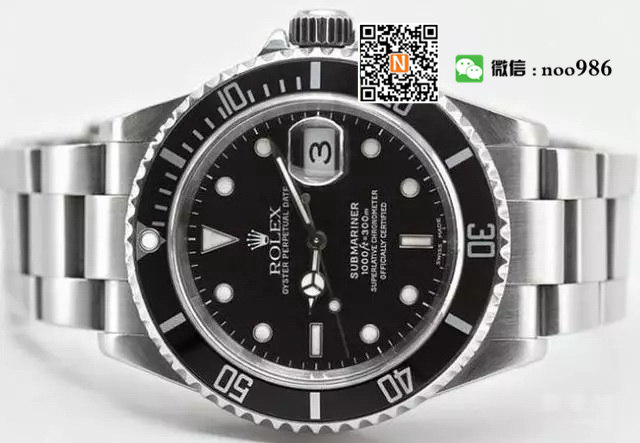
Ref. 16610
The hour‑markers and triangular zero‑marker on early‑model Rolex Submariners originally came without surrounding frames, the well‑known “glue‑on dial”. Framed indices were introduced in 1984, which gradually phased out the glue‑on dial design. Consequently, the glue‑on dial variants sought‑after by numerous Rolex enthusiasts were all manufactured before that period. Launched in 1988, the Ref. 16610 was powered by the Caliber 3135 movement and bore a strong‑resemblance to the modern‑day Submariner in appearance.
In 2008, the Submariner replaced its anodised‑aluminium bezel insert with the present‑day Cerachrom ceramic bezel. The ceramic insert resists scratches and abrasion far better, whereas the old aluminium bezel was prone to fading under ultraviolet radiation. Rolex also adopted Chromalight luminous material to supersede the former Super‑Luminova and the earlier tritium‑based luminescent coating. It delivers brighter glow and removes worries over minor radiation from tritium gas.
present
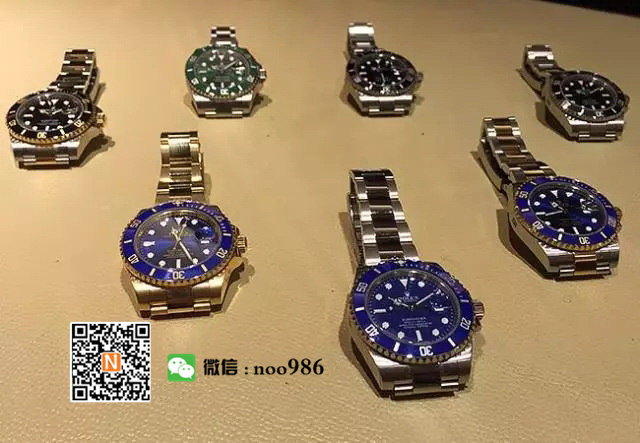
Rolex officially lists eight Submariner variants on its website: yellow‑gold‑and‑steel models with blue and black dials, solid yellow‑gold versions fitted with blue and black dials, the white‑gold blue‑dial variant, date‑equipped and no‑date stainless‑steel black‑dial watches, and the iconic green‑dial stainless‑steel edition. All contemporary Submariners feature a 40‑millimetre case and are powered by the Cal. 3135 self‑winding movement introduced back in 1988. These movements meet COSC chronometer standards with a daily rate deviation kept within ±2 seconds and are fitted with the blue Parachrom hairspring. Exterior specifications include a scratch‑resistant Cerachrom ceramic bezel insert, blue‑toned Chromalight luminous markers, an Oyster bracelet equipped with the patented Rolex Glidelock clasp, and a 300‑metre water‑resistance rating.