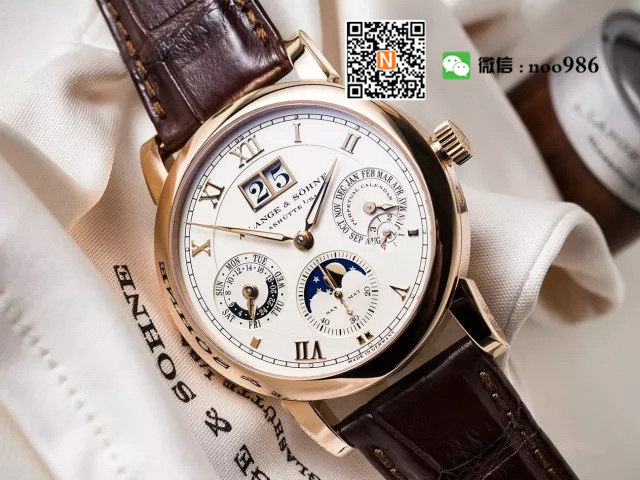
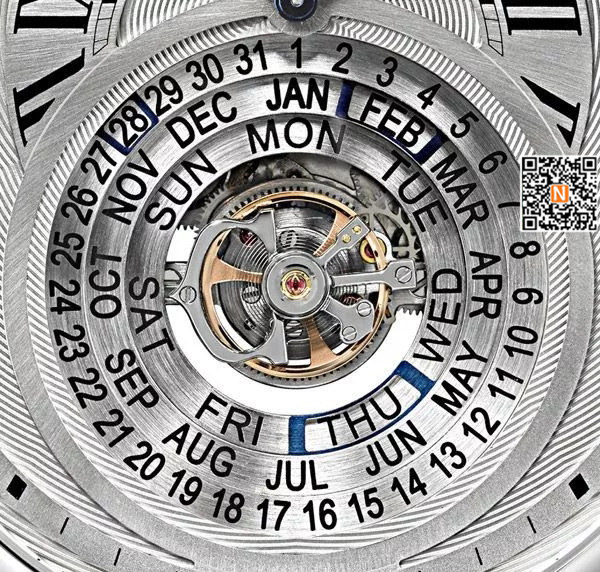
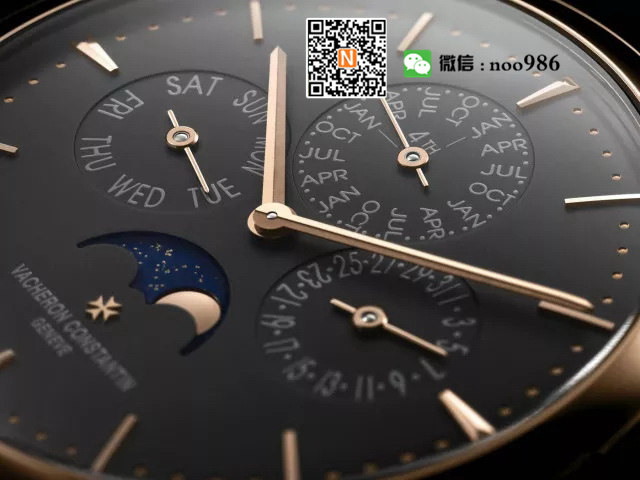
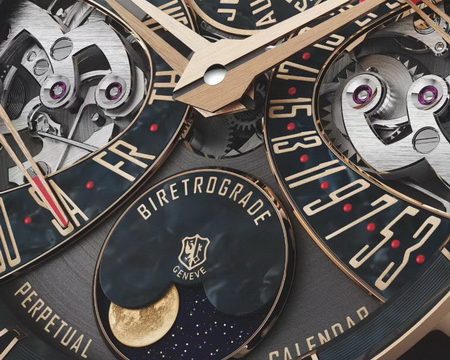
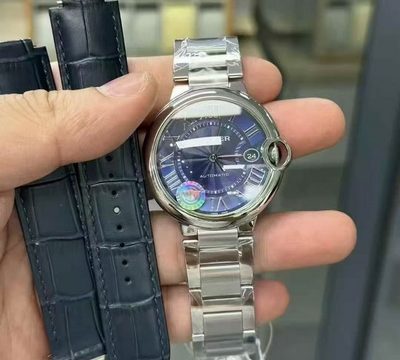
A perpetual‑calendar watch that automatically displays February 29 on every four‑year leap‑year is known as a “full perpetual calendar”. By contrast, a “semi‑perpetual calendar” cannot show February 29 during leap‑years and requires a manual date adjustment once every four years. Perpetual‑calendar watches command high prices owing to their intricate mechanics, and full perpetual‑calendar models cost even more than semi‑perpetual‑calendar variants due to their greater complexity. Maintenance of perpetual‑calendar timepieces can also be demanding. If serious malfunctions occur, the watch usually has to be sent back to the manufacturer for repair, resulting in substantial costs of both time and money. Do you believe replica‑watch makers are capable of producing such a sophisticated mechanism? Even if they could, the final cost would defeat the whole purpose of buying a replica. Therefore, customers should not expect genuine functional perpetual‑calendar complications in watches costing only a few thousand.
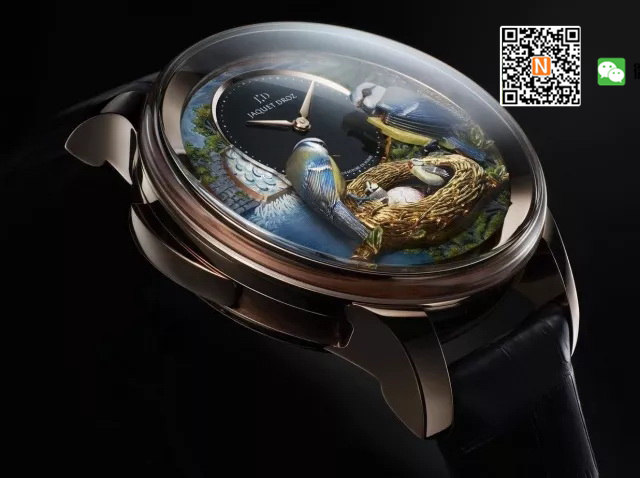
Jaquet‑Droz Bird Repeater
The minute repeater is another high‑end watch complication, long regarded as one of the most sophisticated, intricate, and visually deceptive functions. Its complexity goes far beyond pure watchmaking mechanics, as expectations for minute‑repeater timepieces carry strong aesthetic significance. Also known as a three‑gong repeater, the minute repeater chimes out hours, quarters and minutes with distinct tones produced by three separate gongs. It represents a masterful combination of acoustics and mechanical dynamics. Usually, a slide lever or push‑piece is located on the side of the watch case. Sliding or pressing it triggers the entire striking mechanism, where small hammers strike circular gongs to generate chimes, allowing the wearer to tell the time by sound.
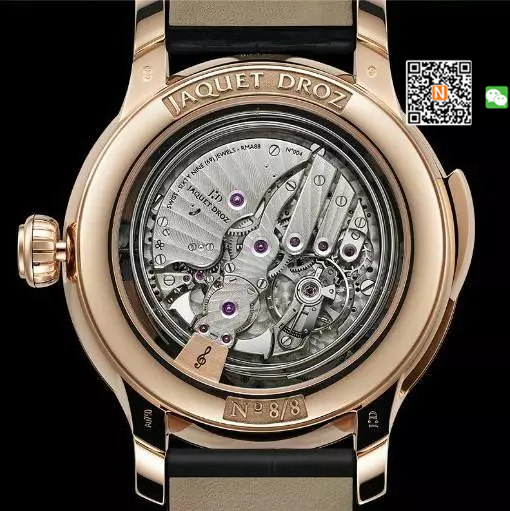
Besides minute repeaters, other striking‑watch variants gradually emerged, including ten‑minute repeaters, half‑quarter repeaters and five‑minute repeaters, offering ever‑higher precision for time chimes.
Grande Sonnerie Petite Sonnerie
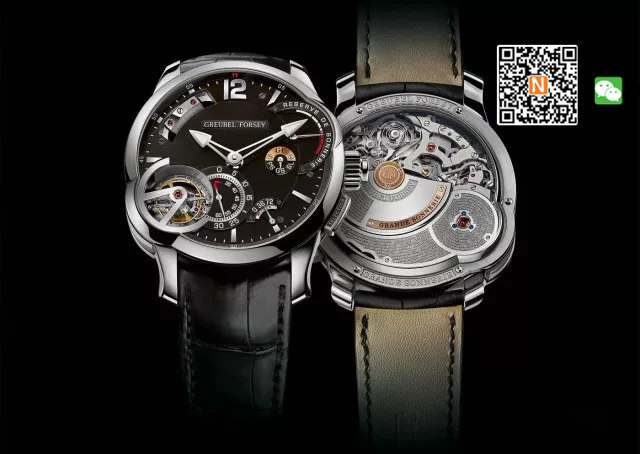
Greubel Forsey Grande Sonnerie
A striking‑sonnerie watch chimes the time automatically without manual operation. It falls mainly into two categories: grande sonnerie and petite sonnerie. Both strike on the hours and quarters. The difference is that the petite sonnerie does not repeat the hour chime when it strikes the quarter.
Difference between sonnerie watches and repeater watches:
A sonnerie watch can announce the time automatically. It requires an extra dedicated spring to power the self‑striking mechanism. Therefore, a sonnerie watch may be regarded as an automatically‑actuated gong‑striking watch.
Enamel Craft / Enamel Work

An enamel watch refers to a timepiece decorated with enamel craftsmanship on its dial, or the outer cover and case‑back of a pocket watch. Enamel is a powdery, glass‑like substance made from raw materials such as quartz, feldspar, borax and china clay, with metal oxides used as colourants. It is produced after grinding and melting.
Enamel craftsmanship is mainly divided into five categories: solid‑colour enamel, miniature painted enamel, cloisonné, champlevé and grand‑feu enamel. Enamel watches usually command high prices, because this craft demands precise temperature control, superb workmanship and extensive experience from artisans. Some cheap so‑called “enamel watches” on the market actually feature ceramic dials instead of real enamel. The tactile and visual difference between the two materials is substantial, and their prices vary enormously.
You may wonder why the tourbillon has not been mentioned. Is the tourbillon not one of the high‑end watch complications? As noted earlier, the overall mechanism of a tourbillon is comparatively simpler than that of a perpetual‑calendar or repeater movement. Many manufacturers, including a small number of replica‑watch factories, are capable of producing tourbillons. On online marketplaces, a bare tourbillon movement costs roughly 3,000, which pushes up the total cost of a finished replica watch. Such replicas are generally priced at a minimum of 6,000‑7,000, making them less common yet far from non‑existent. In many cases, replica producers do not avoid certain complications out of choice; they lack the required technical capability, or the high production cost leaves very little profit margin.