
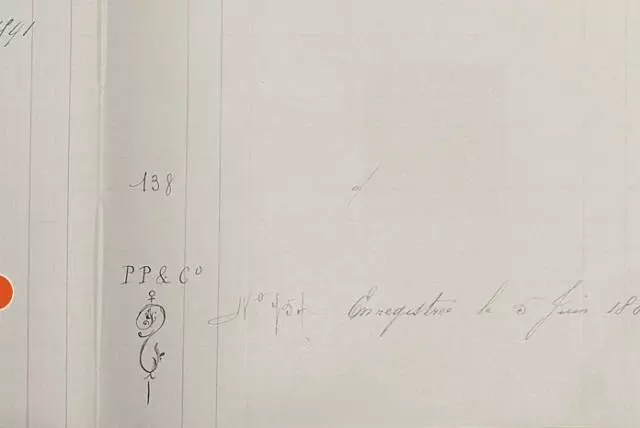
The brand‑name registration for “Patek Philippe et Compagnie” was submitted in 1882. It adopted the initial‑letter abbreviation “PP&C” decorated with ornate typefaces, yet this design was abandoned shortly afterwards.
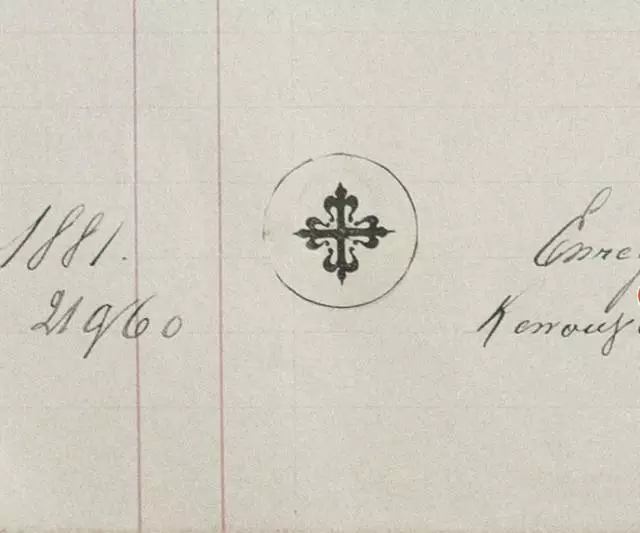

Three out of six newly‑registered trademarks in 1891 featured the Calatrava Cross motif. Patek‑Philippe likely took this measure to prevent third‑party parties from unauthorised usage or counterfeiting of its Calatrava‑Cross emblem.
In 1875, two gifted young watch‑making masters, Jules Louis Audemars and Edward Auguste Piguet, resolved to devote themselves to high‑end horology within Switzerland’s renowned Vallée‑de‑Joux watch‑making heartland. They founded the Audemars Piguet watch manufactory and established the firm “Audemars, Piguet & Cie” in Le Brassus on December 17, 1881.

Audemars Piguet’s logo “AP” consists of the initial‑letter “A” and “P” taken from the surnames of its founders Jules‑Louis Audemars and Edward‑Auguste Piguet. Displayed on the dial is the capital‑letter combined mark “AP”, with the watch‑brand name underneath.
旧LOGO
In 2012, the brand‑new logo underwent an ingenious redesign. The lengthy slogan “Le maitre de l’horlogerie depuis 1875” was replaced with the name of a village in the Vallée‑de‑Joux, namely Le Brassus, the long‑standing headquarters home to the Audemars Piguet manufactory.

Design drawing for the common five‑pronged Maltese‑cross stop‑work device
When registering its corporate emblem at the Swiss Federal Trademark Office in Bern in 1880, Vacheron‑Constantin deliberately picked this symbol of premium quality to showcase its superior craftsmanship and hand‑made watch‑making heritage to the whole world.

The brand emblem was registered at the Swiss Federal Trademark Office in Bern
The Maltese Cross is the symbol adopted by the Knights Hospitaller and the Order of Malta. Shaped from four‑pointed V‑shaped arms, its design derives from the cross used during the First Crusade. Its eight points are said to represent the eight virtues of a knight: loyalty, piety, honesty, bravery, glory and honour, fearlessness in the face of death, assistance for the poor and sick, and reverence for the church.
Girard‑Perregaux was founded long before it adopted its current‑day name. In 1791, master watch‑maker Jean‑François Bautte opened his manufactory in Geneva, centralising all watch‑making procedures for streamlined management and communication.
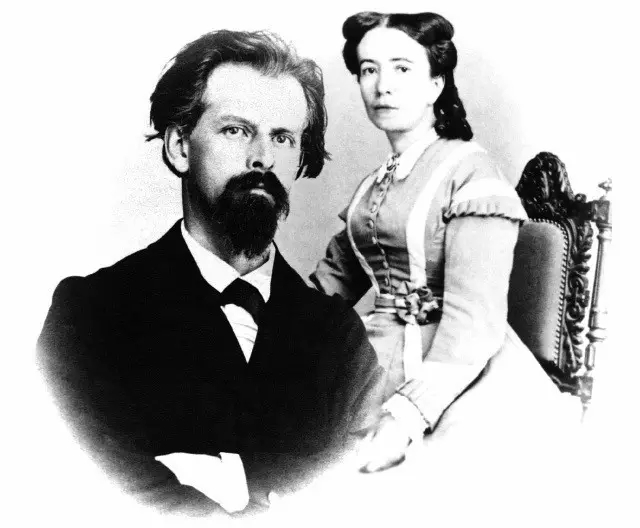

He therefore won high‑recognition from Erland Dort, chairman of the Sandoz Family Foundation. With substantial backing and in‑depth cooperation, the Parmigiani brand made its debut in 1996. Its interlocked‑PF brand logo features the tail end of the letter F shaped like two screws, a symbol of the brand’s persistent pursuit of perfection down to the smallest details.

Franck Muller is undoubtedly a contemporary horological genius. He began learning watch‑making from an early age. After graduating from the Geneva Watchmaking School, he restored antique timepieces, much like F.‑P. Journe and Kari Voutilainen. Back in the 1980s, he had already started producing his own watches under the name “Franck Genève”.

In 1991, Franck Muller partnered with case‑maker Vartan Sirmakes to set up his watch manufactory in Geneva and officially launched his eponymous horology brand, Franck Muller. The tonneau‑shaped watch case and striking oversized numeral markers serve as the brand’s signature hallmarks and emblems.

Antoine LeCoultre opened his first watch‑making workshop in 1833. Every timepiece he produced bore the LeCoultre mark, and the enterprise operated under the name Le Coultre & Cie, the forerunner of Jaeger‑LeCoultre. It was not until 1903, when his grandson Jacques‑David LeCoultre entered a partnership with Edmond Jaeger, that the present‑day Jaeger‑LeCoultre brand gradually took shape.



Accordingly, the main logo on its timepieces features an intertwined stylised combination of the‑letters J and L, with the brand name Jaeger‑LeCoultre printed underneath. As we can observe, elite‑tier watchmaking houses excel not merely in craftsmanship. They also attach great importance to details including logo design and intellectual‑property awareness. This partly explains how these prestigious brands have endured for over a century.