Watch‑lovers with a basic understanding of watch movements often question why certain timepieces fitted with the ETA2824 or ETA2892 movements are priced at tens of thousands and regard such pricing as a money‑making scam. Is this claim justified? This is the topic we are going to discuss today. Identical base movements are sold at varied price points by different brands. Why is that? Several contributing factors are listed below. 1. Brand equity: Brands carry different market prestige and value. 2. Finishing craftsmanship: Manufacturers perform distinct surface‑finishing work on ETA movements. For instance, the gap between an IWC and a Tissot watch powered by the identical ETA2824 goes far beyond a price difference of several thousand. 3. Additional determinants: Case material and manufacturing workmanship. Let us start with an introduction to ETA. ETA (ETA SA Manufacture Horlogère Suisse) is a Swiss supplier of raw‑blank movements and a cornerstone enterprise of the Swatch Group. Its core businesses cover conducting technical research for Swiss horology, enabling mass‑production of components, movements and complete watches at accessible costs, mastering full‑range technology for timepieces and production machinery, and carrying out the batch assembly of watch movements and finished watches.
Breitling Avenger Chronograph II
It is equipped with Caliber 13, which is modified on the basis of the ETA‑7750 movement.
ETA mainly specialises in mechanical movements and manufactures a wide‑ranging lineup of watch calibres. Apart from supplying movements to watch brands under the Swatch Group, including Longines, Omega, Swatch and Tissot, it also serves numerous independent watch‑makers. Brands such as Breitling, Fortis, Enicar and Titoni have adopted factory‑stock ETA movements inside their timepieces. Meanwhile, IWC, Oris, TAG‑Heuer and Tudor utilise movements modified from original ETA base calibres.
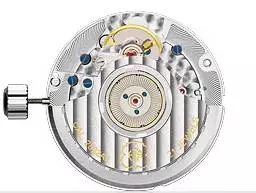
IWC Mark XVII Watch
It houses Calibre 30110, which is based upon the ETA2892‑A2 movement.
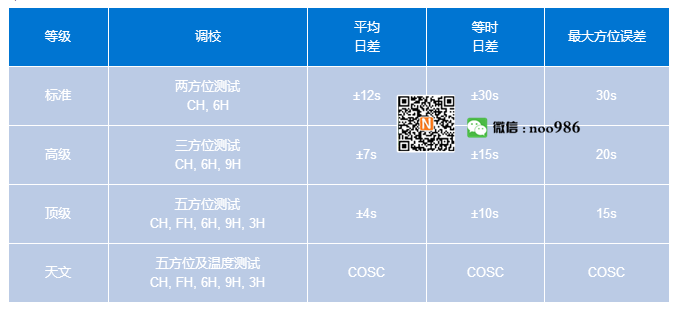
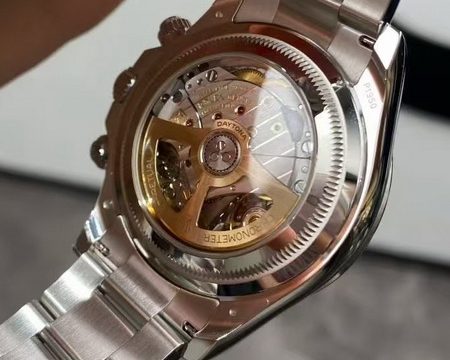
The ETA2824 and ETA2892 mentioned at the beginning of the article are high‑calibre factory movements. They are proven excellent mechanisms tested by tens of millions of timepieces over decades. Any upgrades made to the base‑movement structure or materials will raise the overall value of the watch. To satisfy diverse buyer requirements and market positioning, ETA roughly categorises its factory‑finished movements into four grades: Standard, Elaboré, Top and Chronomètre. Each movement is available in different specifications. Movements with higher sales volume and popularity come with more grade options. Movement manufacturing falls into two groups: Standard‑Elaboré and Top‑Chronomètre. Their dividing line lies in qualification tests. A Top‑grade movement will be upgraded to Chronomètre‑certified once it passes chronometer examinations, while a Standard‑grade movement becomes Elaboré‑grade after passing corresponding advanced‑level inspections.
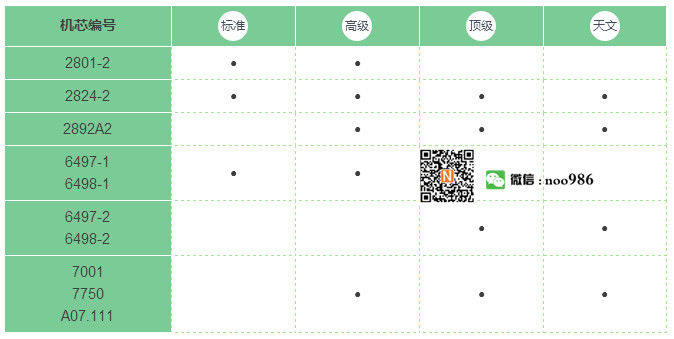
Regarding the V8 and DM markings on movement serial‑numbers The distinction between V8 and DM stems from differences in component material composition, surface finishing, heat‑treatment processes and temperature sensitivity. V8‑grade movements are mostly adopted by high‑end watch brands, whereas DM‑grade ones are commonly fitted into lesser‑known brands, no‑name timepieces and replica watches. An easy‑to‑remember analogy goes as follows: V8 is comparable to an automobile V8 engine, a specification mostly reserved for premium‑grade vehicles. By contrast, the DM label evokes supermarket direct‑mail leaflets, which stand for mass‑produced low‑cost goods. Nearly all chronometer‑certified movements are upgraded from V8‑grade foundations. DM‑grade movements can be likened to unregistered publications without official publication numbers. Hence the ranking: chronometer‑certified grade > V8 > DM. Taking the ETA2824 as an example, factory‑supplied components of different grades are listed in the table below.

# Explanation of Special‑Terminology Early‑era mainsprings were fabricated from carbon steel. They were highly prone to metal fatigue, generated substantial torque fluctuation, and their riveted end hooks tended to snap off easily. Nivaflex refers to a patented alloy composed of beryllium, chromium, iron, nickel and titanium. It delivers anti‑magnetic and rust‑resistant properties, resists metal fatigue, maintains steady torque output and features strong fracture resistance. Numerical suffixes attached to Nivaflex denote variations in chemical makeup, physical traits and corrosion‑resistance capacity. The Etachoc is an affordable shock‑absorbing device developed by Incabloc for ETA in 1980. Though simple‑structured, it proves tricky to disassemble and service, and secures the pivot jewel with a three‑pronged spring leaf. The manufacturer of Incabloc was later acquired by ETA. Nickel‑plated gold components are low‑cost and lightweight yet susceptible to magnetic interference. Glucydur is a proprietary alloy made up of beryllium, copper and iron. Its merits encompass exceptional hardness, dimensional stability, deformation resistance, antimagnetism and corrosion protection. Gold‑plated Glucydur balance wheels are widely fitted inside numerous C.O.S.C.‑certified chronometers. Nivarox hairsprings come in five grades distinguished by chronometric performance and alloy composition. The Anachron alloy outperforms all Nivarox hairspring variants and is reserved for premium‑tier wristwatches. ## Testing Criteria for ETA Movement Grades