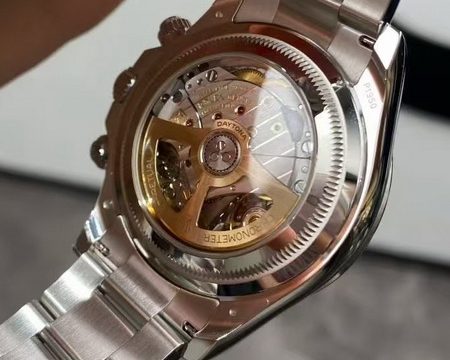
Nearly every luxury‑grade watch movement is fitted with ruby bearings. These rubies are usually synthetic, also known as functional jewels. Apart from minor decorative purposes, ruby bearings cut down friction and mechanical wear, greatly extending the service life of the movement. Bearings set with ruby stones help enhance the overall build standard of a timepiece.
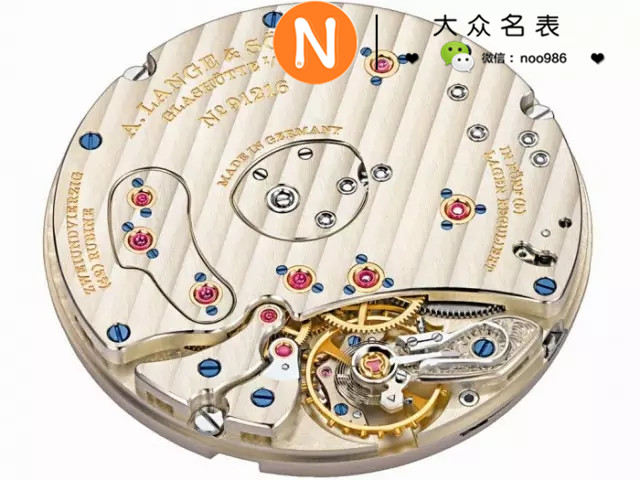
A.‑Lange & Söhne Calibre L095.4 Hand‑Wound Movement
42‑jewel
Nicolas Fatio, a Swiss optical instrument maker and astronomer, invented the ruby‑drilling technique. In the 18th‑century, Britain served as the hub for premium‑quality clocks. Hoping to secure a royal patent, Nicolas Fatio travelled to the country together with his technology.
For the sake of commercial interests, local British clockmakers falsely claimed that they had already mastered the drilling skill. Fatio failed to obtain the royal privilege. Instead, British horologists began producing drilled ruby beads for the watch‑making trade. From then on, the refined ruby‑processing technology gave Britain’s watch‑making industry a competitive edge.
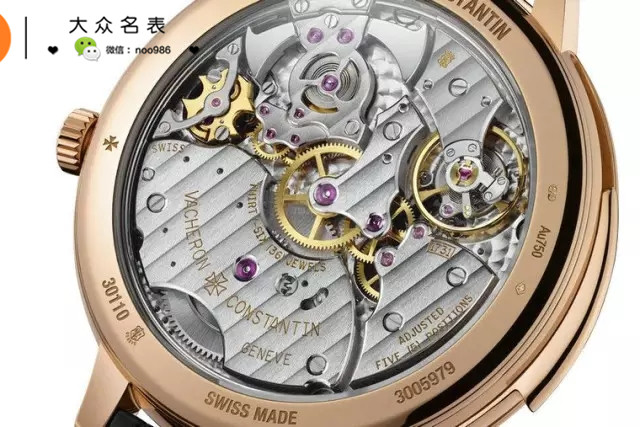
Vacheron‑Constantin Patrimony Contemporaine Calibre 1731
36‑jewel
Yet from raw‑material processing to finished components, around 90 percent of ruby stock gets discarded, and merely 10 percent proves suitable for watch‑movement assembly. It was not until the 1930s that ruby bearings became qualified to be fitted onto brass movement parts. The later adoption of stamping technology drastically cut manufacturing expenses.
Natural rubies are scarce. Man‑made synthetic rubies are manufactured from aluminium‑oxide‑based raw materials (aluminium trioxide). After a sequence of processing procedures, chromium‑oxide additives impart the characteristic red colour of natural rubies.
- Exceptional hardness (9 on the Mohs scale, second only to natural diamond rated at Mohs 10)
- Outstanding wear resistance
- Favourable surface‑roughness performance
- Low coefficient of friction
Ruby insetting serves practical technical purposes. Before watch‑makers recognised the vital advantages of ruby bearings, spindles for the escape wheel, pallet fork, balance staff and gear‑train wheels rotated directly inside holes drilled through brass bridges. Persistent rotation caused abrasive wear. Shedded metallic debris contaminated watch lubricant. The combined strain from spindle pressure and high‑speed friction inflicted unbearable damage upon the movement. Watchmakers discovered that ruby, the second‑hardest material after diamond, could withstand pivot abrasion and guarantee reliable watch operation.
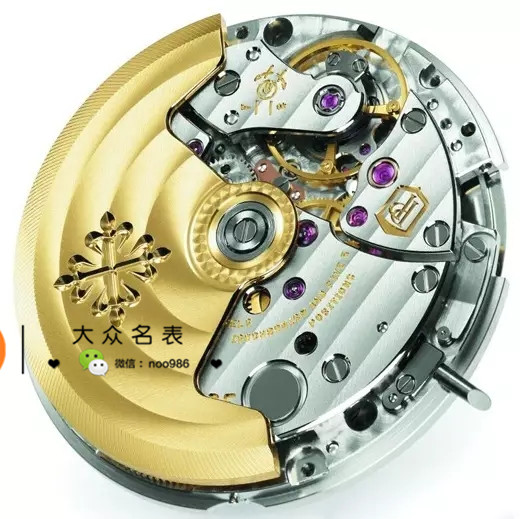
Patek Philippe Calibre 324 SC Self‑Winding Movement
29‑jewel
There are four primary types of jewels inside a watch movement. The first type serves as pivot holes, commonly‑known as jewel bearings. Mounted at designated positions, they make direct contact with gear spindles. The second variety are end‑stone caps, which act as mechanical bearings and restrict vertical play of the shaft pivots. The third consists of circular jewels used for balance pins. The last category covers rectangular pillar‑shaped jewels for pallet stones and banking pins. Generally speaking, a higher jewel count points to greater movement complexity. Jewel configurations under 25 jewels are regarded as functional jewels. A conventional base‑grade 17‑jewel movement breaks down as follows: the centre wheel, third wheel, fourth wheel and escape wheel account for 8 jewels (2 × 4); two jewels for the upper and lower balance‑wheel shock absorbers make 4 jewels (2 × 2); two jewels for the pallet fork and two pallet‑stone jewels add another 4 jewels (2 × 2); one final jewel sits on the impulse pin, totalling one jewel. Based on this standard layout, two extra jewels fitted for the barrel wheel bring the total to 19 jewels. Four or six additional jewels for the self‑winding mechanism yield 21‑jewel or 23‑jewel set‑ups. Two more jewels incorporated for the calendar function raise the specification to 25 jewels.
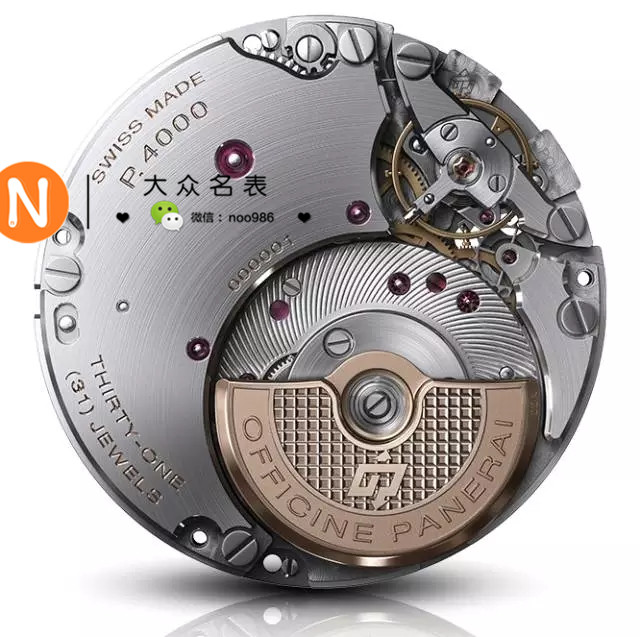
PANERAI P.4000
31‑jewel
From a commercial‑market perspective, watches fitted with jewel bearings gain added‑value attributes, for which buyers are more willing to pay. Manufacturers once capitalised on consumer psychology by adding extra ruby jewels to drive up watch prices. Nevertheless, modern‑day watch brands no longer heavily advertise the jewel count inside movements. Therefore, the number of movement jewels alone cannot determine a movement’s quality. Evaluating whether a timepiece is well‑made calls for comprehensive inspection of its craftsmanship, finishing, design and other facets.