Recently, numerous customers have inquired about watch crystal materials and whether their watches are fitted with sapphire crystals. This article elaborates on the merits of mainstream watch crystal materials. If the watch case serves as armor for a timepiece, the watch crystal acts as its protective shield. The most widely adopted crystal materials include sapphire crystal, mineral glass and acrylic glass. While these components safeguard internal watch parts, improper use can still cause damage to the watch itself. Many buyers overlook crystal material selection during purchase, yet different crystals feature huge disparities in hardness and service durability.
Acrylic / Organic Glass
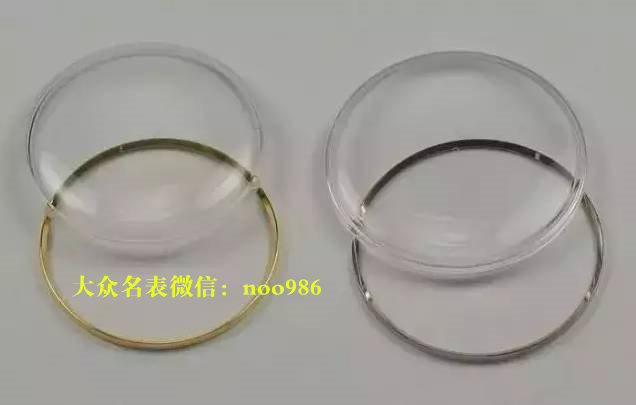
Commonly referred to as acrylic, organic glass is a traditional watch crystal material with soft texture and strong formability. Vintage antique watches circulating on the market mostly utilize acrylic crystals.
- Advantages: Great flexibility and shatterproof property, hence known as safety glass.
- Disadvantages: Prone to surface scratches with slightly inferior light transmittance.
- Practical value: Minor scratches can be polished and repaired by watchmakers without full crystal replacement. Heavily scratched crystals are also cheap to replace officially. Many vintage reissue models at brand boutiques adopt this material, such as the Panerai 372.
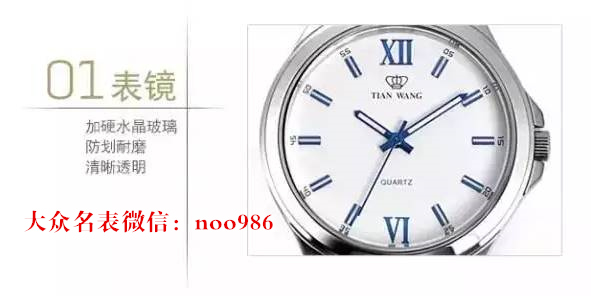
Mineral Crystal Glass
Mineral crystal glass is also named artificial crystal, hardened crystal glass or reinforced mineral glass. Natural crystal is scarce and difficult to mine, which cannot satisfy market demand, leading to the mass production of man-made mineral crystal glass. Mineral crystal glass shares a similar appearance with acrylic glass, yet they are fundamentally different substances. Five core distinctions are listed below:
- Material composition: Mineral crystal glass is crystalline silica; acrylic glass is merely a molten mixture containing silica components.
- Functional difference: Acrylic glass only delivers decorative effects. Beyond aesthetics, mineral crystal glass produces a piezoelectric effect with certain physical health benefits.
- Price gap: Mineral crystal glass costs several to dozens of times more than acrylic glass.
- Physical properties (1) As a crystalline substance, mineral crystal glass boasts higher hardness than soft acrylic glass. (2) Mineral crystal features excellent thermal conductivity and feels cool to touch, while acrylic glass feels relatively warm. (3) Identifiable under a polarizing lens: mineral crystal permits light penetration whereas acrylic glass does not. (4) Premium mineral crystal is crystal clear without internal bubbles or water ripples when viewed against light, resulting in its relatively high market price.
Sapphire Crystal Glass
Natural sapphire belongs to the corundum family. Watch-grade sapphire crystal is synthetic crystalline alumina purified by removing impurities such as iron oxide and titanium oxide. Chemically speaking, synthetic sapphire is identical to natural sapphire crystal. No extra color additives are used, so watch sapphire crystals are naturally colorless and transparent instead of blue. A widespread misconception among buyers is that water droplets bead up on sapphire surfaces. In fact, water beading performance depends entirely on the coating formula rather than the crystal substrate itself. Sapphire crystal is the most popular crystal material used across replica watches.
- Advantages: High structural density and outstanding scratch resistance. Sapphire ranks second only to diamond on the hardness scale, paired with great light transmission, low friction coefficient and heat resistance, far outperforming mineral and acrylic glass in wear resistance.
- Disadvantages: Poor shock resistance. Impacts, heavy pressure or drops may easily cause cracks on sapphire crystals when subjected to violent collisions.
Performance ranking
Hardness & scratch resistance: Acrylic glass < Mineral crystal glass < Sapphire crystal glass Each material has its unique strengths in other aspects: acrylic glass resists cracking and supports polishing repair; mineral glass has moderate anti-scratch performance and better vertical impact resistance than sapphire; sapphire features top-tier hardness yet is brittle with expensive repair costs. Mineral glass and sapphire crystal are the two dominant materials in modern watch manufacturing.
Anti-Reflective (AR) Crystal Coating
Anti-reflective crystals are treated with multi-layer vacuum coating to eliminate light refraction, functioning similarly to automotive tint films. Also called multi-layer coating, it is widely applied to aviation watches, dive watches and timepieces with curved crystal surfaces. AR crystals fall into two categories: double-sided AR coating (film applied to both inner and outer crystal surfaces) and single-sided AR coating (film only on the inner face). Coatings come in transparent or tinted variants. Do not habitually ask for blue-tinted AR coatings, as very few brands besides IWC adopt colored crystal coatings. This guide covers fundamental knowledge regarding watch crystal materials and maintenance tips for watch enthusiasts.