
This AP 15720 is well worth covering! Before APS Factory released its Royal Oak Offshore model, this product segment was in a chaotic state. Multiple factories produced versions of this watch, including ZF Factory, IP Factory, knock‑off JF versions, counterfeit ZF pieces, along with various copies of copies. In my opinion, none of them were worthy of recommendation.
Since JF Factory partially folded and exited the market, case manufacturers have supplied Royal Oak Offshore components to numerous brands. By and large, they could not break free from the old JF‑style formula of a 9015 movement fitted with decorative spacer plates. Fundamentally, those factories showed no meaningful differentiation in their replica output, and around 80 % of them shared identical case assemblies.
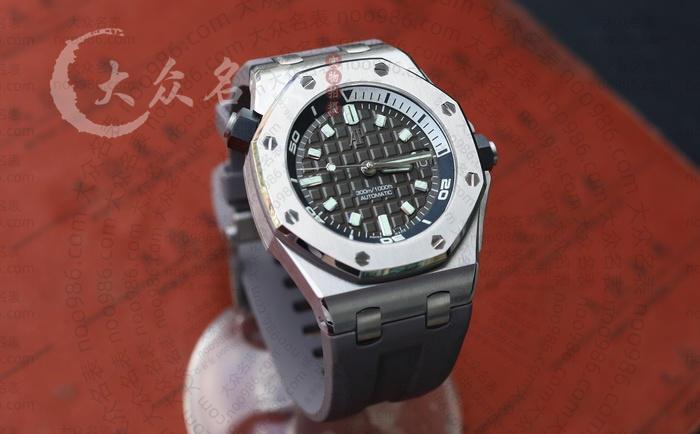
Following the success of its Royal Oak Offshore OAK model, APS Factory moved on to develop the new‑release 15720.
As mentioned in previous articles, around 90% of APS’s timepieces feature custom‑built or integrated movements. This manufacturer’s output has far exceeded my expectations. It also recently launched its Daytona equipped with the Shanghai‑built 4130 movement, demonstrating extremely strong technical capabilities. That makes this 15720 a model well worth paying close attention to.
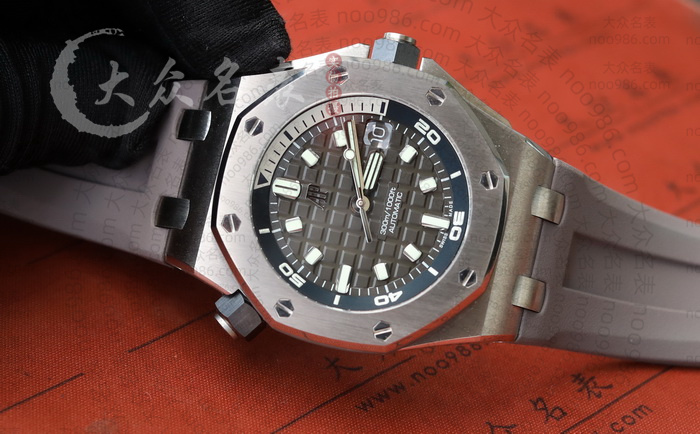
I have rarely gone deep into hands‑and‑dial details in my recent original articles. The overall average quality of these components has improved tremendously this year. When there are no obvious major flaws, I avoid overly nit‑picky evaluations. Instead, I will focus my writing on the movement breakthrough of this watch.
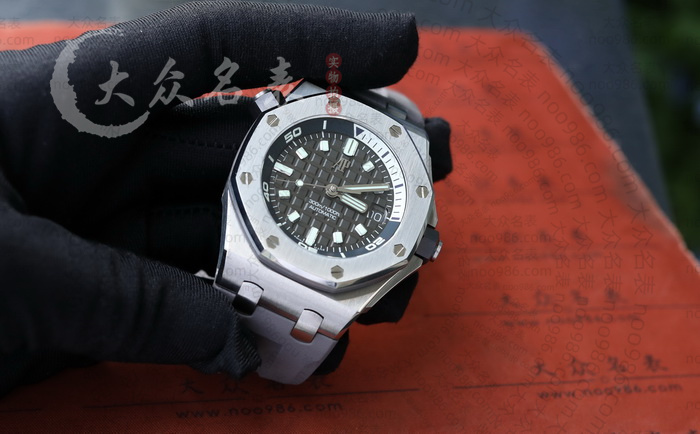
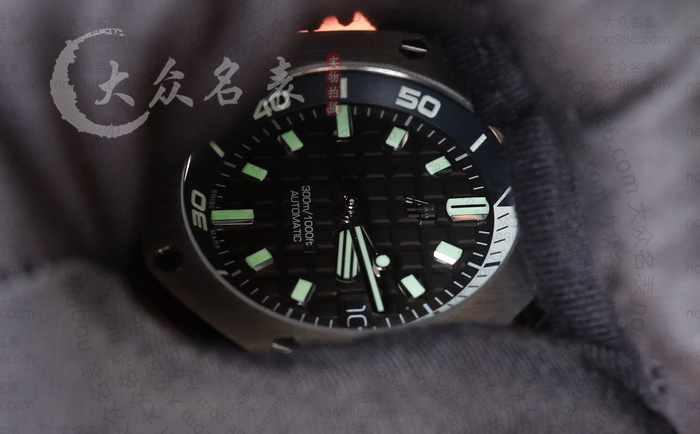
Luminescence features are photographed as a matter of routine. There is now a complete industrial supply chain for luminous materials used in replica watches. There are no noticeable differences among various factories, as they simply source and fill the luminous paste from third‑party suppliers.
The real highlight lies in the movement. The genuine watch is fitted with the Cal.4308 movement. You may call APS’s version whatever you prefer; many still refer to it as Cal.4308, or sometimes 4038.
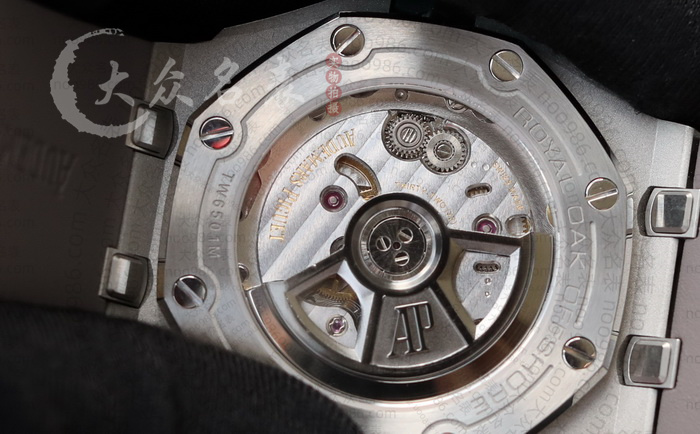
The gears shown in the photo perform real power transmission during winding, and most of the jewel bearings are genuine.
By contrast, competitors such as ZF rely on decorative fake spacer plates built around a base 9015 movement. Their balance wheel position also deviates from the original.
For this price point, APS has got nearly everything right: balance‑wheel placement and gear transmission are faithfully executed. If you demand absolute perfection, you should go for the genuine watch.
Rotational noise is far better controlled than on ZF and similar alternatives. With manual winding, it delivers an actual power reserve of over 50 hours, compared to the 60‑hour full power reserve of the original.
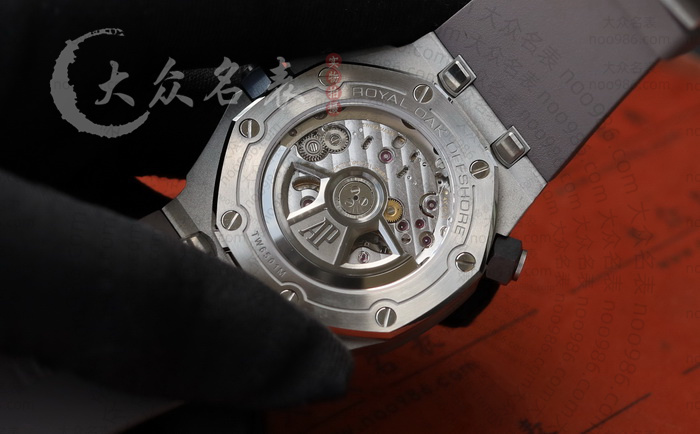
The image below shows it more clearly. If you have owned transparent‑case‑back Royal Oak Offshore models from other factories, check whether their gears remain stationary — a tell‑tale sign of poor‑quality fakes. This movement effectively solves the common “see‑through case‑back phobia” for buyers of transparent‑back AP watches.
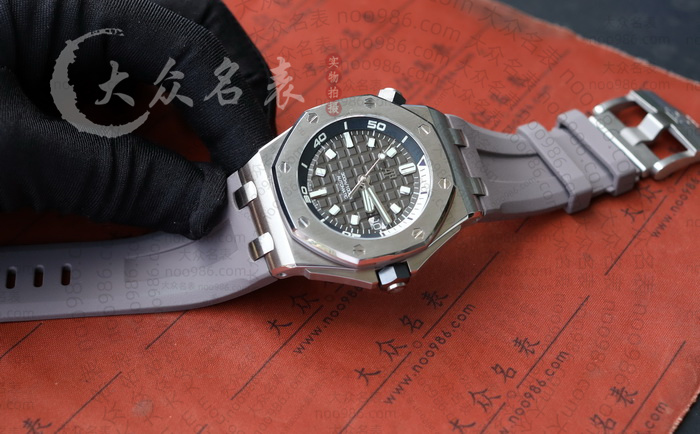
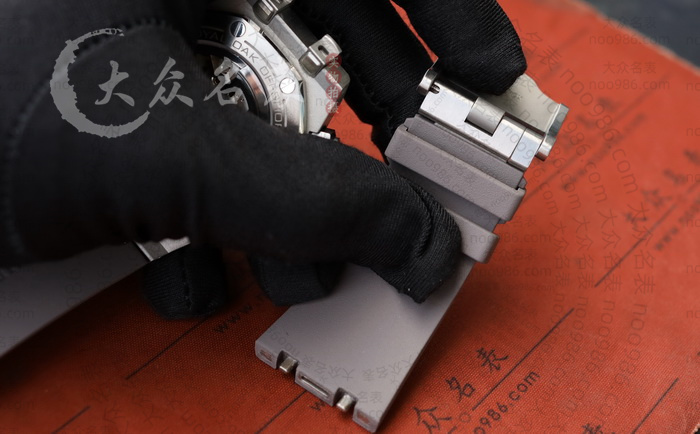
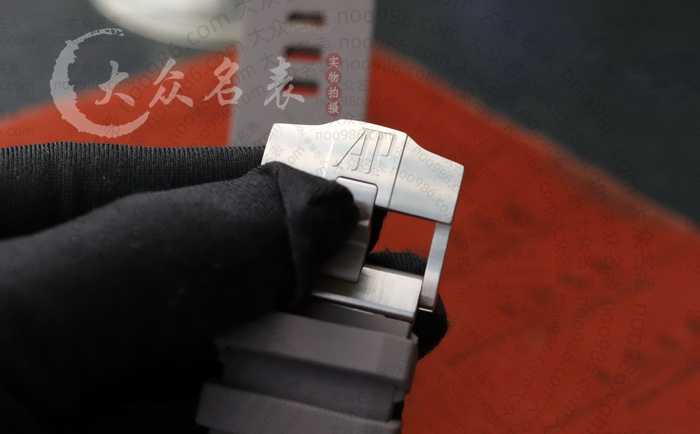
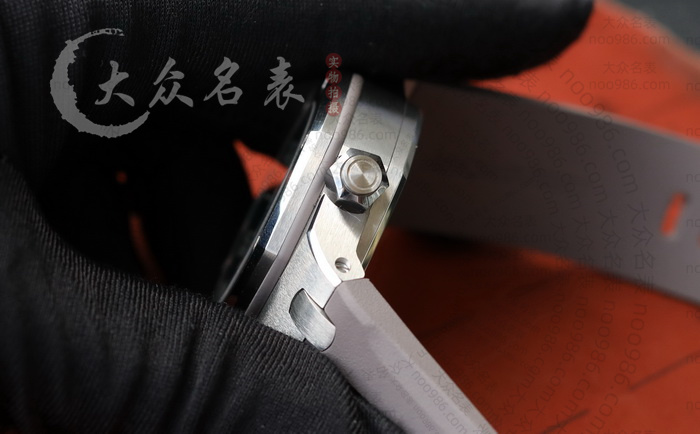
Apart from the exhibition‑back movement, this watch keeps up with the original in fine‑detail execution. Take the quick‑release system for example. Many factories produce clunky, rough quick‑release mechanisms, yet this one operates fairly smoothly when opening and closing. That said, the quick‑release bracelet comes at a much higher price, as it incorporates internal metal components.
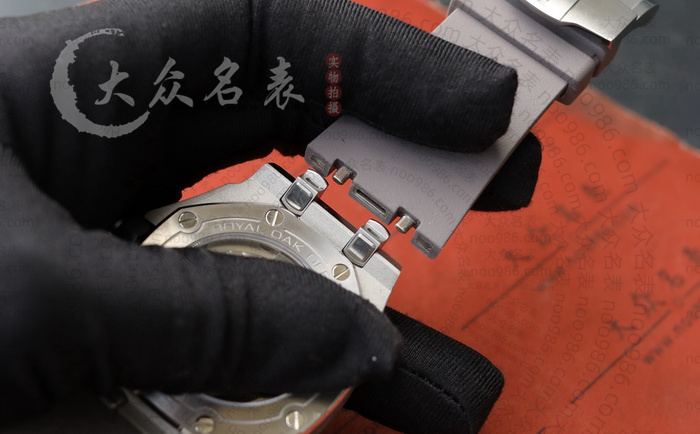
Removal holes are also pre‑drilled at the clasp position. For new collectors, the new 15720 is far more user‑friendly than the 710!
Finally, for those who like the 15720 Offshore, I believe you can confidently go with this factory’s version. Other manufacturers simply cannot compare. You only need to decide whether to buy it or not, instead of weighing up which factory is better among multiple options!